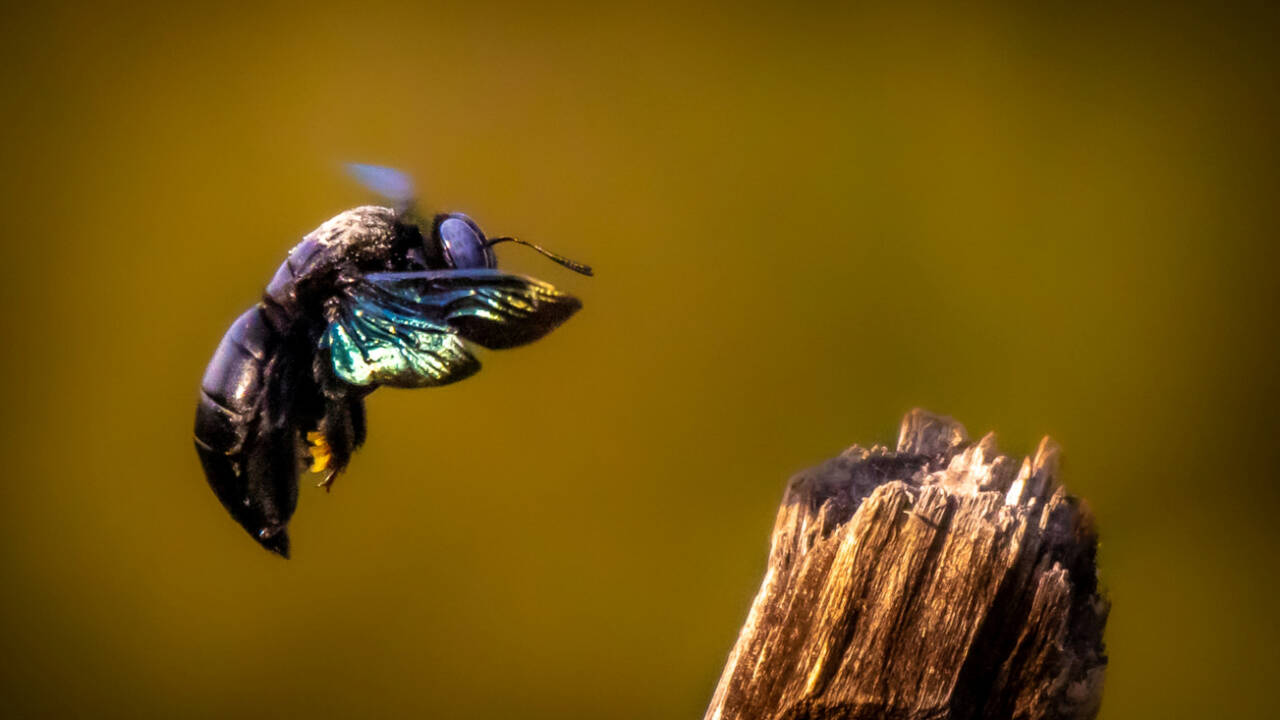
Traditional ecotoxicological assessments rely heavily on lethal dose ($LD_{50}$) metrics to determine whether an agricultural chemical is safe for non-target organisms. However, this binary focus on survival obscures subtle, systemic physiological failures that occur far below the lethal threshold.
A 2026 study by Catto et al. at the Georgia Institute of Technology reveals how the next-generation insecticide sulfoxaflor compromises the reproductive capacity of the bumblebee Bombus impatiens. Even when exposed to sublethal concentrations that do not cause immediate mortality, worker bumblebees experience profound, tissue-specific alterations in gene expression. By analyzing transcribed RNA from flash-frozen tissues, the research demonstrates that the largest shifts in gene activity occur within ovarian tissues. Learn more on a connected issue: this related article.
This molecular disruption creates an ecological bottleneck: while the immediate workforce survives, the colony’s long-term reproductive capacity is severely degraded, threatening the agricultural systems that rely on these insect vectors.
The Dual-Stress Framework: Acute Neurotoxicity vs. Chronic Epigenetic Strain
To understand how sulfoxaflor impacts bumblebee physiology, we must categorize its effects into two distinct functional channels. Further reporting by Psychology Today highlights similar perspectives on the subject.
                    [Sublethal Sulfoxaflor Exposure]
                                   │
         ┌─────────────────────────┴─────────────────────────┐
         ▼                                                   ▼
[Channel 1: Acute Neurotoxicity]                   [Channel 2: Transcriptomic Shift]
  │                                                  │
  ├─ Nicotinic Acetylcholine Receptors               ├─ Downregulation of vitellogenin
  │  (nAChRs) overstimulated                           │  (egg yolk precursor)
  │                                                  │
  └─ Immediate behavioral/motor impairment           └─ Ovarian tissue-specific RNA disruption
Channel 1: Acute Neurotoxicity (The Target Mechanism)
Sulfoxaflor is a sulfoximine class insecticide designed to target sap-feeding pests like aphids. It operates by binding to nicotinic acetylcholine receptors (nAChRs) in the central nervous system of insects. Because bumblebees share these homologous receptor sites, they experience the same neurotoxic pathway. Under high concentrations, this causes uncontrolled receptor stimulation, muscle convulsions, and rapid death.
Channel 2: The Transcriptomic Shift (The Sublethal Pathway)
Under low-dose, sublethal exposure, the central nervous system manages to clear or tolerate the chemical without causing systemic shutdown. However, the systemic stress triggers a downstream cascade of altered gene expression. The Georgia Tech team identified that this response is not uniform across all cell types; instead, it is highly localized within ovarian tissues. When sulfoxaflor binds to non-target pathways, it disrupts the transcription of key maternal and reproductive genes.
The primary consequence of this transcriptomic shift is the down-regulation of vitellogenin—a precursor protein essential for egg yolk formation—and the alteration of regulatory networks governing oocyte maturation. The bee survives the chemical exposure, but its biological system is forced to reallocate metabolic resources away from reproduction toward detoxification.
The Colony Energy Budget: A Zero-Sum System
Bumblebee colonies operate under a highly constrained energetic resource budget. Every unit of energy harvested as nectar (carbohydrates) or pollen (proteins/lipids) must be split between three competing metabolic sinks:
- Somatic Maintenance: Cellular repair, thermoregulation, and basic metabolic functions of the individual bee.
- Foraging and Colony Upkeep: The physical energy required to fly, locate resources, construct comb, and defend the nest.
- Reproduction: The production of vitellogenin, egg-laying, and rearing of larvae.
Total Metabolic Energy = [Somatic Maintenance] + [Foraging Effort] + [Reproductive Investment]
When sublethal sulfoxaflor exposure alters gene activity in the ovaries, the somatic maintenance cost increases dramatically. The bee must synthesize cytochrome P450 monooxygenases and other detoxification enzymes to metabolize the foreign chemical.
Because the total energy input of the colony is limited by foraging range and environmental stressors like heatwaves, this metabolic shift behaves as a zero-sum game. When the energy required for somatic maintenance spikes, reproductive investment is the first budget item cut. The transcriptomic down-regulation of reproductive genes is the physical mechanism by which this resource reallocation is enforced.
Why Current Pesticide Screening Protocols Fail
The persistence of sulfoxaflor-induced reproductive decline highlights a fundamental blind spot in environmental regulatory frameworks, such as those used by the Environmental Protection Agency (EPA).
The primary metric used to license pesticides is short-term survivability. If a compound breaks down quickly in the environment, it is often deemed safer than persistent legacy chemicals like neonicotinoids. While sulfoxaflor does degrade faster, its immediate, high-affinity binding to nAChRs triggers a genetic cascade that outlasts the presence of the chemical itself in the environment.
By evaluating safety based on whether an insect lives or dies within a 48-hour window, regulatory bodies miss the transgenerational decay of the colony. The worker bees return to the hive, but their altered ovaries cannot produce a viable next generation. The population does not collapse from sudden poisoning; it simply fails to replace itself, leading to a silent, delayed decline in localized pollination services.
Strategic Mitigations for Sustainable Agriculture
Solving this ecological bottleneck requires moving past binary debates that pit agricultural yield against environmental preservation. Farmers require crop protection to secure food supplies against sap-sucking pests, but they cannot afford the long-term loss of pollination vectors. A balanced approach must target the application window and chemical alternatives.
- Synchronized Application Windows: Applying sulfoxaflor exclusively during pre-bloom or post-bloom phases minimizes direct exposure to active foraging bees. This keeps the chemical away from the hive during peak reproductive cycles.
- Targeted Systemic Delivery: Utilizing precise soil drenching or seed treatments rather than foliar sprays reduces the drift of neurotoxic particulates onto neighboring wild flora, restricting the chemical to the targeted crop.
- Transcriptomic Toxicity Screening: Regulators must integrate RNA sequencing and ovarian tissue analysis into standard ecotoxicological risk assessments. Pesticides should not be approved based on survival alone; they must demonstrate negligible impact on the reproductive gene expression profiles of key pollinator species.