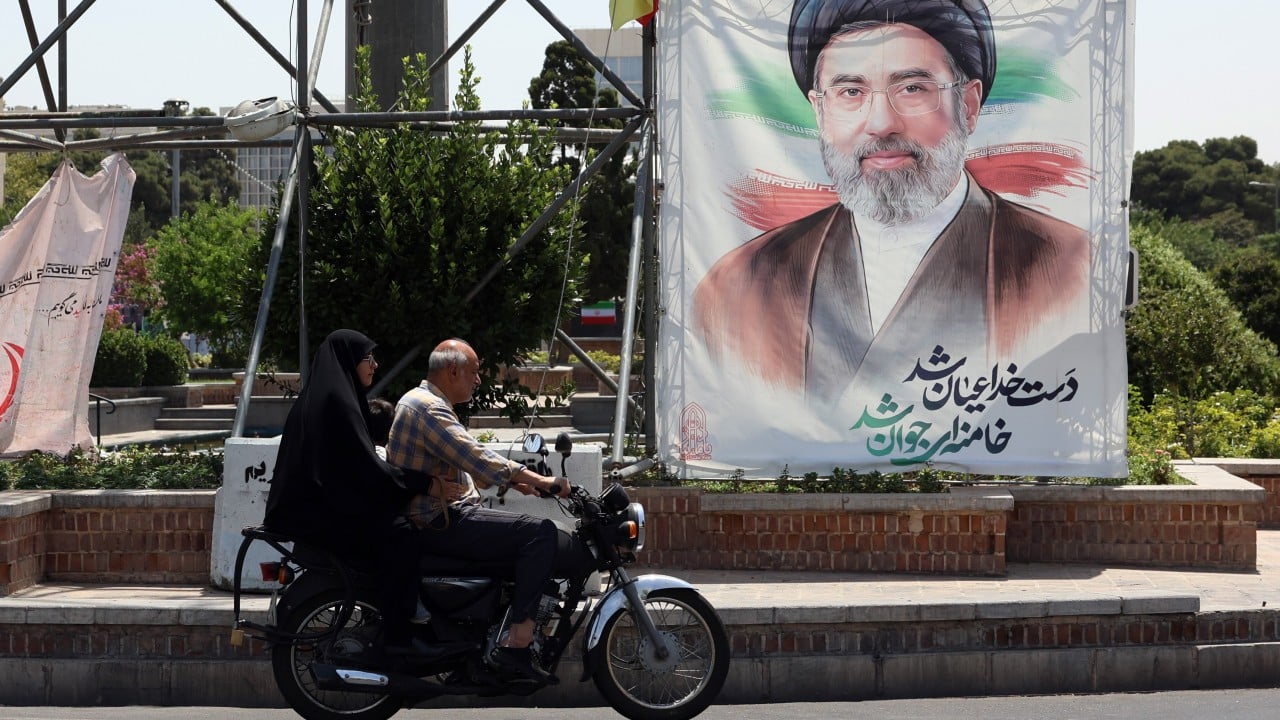
Western analysts love a good disappearing act. When Mojtaba Khamenei—the highly influential son of Iran’s Supreme Leader—drops out of the public eye or steps back from his high-profile seminary lectures, the consensus machine immediately kicks into overdrive. The headlines write themselves: Internal rift. Shifting dynamics. The fall of the house of Khamenei.
It is lazy analysis. It treats the highly opaque, hyper-bureaucratic machinery of the Islamic Republic like a Western political campaign where visibility equals power.
In Tehran, the exact opposite is true. Silence is a display of strength, not a sign of weakness. True power in the Iranian deep state does not campaign for office; it manages the transition from the shadows. The mainstream view that Mojtaba’s recent tactical retreat signals a decline in his political fortunes completely misses how succession planning actually works in authoritarian regimes.
The Visibility Fallacy in Authoritarian Succession
The standard geopolitical take assumes that to inherit the Supreme Leader's mantle, Mojtaba needs to constantly project public authority, secure high-level clerical consensus, and maintain a loud presence in the holy city of Qom. This view is fundamentally flawed.
Iran’s political architecture is not a monolithic dictatorship; it is a complex web of competing factions across the Islamic Revolutionary Guard Corps (IRGC), the clerical elite, and the sprawling economic bonyads (charitable foundations). For a successor, stepping too far into the spotlight too early turns you into a target. It invites pre-emptive strikes from rival factions who want to prune the family tree.
The Reality Check: In highly securitized regimes, public absence is frequently a deliberate strategy to lower your profile, mitigate factional blowback, and consolidate institutional backing behind closed doors.
Consider the historical precedent. When Ali Khamenei himself ascended to the position of Supreme Leader in 1989, he was not the most prominent or senior cleric in Iran. He was a compromise candidate backed by deep institutional consensus and backroom maneuvering by figures like Akbar Hashemi Rafsanjani. The real work of succession happens in windowless rooms, not in front of state media cameras.
Dismantling the Clerical Consensus Myth
A common question dominating regional analysis is whether Mojtaba possesses the necessary religious credentials—the rank of marja or Grand Ayatollah—to claim the top spot. Analysts point to his sudden cessation of advanced kharij lectures as proof that he has failed to secure the blessing of the Qom establishment.
This argument applies a 20th-century framework to a 21st-century security state. The contemporary Islamic Republic is no longer governed strictly by traditional clerical hierarchy. It is a security-industrial complex.
- The Constitution Was Already Rewritten: In 1989, Iran amended its constitution specifically to drop the requirement that the Supreme Leader must be a Grand Ayatollah. The criteria shifted from pure religious scholarship to political acumen and executive capability.
- The IRGC Factor: The Revolutionary Guard cares far more about ideological continuity, internal stability, and the protection of their massive economic empire than they do about the finer points of theological jurisprudence.
Mojtaba Khamenei has spent over two decades serving as the primary gatekeeper to the Office of the Supreme Leader (Beit-e Rahbari). He understands the intersections of the intelligence apparatus, the financial networks, and the military command better than any living cleric. To think his lack of a public lecture series derails his trajectory is to misunderstand what keeps the regime afloat.
The Operational Reality of the Beit-e Rahbari
I have watched observers misread these internal shifts for over a decade. They mistake tactical silence for strategic defeat. To understand why Mojtaba is still arguably the most potent force in the succession conversation, you have to look at how power is operationalized daily in Iran.
The Beit-e Rahbari functions as a shadow government that overrides the presidency and the parliament. It controls the judiciary, the state media, and the security forces. Mojtaba does not need to sit on a public committee to exert influence; his allies run the committees.
| Institution | Traditional Role | The Reality under the Shadow State |
|---|---|---|
| Assembly of Experts | Publicly vets and chooses the next leader | Merely rubber-stamps decisions pre-negotiated by the security core |
| The Presidency | Manages the economy and public administration | Acts as a lightning rod for public anger while real assets remain insulated |
| The Security Apparatus | Protects borders and maintains domestic order | Directly answers to the Office of the Leader, bypassing standard state oversight |
If you are looking at the Assembly of Experts for signs of who the next leader will be, you are watching the wrong stage. The real selection process is a negotiation between the upper echelons of the IRGC and the core management of the Beit-e Rahbari. Mojtaba sits squarely at the center of that Venn diagram.
The Dangerous Downside of the Hidden Hand
Admittedly, this strategy of governing from the shadows carries significant systemic risks. By remaining an unelected, largely unaccountable figure within the state apparatus, Mojtaba lacks the public legitimacy that even an authoritarian system occasionally needs to navigate deep crises.
If the transition of power is handled too aggressively behind closed doors without a veneer of broader elite consensus, it risks triggering internal friction within the lower ranks of the security forces. A forced succession could fracture the very base of support the regime relies on to suppress domestic unrest.
But assuming that his recent low profile means he has been sidelined is a dangerous miscalculation for Western policymakers. It breeds complacency. It leads to the false assumption that Iran's political landscape will naturally moderate or fracture during the transition.
Stop looking for Western political logic in a system built entirely to resist it. The silence out of Tehran isn't a sign of a crumbling campaign; it is the quiet before the institutional machinery locks the next era into place. Turn off the television cameras and watch where the money and the security appointments actually flow. That is where the real successor is standing.