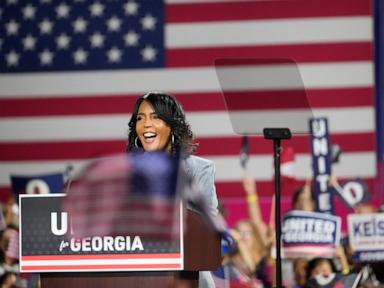
Media coverage of Black women in American politics frequently relies on a single, predictable narrative: one of unbroken systemic barriers and inevitable victimhood. According to standard political commentary—such as articles framing Atlanta’s former mayor Keisha Lance Bottoms solely through the lens of "navigating challenges" and "battling barriers"—the political trajectory of Black women in Georgia is reduced to a perpetual uphill struggle against immovable institutional friction.
This framing misses the actual mechanics of Georgia’s political transformation. While structural hurdles in fundraising, media scrutiny, and voter access are documented realities, reducing Keisha Lance Bottoms’ career—or the broader rise of Black female leadership in the state—to a story of mere survival ignores how political power in Georgia is actually built, wielded, and contested.
The Myth of the Monolithic Barrier
Political analysts at outlets like the Atlanta Journal-Constitution and national broadcast networks have extensively documented the demographic shifts that turned Georgia into a premier battleground state. In these analyses, Black women are rightly credited as the backbone of the Democratic electorate, organized by figures like Stacey Abrams and Nse Ufot.
However, a critical distinction exists between mobilizing voters and governing a major metropolitan economy.
When Keisha Lance Bottoms won the Atlanta mayoralty in 2017—defeating Mary Norwood by fewer than 1,000 votes—the victory was widely cast as a triumph over racial and gender headwinds. Yet, closer examination of Atlanta’s political history reveals that Black mayors have governed the city continuously since Maynard Jackson’s election in 1973. Within Atlanta’s city limits, Black political leadership is not an anomaly breaking through a glass ceiling; it is the established governing coalition.
The real friction Bottoms faced was not simply "getting in the door." It was managing the competing expectations of that very coalition.
Governance Versus Symbolism
During her single term from 2018 to 2022, Bottoms operated at the intersection of two irreconcilable demands:
- The Progressive Mandate: Following the 2020 police killing of Rayshard Brooks in Atlanta, activists and national commentators demanded sweeping criminal justice reforms and rapid changes to policing protocols.
- The Business Establishment Mandate: Atlanta’s corporate community—anchored by Fortune 500 headquarters and the world’s busiest airport—prioritized public safety, commercial stability, and a sharp response to rising violent crime rates during the COVID-19 pandemic.
According to contemporary reporting from The New York Times and local Atlanta newsrooms, Bottoms’ decision not to seek a second term in 2021 stemmed largely from the intense political crossfire of 2020 rather than an inability to raise funds or clear baseline ballot hurdles. She faced simultaneous criticism from the political left for not moving fast enough on police accountability and from the political right—as well as suburban voters—over crime statistics and the Buckhead cityhood movement.
Framing these events purely as "barriers against Black women" obscures the standard, brutal mechanics of big-city executive governance. Mayors of major American cities—regardless of race or gender—routinely face career-ending approval drops when crime rises and civil unrest disrupts commerce.
The Structural Realities That Actually Matter
To understand where racial and gender disparities genuinely distort Georgia politics, analysts point away from symbolic narratives and toward three concrete, measurable factors:
- Statewide vs. Municipal Electorates: Winning in Fulton and DeKalb counties requires a vastly different coalition than winning statewide in Georgia. While Black women hold significant institutional power in metro Atlanta, statewide offices—Governor, Lieutenant Governor, Secretary of State—remain heavily influenced by exurban and rural voters. Stacey Abrams’ 2018 and 2022 gubernatorial campaigns demonstrated both the ceiling of high-turnout base mobilization and the difficulty of winning over moderate swing voters in a polarized environment.
- Donor Networks and PAC Bundling: Research from organizations like the Center for American Women and Politics (CAWP) at Rutgers University consistently shows that women of color face steeper early-stage fundraising deficits than white male candidates. Because traditional political donor networks rely heavily on personal wealth and established corporate pipelines, candidates without generational access to capital must spend disproportionate time dialing for small-dollar donations rather than building field operations.
- Double-Bind Scrutiny: Political scientists note that female executives face narrower behavioral margins. Assertiveness is frequently framed as aggression, while consensus-building is dismissed as indecisiveness. During the 2020 protests, Bottoms’ nationally televised speech urging demonstrators to "go home" drew praise from national Democratic leaders—earning her a spot on Joe Biden’s vice-presidential shortlist—while simultaneously alienating local progressive organizers who viewed the remarks as dismissive of their grievances.
Moving Beyond the "Barrier" Narrative
When political commentary treats every setback experienced by a Black female official as proof of insurmountable bias, it inadvertently strips those leaders of agency. It suggests their outcomes are dictated entirely by external prejudice rather than strategic choices, policy trade-offs, and coalition management.
Keisha Lance Bottoms’ career—spanning her time on the Atlanta City Council, her tenure as mayor, her role as a senior advisor in the Biden White House, and her subsequent political endeavors—illustrates the complexity of modern executive power. She navigated a global pandemic, a historic social justice movement, an internal municipal secession effort, and intense national media attention.
Understanding the future of Georgia politics requires looking past simplified narratives of struggle. Voters, journalists, and strategists alike must evaluate Black women in leadership not merely as symbols overcoming obstacles, but as consequential executives operating within the demanding, unforgiving arena of American governance.