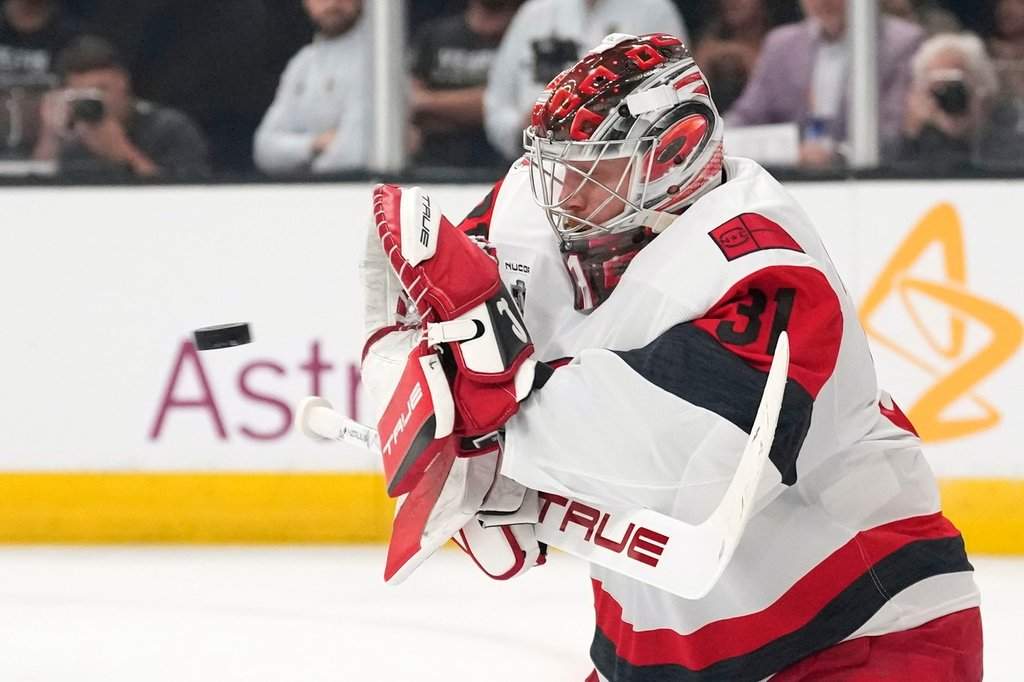
Every September, hockey media goes into collective hyperventilation over training camp absences. A veteran goaltender tweaks something in August or gets held back for load management, and the panic room doors fly open. Fans start refreshing trade rumor blogs. Pundits draw dramatic graphs about lost chemistry and early-season structural collapse.
It is absolute noise. For an alternative view, check out: this related article.
If you are sweating Frederik Andersen missing the opening days of camp, you are looking at the modern NHL through a 1995 lens. You think September reps build foundations. You think sweat equals stability. I have watched front offices panic over September paper cuts while letting actual structural flaws rot in June.
Let us dismantle the lazy consensus right now. Andersen missing early camp reps is not a disaster. It is a calculated luxury for an elite organization, and for a veteran netminder, it might just preserve his hips for the only stretch of the year that actually matters. Similar insight on the subject has been shared by Bleacher Report.
The Myth of the September Workload
The entire premise of training camp is built on a lie: that more volume equals better preparation. For a twenty-year-old rookie fighting for a bottom-six roster spot, maybe. You need to skate until your lungs burn to prove you belong.
For a battle-tested starting goaltender with hundreds of high-leverage NHL games on his ledger, September hockey is an injury trap. The ice is choppy, the defensive structures are half-baked, and you have fringe forwards crashing the net with zero professional spatial awareness trying to make an impression. Exposing a frontline goalie to three weeks of preseason chaos is like driving a Ferrari through a demolition derby just to check if the windshield wipers work.
Look at the data from elite goaltending departments across the league over the last half-decade. The correlation between heavy September workloads and April performance is flatlining. If anything, the teams making deep postseason runs are the ones managing their veteran assets with ruthless, paranoid caution.
"Preseason games are for evaluation. Training camp is for conditioning. Neither requires a proven starter to face thirty-five uncoordinated deflection shots a day in a humid auxiliary rink."
When a goalie of Andersen's caliber steps away from the initial rush of camp, the medical and coaching staffs are not scrambling. They are executing a maintenance protocol. They are protecting an asset from the single most predictable enemy in professional sports: early-season overuse.
The Cognitive Load of Being a Modern NHL Goaltender
We talk endlessly about physical health, but we completely ignore the psychological and neurological tax of playing goal in the NHL. Modern goaltending is not about standing in a butterfly and blocking pucks anymore. It is a high-speed geometry puzzle played out in fractions of a second.
Every single movement requires hyper-precise micro-decisions based on rapid-fire data processing:
- Puck trajectory off the stick blade
- Screen density in the slot
- Passing lanes opening up backdoor
- The exact angle of the shooter's blade relative to the post
Asking a veteran to process thousands of these reps in meaningless exhibition games against guys who won't be in the league by November is mental fatigue you simply do not need to incur.
I have seen organizations burn out their goaltenders by December because they felt obligated to parade them out for every promotional opening week scrimmage. By the time the playoff push starts in March, the legs are heavy and the mind is fried. Missing a week of camp gives a veteran mental whitespace. It lets him train in controlled environments, hone his tracking without the physical carnage of live traffic, and enter the regular season hungry rather than exhausted.
Why the Backup Plan is Always Better Than You Think
The underlying terror fueling the panic over Andersen's absence is the fear of the backup. Fans look at the depth chart and picture a catastrophic freefall if the starter isn't standing in the blue paint from day one.
This betrays a fundamental misunderstanding of how modern NHL systems operate. A competent defensive structure does not disintegrate because a backup starts a few October games. In fact, playing behind a simpler, more conservative early-season shell often helps a team establish defensive habits faster. When you know your marquee goaltender is resting, everyone tightens up. Backchecking improves. Slot coverage gets cleaner.
Teams that panic-rush their starters back onto the ice because they are terrified of dropping a couple of points in October are trading long-term security for short-term comfort. It is bad asset management. It is terrible coaching. And it usually ends with an injured star in January and a bewildered front office wondering where it all went wrong.
Let Andersen sit. Let him sort out whatever minor maintenance keeps his body humming. Let the depth pieces take the early load.
When the games get tight, when the ice shrinks, and when every shot carries the weight of a playoff berth, you won't care about a missing skate in September. You'll care that your goaltender is fresh enough to steal a series.
Stop treating training camp like a sacred ritual. It is a glorified tryout.
Let the kids fight for jobs. Let the veterans heal. And stop asking questions you already know the cynical, practical answers to.