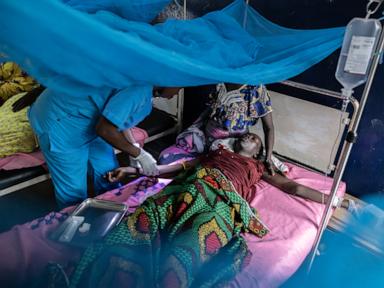
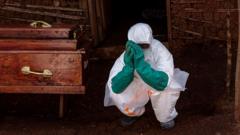
The heat in the isolation ward does not move. It sits on your chest, thick and heavy, trapped inside layers of impermeable polymer, dual-layered rubber gloves, and a full-face respirator that fogs with every breath. Inside that suit, you hear only your own respiration. In, out. It sounds like scuba diving, but you are not swimming over a reef. You are standing over a cot in a hastily converted clinic in the Democratic Republic of the Congo. On the cot is a nine-year-old boy named Alphonse—a hypothetical composite of the dozens of children I have watched slip away.
Alphonse is bleeding from his gums. His skin is slick with sweat, his eyes wide with a terrifying blend of exhaustion and raw panic. He does not understand why the people trying to save him look like faceless, white-suited astronauts. He cannot see my face. He cannot see the tears pooling at the bottom of my goggles. If I touch his hand to comfort him, he feels only the cold, sterile friction of nitrile.
This is the reality of Ebola. It is not a abstract headline, a clinical statistic, or a plot point in a Hollywood thriller. It is a brutal, liquefying assault on human biology and human dignity.
Outside the clinic walls, the world often views an outbreak through the cold lens of data. We hear about transmission rates, case fatality percentages, and containment zones. But statistics are just human tragedies with the tears wiped away. To truly understand Ebola, you have to understand the terrifying speed of its shadow, the fragility of our global defense system, and the immense psychological toll paid by those who stand between the virus and the rest of humanity.
The Invisible Invader
Ebola is shockingly simple. It is a filovirus, a microscopic piece of genetic material wrapped in a protein coat, shaped like a shepherd’s crook. It possesses no intelligence, no malice, and no motive. Yet, the moment it enters a human bloodstream, it behaves with the devastating efficiency of a scorched-earth military campaign.
Consider how a normal virus operates. Usually, an invader targets specific cells—the lungs for flu, the liver for hepatitis. Ebola breaks that rule entirely. It targets the very foundation of the human body: the immune system and the circulatory system simultaneously.
[Image of Ebola virus structure]
The virus first hijacks macrophages and dendritic cells, the frontline soldiers of our immune defense. Instead of fighting the infection, these cells are turned into factories, churning out millions of viral copies. The virus then hitches a ride in these cells to travel through the lymph nodes, spleen, and liver.
As it replicates, it triggers a catastrophic biological event known as a cytokine storm. The body’s immune system panics. It releases a massive, unregulated flood of inflammatory chemicals. This is where the true horror begins. The chemicals attack the lining of the blood vessels, causing them to become porous.
Imagine a hose filled with water under high pressure, suddenly turning into cheesecloth.
Blood begins to leak out of the capillaries into the surrounding tissue. Internal organs—the liver, the kidneys, the spleen—begin to fail from a lack of oxygen and the sheer volume of internal bleeding. The blood loses its ability to clot. It is a total systemic collapse. In the worst cases, patients die of hypovolemic shock—essentially, their bodies run out of fluid because the circulatory system can no longer hold it.
The numbers back up this biological nightmare. Historically, the Zaire strain of Ebola carries a case fatality rate hovering around 70 to 90 percent if left untreated. Even with modern supportive care, the mortality rate rarely drops below 40 percent. It is one of the most lethal pathogens known to science.
The Cultural Friction of Containment
When an outbreak hits, Western medical teams often arrive with an air of clinical certainty. They bring protocols, heavy machinery, and strict quarantine guidelines. But science does not exist in a vacuum. It exists in communities with deep histories, sacred traditions, and understandable skepticism toward outsiders.
During my time in the field, I learned that the hardest part of fighting Ebola isn't the science. It's the sociology.
Take burial practices. In many rural West African communities, a traditional funeral is a deeply spiritual, communal necessity. It involves washing the body of the deceased, dressing them in their finest clothes, and kissing them goodbye. It is an act of profound love and respect.
But Ebola is at its most contagious right after a patient dies.
The corpse is loaded with viral particles. Every drop of bodily fluid is a potential lethal dose. When family members perform these traditional washing rituals, they are unknowingly signing their own death warrants.
Now, imagine being a villager. Strange trucks roll into your town. People in biohazard suits arrive, take your sick relative away to a tented zone where you cannot visit, and if that relative dies, their body is wrapped in a plastic bag and buried in a mass grave by strangers without the proper spiritual rites. To the local community, it doesn't look like healthcare. It looks like state-sponsored abduction.
This disconnect creates a breeding ground for rumors and resistance. During the massive 2014–2016 West Africa outbreak, which claimed over 11,000 lives, medical teams were occasionally met with stones, machetes, and blockades. Trust had eroded entirely.
We quickly realized that we could not shoot our way out of this crisis with medicine alone. We had to listen. We had to adapt.
We began training local elders and religious leaders to conduct "Safe and Dignified Burials." We allowed families to watch the burial from a safe distance, to throw soil onto the grave, and to pray over their loved ones. We replaced the faceless white suits with suits that had clear plastic windows over the face, so patients could see our smiles, our grimaces, our humanity. The moment we treated the culture with the same respect as the science, the transmission numbers began to drop.
The Frontline Trauma
The physical toll of working an Ebola outbreak is exhausting. The psychological toll is permanent.
When you are in the hot zone, every move you make must be calculated, deliberate, and slow. A single mistake—touching your exposed neck with a contaminated glove, a microscopic tear in your boot—can be fatal. The anxiety is a constant, low-frequency hum in the back of your mind.
You spend hours sweating through your clothes, hydrating constantly, only to watch patients die despite your best efforts. Because there is no definitive cure, much of the treatment is supportive: intravenous fluids, balancing electrolytes, keeping the fever down, and managing pain. You are essentially holding a shield over the patient, hoping their own immune system can build antibodies before the virus burns the house down.
The heartbreak comes in waves. You watch a mother bring in her child, only for the mother to test positive and the child to test negative. You have to separate them. You have to watch a toddler cry for a mother who cannot hold him, knowing that if she does, she passes on a death sentence.
Then there are the survivors. Winning the battle against Ebola is a miracle, but the victory is often bittersweet.
Survivors face a grueling aftermath known as Post-Ebola Syndrome. They suffer from severe joint pain, chronic fatigue, and vision loss—sometimes going entirely blind because the virus can linger inside the immune-privileged space of the eye long after it is cleared from the blood.
Worse than the physical ailments is the stigma. When a survivor returns to their village, they are often treated like ghosts or pariahs. Neighbors fear that they are still contagious. Shopkeepers won't take their money. Landlords evict them. They have survived a literal hell, only to find their old lives burned to the ground.
The Global Shield
It is tempting for someone sitting in a comfortable apartment in London, New York, or Tokyo to view Ebola as a distant, tropical problem. A tragedy, yes, but one confined to remote corners of the globe.
That view is a dangerous luxury.
We live in an era of unprecedented global connectivity. A person can catch a virus in a remote forest in central Africa, walk along a dirt path to a trading town, take a motorbike taxi to a regional hub, board a commercial airliner, and land in any major metropolis on Earth within 36 hours. The incubation period for Ebola ranges from 2 to 21 days. A traveler can be infected, asymptomatic, and entirely undetectable while passing through multiple international airport screenings.
The 2014 outbreak proved this wasn't just a theoretical vulnerability. The virus crossed borders into major African capitals like Lagos, leaped across the Atlantic to Dallas, Texas, and reached Europe. The global health infrastructure buckled under the strain.
The threat is not decreasing; it is accelerating. As human populations expand, we are pushing deeper into pristine rainforests through logging, mining, and agriculture. This destroys habitat boundaries and increases the frequency of "spillover events"—the moments when a virus jumps from its natural animal reservoir (likely fruit bats) into humans.
But there is a silver lining in this dark cloud. The terror of recent outbreaks forced the scientific community to innovate at a pace never seen before.
During the 2018–2020 outbreak in the eastern DRC, a region plagued by active conflict and militia violence, we deployed a revolutionary tool: the Ervebo vaccine. This rVSV-ZEBOV vaccine was highly effective, utilized in a strategy called "ring vaccination." Whenever a case was identified, medical teams vaccinated everyone who had come into contact with that person, and everyone who had contacted them, creating a human shield of immunity around the infection.
Simultaneously, clinical trials proved that new monoclonal antibody treatments, like Inmazeb and Ebanga, could dramatically improve survival rates if administered early in the course of the disease.
These scientific breakthroughs are monumental. They change Ebola from a guaranteed death sentence into a preventable, treatable condition. But tools are only useful if they can reach the people who need them. A vaccine sitting in a ultra-cold freezer in Geneva is useless to a family living in a village without electricity or paved roads.
The real battle is infrastructure. It is logistics. It is funding. It is ensuring that the local healthcare workers—the unsung heroes who make up the vast majority of casualties in any outbreak—have access to gloves, clean water, and fair wages.
The Final Chord
The respirator fogs again. I wipe my goggles against the inside of the mask, a useless instinctive gesture.
On the cot, Alphonse's breathing slows. The erratic, shallow gasps that have kept his tiny chest moving for days begin to settle into a quiet, rhythmic stillness. His hand relaxes. The monitor doesn't beep—there are no monitors here—but the silence in the room deepens, taking on a profound, heavy weight.
He is gone.
I stand there for a long moment, listening to the rhythmic rush of my own breath inside the plastic hood. I am alive. He is dead. The boundary between those two states is a few millimeters of synthetic rubber and a world of geographic privilege.
We will clean the cot. We will decontaminate the zone. We will prepare for the next patient walking through the canvas flaps of the triage tent, because there is always another patient.
Ebola is a mirror held up to humanity. It exposes our deepest vulnerabilities, our systemic inequities, and our collective shortsightedness. But it also reveals an incredible, stubborn capacity for resilience, sacrifice, and love. The doctors, nurses, burial squads, and community leaders who fight this virus are not just saving individual lives in remote villages. They are holding the line for the entire human race.
They are the thin, exhausted shield protecting a world that is largely asleep to the danger. And until we realize that an outbreak anywhere is a threat everywhere, that shield will continue to crack, paid for in the currency of human lives.