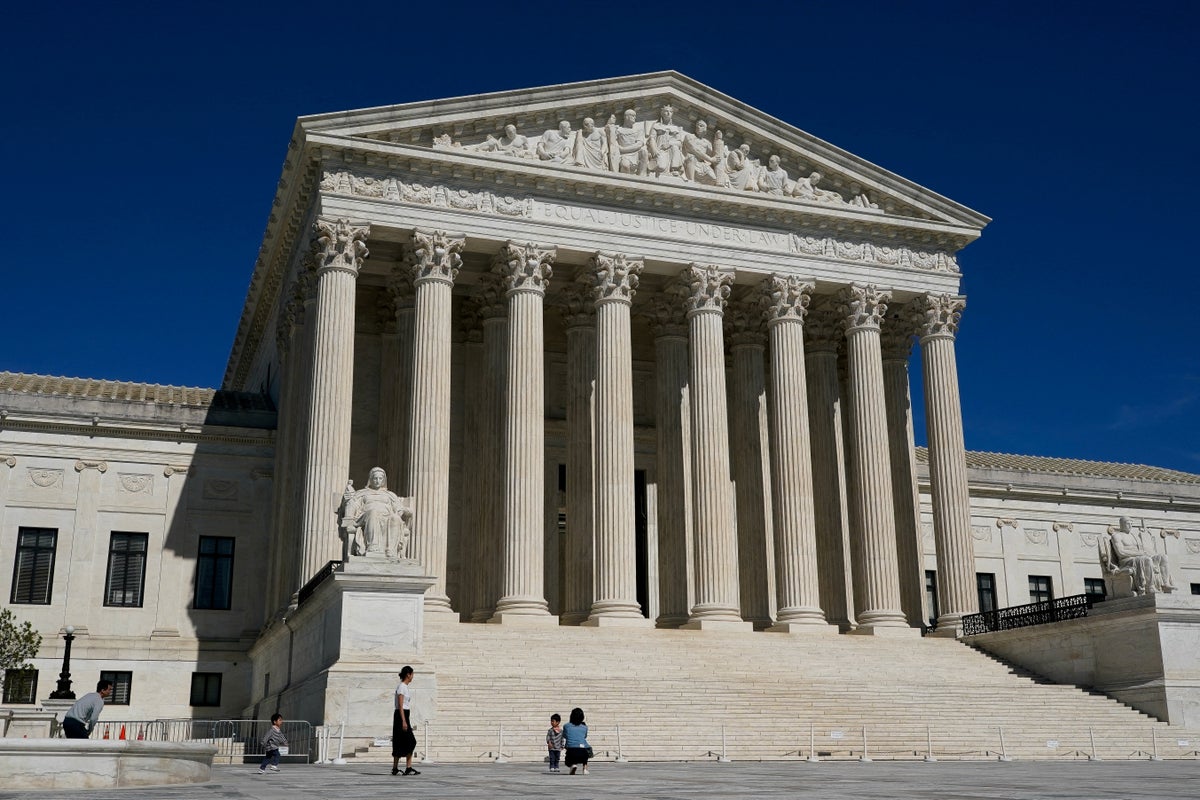
The federal Supreme Court refusal to intervene in the Virginia congressional redistricting dispute establishes a definitive operational reality for the 2026 midterm cycle: structural advantages cannot be engineered through compressed procedural timelines. By leaving intact the Virginia Supreme Court 4-3 decision that invalidated a voter-approved constitutional amendment, the judiciary demonstrated that procedural compliance supersedes raw electoral mandate. The ruling eliminates a projected four-seat dividend for the Democratic Party, anchors the state’s congressional delegation to its 2021 baseline of six Democrats and five Republicans, and exposes the structural flaws of mid-decade legislative retaliation.
To understand why this strategy collapsed, analysts must look past political rhetoric and examine the underlying structural mechanisms. The failure was not a failure of voter mobilization or capital allocation—Democrats spent over $64 million on the referendum campaign. Instead, it was an architectural failure caused by a mismatch between legislative timing and constitutional mandates.
The Intervening Election Bottleneck
The foundational flaw in the legislative strategy rests on a miscalculation of structural timing constraints, specifically the "intervening-election requirement." In Virginia, altering the state constitution demands a multi-step sequence: the General Assembly must pass the proposed amendment in two separate legislative sessions, separated by a structural buffer consisting of a house of delegates election. This sequence functions as a constitutional circuit breaker, preventing a temporary legislative majority from rapidly altering the fundamental law of the commonwealth.
The breakdown occurred during the 2025 legislative timeline. The General Assembly attempted to clear its initial hurdle while an election was actively underway. The chronological sequence reveals the structural vulnerability:
- Phase One (Early Voting Commencement): In early autumn 2025, early voting began across Virginia. Over 1.3 million citizens—approximately 40 percent of the total electorate—cast ballots over the subsequent weeks.
- Phase Two (Legislative Enactment): The General Assembly passed the proposed redistricting amendment less than a week before the traditional November election day.
- Phase Three (The Procedural Deficit): Lawmakers asserted that because the final vote occurred prior to the official calendar date of the general election, it legally preceded the intervening election.
The Virginia Supreme Court rejected this narrow definition of an election as a single calendar day. The majority opinion defined an election as a continuous, cumulative process spanning the entirety of the balloting period. Because 40 percent of the electorate had voted before the legislature acted, the General Assembly had effectively initiated a constitutional change after the public choice process was underway. This sequence breached the procedural integrity required for constitutional modification, rendering the subsequent April 21 referendum null and void.
Geometry Over Geography: The Asymmetric Map Design
The invalidated map was engineered to maximize structural efficiency, translating a thin state-level voting majority into a highly disproportionate federal seat yield. Under the pre-existing 2021 map, Virginia's congressional distribution mirrors its status as a highly competitive state, leaning slightly Democratic but highly sensitive to localized shifts.
The proposed map sought to alter this equilibrium by adjusting boundaries across three core zones:
- The Northern Virginia Apex: Consolidating high-density, high-turnout Democratic strongholds to anchor five secure districts. This included extending one district long distances to absorb conservative rural pockets without compromising the overall Democratic voting majority.
- The Urban-Rural Dilution Zone: Splitting conservative voting blocs across Richmond, southern Virginia, and Hampton Roads into separate districts, mixing them with reliable urban Democratic majorities.
- The Collegiate Consolidation Hub: Uniting three distinct college towns in western Virginia into a single district to counter the surrounding rural conservative electorate.
The efficiency gap of this design was extreme. While republican congressional candidates captured 47 percent of the statewide vote in 2024, the proposed boundaries were mathematically optimized to secure up to 10 out of 11 seats for Democrats—a 91 percent delegation share.
This level of structural optimization creates an inherent optimization paradox. To achieve a 10-1 seat distribution, the map had to spread friendly voters thinly across multiple districts. This lowered the safety margins in previously secure strongholds, making the entire system highly vulnerable to uniform swing dynamics or unexpected shifts in turnout.
Capital Allocation and Resource Mismanagement
The invalidation of the referendum represents a massive destruction of political capital. The $64 million spent by pro-referendum groups was deployed to solve a mobilization problem, but the actual point of failure was a structural law problem.
This misallocation highlights a critical error in campaign strategy: treating judicial outcomes as downstream products of public opinion. Pro-referendum strategists actively chose not to seek an expedited judicial ruling before the April referendum, banking on a positive vote adding political weight to their legal defense. This calculation misread the institutional priorities of the courts, which prioritize procedural adherence over ballot box outcomes.
[Campaign Capital Allocation: $64M] ──> Targeted at Public Mobilization (Success)
                                              │
                                              ▼
[Judicial Review Pipeline] ───────────> Focused on Procedural Timeline (Failure)
                                              │
                                              ▼
                                    [Result: Nullification]
The resulting damage extends beyond the lost $64 million. The sudden reversion to the 2021 map forces campaigns to rapidly pivot, requiring an immediate reallocation of staff, donor capital, and messaging strategies with the midterms rapidly approaching.
The National Redistricting Equilibrium
The resolution of the Virginia dispute solidifies a major structural advantage for the Republican party in the national fight for control of the House of Representatives.
The national redistricting environment operates as an adversarial system of competitive map-making. Following recent federal Supreme Court decisions that weakened specific provisions of the Voting Rights Act, several Republican-led states moved to adjust their congressional lines. Texas, North Carolina, and Missouri enacted changes designed to remove up to seven Democratic seats in total.
Virginia was intended to be the primary counterweight to this strategy. A four-seat pickup in Virginia would have cancelled out over half of the expected Republican gains in the South and Midwest. With Virginia locked into its 2021 baseline, the path to a Democratic House majority shifts entirely away from defensive mid-decade redistricting toward the much harder task of winning challenging away games in existing districts.
Strategic Realignment for the Midterm Cycle
With mid-decade redistricting blocked, national campaigns must adjust their strategy from line-drawing back to traditional turnout and candidate performance. In Virginia, this means focusing resources on a small number of highly competitive districts.
The immediate priorities for campaign spending must shift to two key areas:
- Defending Insecure Incumbents: Resources must be sent to shore up vulnerable districts where current members are running in areas with tight margins.
- Exploiting Vulnerable Republican Margins: Investment should focus on districts where past races show potential for a flip under the old map, such as the 1st and 2nd Congressional Districts.
The defeat of the Virginia referendum proves that legal shortcuts cannot bypass constitutional requirements. Future efforts to change voting rules must prioritize strict procedural compliance long before launching expensive public relations campaigns. In the modern electoral arena, a brilliant map design is completely worthless if it cannot survive a basic timeline audit.