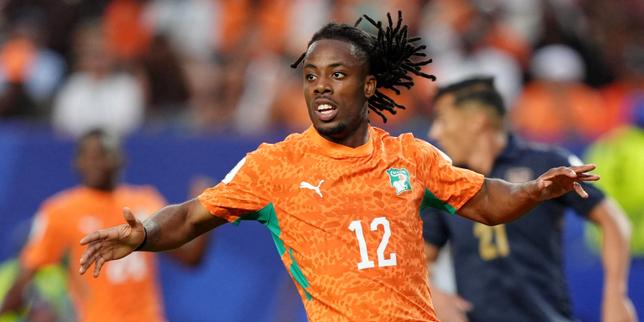
The success of an underdog national team in a major tournament group stage relies on a tight intersection of three variables: physiological adaptation to travel, tactical asymmetry, and the conversion of neutral fan equity into a psychological home-field advantage. South Africa’s arrival in Atlanta ahead of their critical World Cup fixture provides a textbook case study in trying to maximize these levers. The narrative surrounding the team often focuses on the vibrant culture, energy, and musicality of the squad—often encapsulated in the media as "ritmo y sazón." However, relying on emotional momentum without underlying structural efficiency guarantees failure against disciplined opponents.
To secure a first tournament victory, the South African technical team must execute a precise operational strategy that translates cultural cohesion into quantifiable on-pitch performance metrics.
The Physiology of Transatlantic Displacement
The logistical reality of competing in Atlanta after traveling from the southern hemisphere presents an immediate physiological bottleneck. The primary threat to athletic performance is circadian disruption, which directly degrades cognitive processing speed, explosive power output, and soft-tissue recovery rates.
The optimization problem can be broken down into specific variables:
- Time Zone Delta: The shift in circadian rhythms requires a calculated adjustment period. The standard human biological clock adapts at a rate of approximately one day per time zone crossed.
- Microclimate Variance: Transitioning from the South African winter or European club environments to the high humidity and variable summer conditions of Atlanta alters sweat rates and electrolyte depletion profiles.
- Travel Fatigue Cumulative Load: Long-haul flight vectors increase blood pooling in lower extremities and induce mild dehydration due to cabin pressure dynamics.
South Africa's technical staff must counter these factors through a phased acclimation protocol. High-intensity training blocks must be scheduled to match the exact kickoff window in Atlanta time at least four days prior to the match. Hydration strategies cannot be reactive; they must be managed via specific gravity testing of urine samples to ensure cellular hyperhydration before the squad steps onto the pitch. Failing to neutralize this physiological deficit nullifies any tactical adjustments made by the coaching staff.
Tactical Asymmetry and Exploiting the Underdog Status
South Africa enters the match seeking an elusive first World Cup victory, a status that dictates a specific tactical posture. Teams chasing a historic milestone often fall into the trap of over-activating their pressing lines due to emotional volatility, leading to structural disorganization.
To achieve a positive result, South Africa must employ a low-block, high-transition framework that exploits the specific dimensions and surface characteristics of the Atlanta venue.
[Opponent High Attacking Line]
       │
       ▼ (Over-commitment leaves space behind)
[South Africa Midfield Block] ───► Fast Vertical Pass ───► [Explosive Winger Isolation]
The tactical framework rests on two distinct phases:
Controlled Low-Block Defending
Rather than engaging in a high press that drains energy reserves in the humid Atlanta climate, the defensive unit must maintain a compact 4-4-2 or 4-5-1 mid-low block. The distance between the defensive line and the midfield line must not exceed 12 meters. This density denies the opponent space between the lines, forcing them to use wide areas where the touchline acts as an extra defender.
Targeted Vertical Transition
The moment possession is regained, the transition phase must be immediate and vertical. The first pass must bypass the opponent’s counter-press, targeting the space behind the opposing fullbacks. This requires wingers with high acceleration profiles who can isolate defenders in 1v1 situations. The metric of success here is the time from possession winning to a shot attempt, which must remain under 8 seconds.
This approach acknowledges the technical superiority of certain opponents while leveraging South Africa's specific structural advantages: speed on the break and collective defensive discipline.
Quantifying the Fan Equity Factor
The media frequently notes the festive atmosphere that South African teams bring to host cities, characterized by public singing, dancing, and high fan engagement. In a neutral venue like Atlanta, this public presence is not merely a public relations asset; it is a strategic tool for generating synthetic home-field advantage.
Home-field advantage is a measurable phenomenon in professional sports, typically worth an estimated 0.3 to 0.5 goals in goal-differential models. This advantage stems from three distinct mechanisms:
- Slight Referee Bias: Studies consistently demonstrate that crowd noise unconsciously influences officiating decisions, particularly regarding yellow cards and subjective fouls in high-impact zones.
- Elevated Testosterone Profiles: Athletes performing in front of a supportive, highly vocal crowd show higher baseline testosterone levels, correlating with increased pain tolerance and sustained sprint capacity in the final 15 minutes of play.
- Opponent Cognitive Load: Persistent, organized acoustic pressure increases the cognitive load on the opposing team's central communicators, leading to breakdowns in defensive organization during set pieces.
The South African delegation maximizes this by deliberately engaging the local diaspora and neutral Atlanta sports fans. By turning public training sessions and hotel arrivals into highly visible cultural touchpoints, they build an emotional connection with the host city. On matchday, this translates into a partisan stadium atmosphere. For an underdog squad, this acoustic backing serves as a psychological buffer when weathering sustained periods of defensive pressure.
The Strategic Blueprint for Matchday
The path to South Africa's first tournament victory requires a shift from emotional narratives to strict operational execution. The final strategic play does not rely on inspiration, but on the ruthless mitigation of travel fatigue, absolute adherence to a low-block transition model, and the deliberate mobilization of the crowd to pressure the officiating calculus. If the technical staff maintains structural discipline over emotional exuberance, the combination of tactical asymmetry and localized fan support will yield the efficiency needed to secure three points.