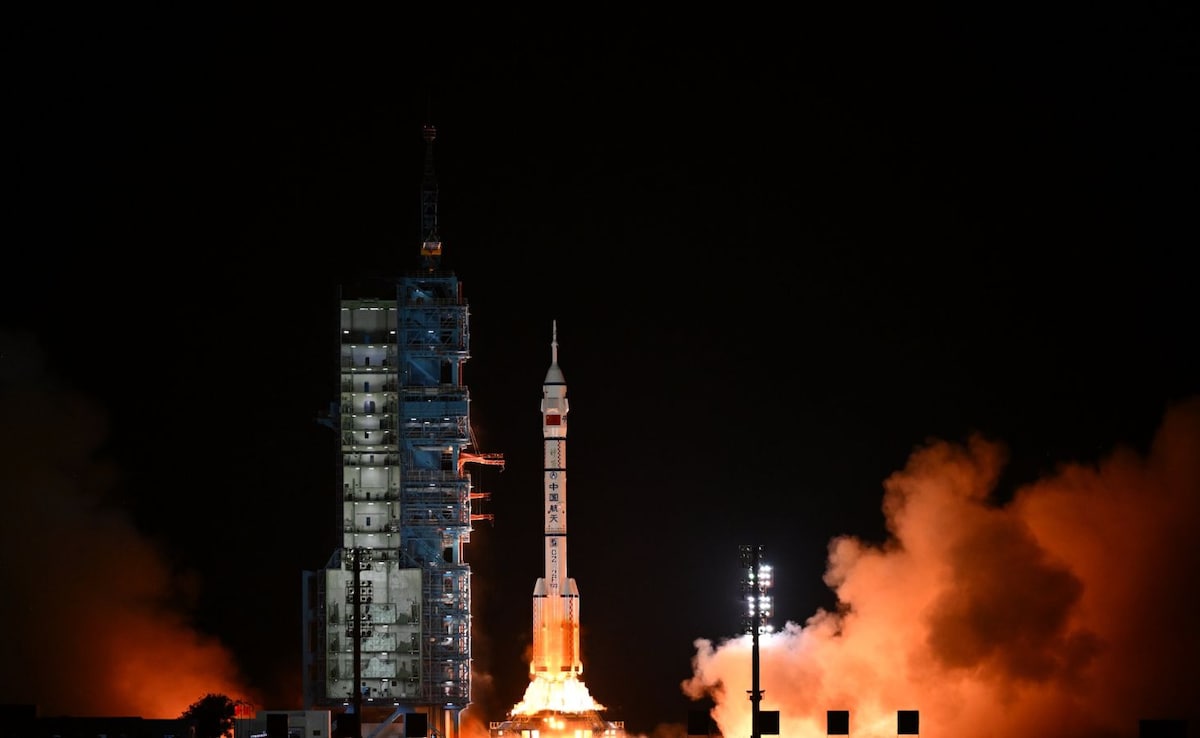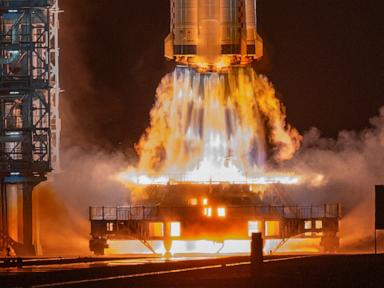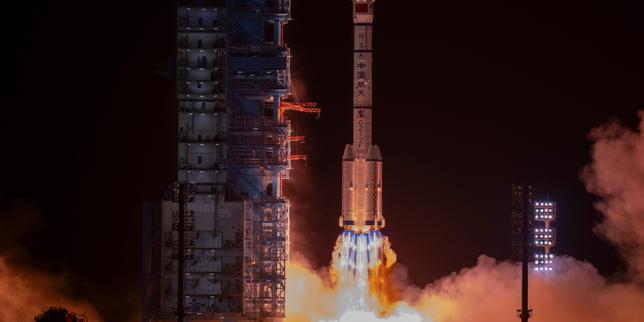
China’s deployment of an astronaut to the Tiangong space station for a continuous 365-day mission represents a structural shift from low Earth orbit (LEO) utilization to deep space operational validation. While general news coverage framing this as a routine endurance milestone captures the human interest element, it completely misses the engineering and physiological calculus. A one-year orbital stay is not an arbitrary endurance record; it is a critical, bounded simulation designed to systematically eliminate risks from the long-duration transit and surface stay profiles of a crewed lunar campaign.
The strategic imperative of this mission rests on a single variable: the mitigation of systemic physiological decay under prolonged microgravity before exposing a crew to the unshielded, high-radiation environment of the lunar surface. By analyzing the mission through the lens of operational endurance, life support loops, and mission architecture, we can map exactly how the Tiangong program serves as the hardware and biological testbed for the upcoming Chang'e crewed lunar landings. Expanding on this theme, you can also read: The Unraveling of the Billion Dollar Reaper Fleet.
The Physiological Cost Function of Deep Space Transit
Human spaceflight to the Moon requires a minimum operational envelope that exceeds the duration of standard LEO rotations when accounting for contingency scenarios, orbital mechanics, and surface operations. To quantify the necessity of a 365-day LEO mission, the physiological degradation of the human organism must be modeled as a function of time spent in a microgravity environment ($t$).
Acceleration of Bone Demineralization and Muscular Atrophy
Under Earth's gravity, osteoblast (bone-building) and osteoclast (bone-resorbing) activities exist in a state of equilibrium. Microgravity disrupts this mechanism, inducing a form of accelerated osteoporosis. Analysts at Engadget have also weighed in on this matter.
- Bone Mineral Density (BMD) Loss: Astronauts lose an average of 1% to 1.5% of their bone mass per month in weightless environments, specifically targeting weight-bearing regions such as the calcaneus, femoral head, and lumbar vertebrae.
- Calcium Shedding: This rapid resorption forces large volumes of calcium into the bloodstream, spikes the risk of nephrolithiasis (kidney stones), and threatens to compromise crew autonomy during high-workload surface operations.
- Skeletal Muscle Atrophy: Without the requirement to maintain posture against a 1G vector, slow-twitch muscle fibers experience rapid denervation and loss of cross-sectional area.
A 365-day continuous stay allows Chinese aerospace medical researchers to establish a precise baseline for the maximum rate of degradation when mitigated by current countermeasures. The Tiangong station serves as a controlled environment to test whether custom-built resistive exercise devices and short-radius centrifuges can arrest this decline before a crew attempts a lunar descent, where they must immediately operate under a 0.166G gravity vector while wearing heavy extravehicular activity (EVA) suits.
Spaceflight-Associated Neuro-Ocular Syndrome (SANS)
One of the most severe bottlenecks in long-duration spaceflight is the upward shifting of cephalic fluids. In 1G, gravity pulls bodily fluids downward; in microgravity, approximately two liters of fluid shift from the lower extremities toward the torso and head.
This fluid redistribution causes a sustained increase in intracranial pressure (ICP). Over a twelve-month period, this chronic pressure induces structural changes in the ocular anatomy, including optic nerve sheath swelling, globe flattening, choroidal folds, and progressive hyperopic shifts (loss of near vision).
By extending the Tiangong mission to a full year, mission planners are evaluating the long-term efficacy of lower-body negative pressure (LBNP) devices. These devices mechanically draw fluids back into the lower limbs for specified periods daily to prevent irreversible vision degradation—a failure mode that would jeopardize a pilot's ability to execute a manual lunar landing.
Closed-Loop Environmental Control and Life Support Systems (ECLSS) Scaling
A crewed lunar mission cannot rely on the rapid, low-energy resupply chains that sustain LEO stations. Every kilogram of water, oxygen, or nitrogen launched from Earth requires an exponential increase in propellant due to the constraints of the rocket equation. Therefore, the Tiangong one-year mission is an operational stress-test of China’s advanced, closed-loop Environmental Control and Life Support Systems (ECLSS).
The Mass-Balance Equation of Life Support
To transition from a logistics-dependent LEO presence to an autonomous lunar framework, the ECLSS must achieve near-total closure of both the oxygen and water loops. The architecture relies on three interconnected subsystems:
- The Sabatier Reactor System: Carbon dioxide ($CO_2$) exhaled by the crew is scrubbed from the cabin atmosphere using amine-based solid sorbents. This collected $CO_2$ is then reacted with hydrogen ($H_2$) at high temperatures ($300^\circ\text{C}$ to $400^\circ\text{C}$) in the presence of a ruthenium catalyst to produce methane ($CH_4$) and water ($H_2O$):
$$\text{CO}_2 + 4\text{H}_2 \rightarrow \text{CH}_4 + 2\text{H}_2\text{O}$$ - Water Electrolysis System: The water generated by the Sabatier reaction, alongside recycled sweat, humidity condensates, and purified urine, is routed into an electrolysis unit. Electrical power generated by Tiangong’s gallium arsenide solar arrays splits the water molecules to regenerate breathable oxygen ($O_2$) and supply the hydrogen required to sustain the Sabatier loop:
$$2\text{H}_2\text{O} \rightarrow 2\text{H}_2 + \text{O}_2$$ - Urine Distillation and Processing: A vapor compression distillation assembly recovers pure water from urine with an efficiency target exceeding 95%.
System Wear and Mechanical Reliability Engineering
Running these chemical reactors continuously for 365 days without catastrophic component failure is the true objective of the long-duration mission. In-situ planetary exploration demands that mechanical pumps, catalytic beds, and filtration membranes survive thousands of duty cycles without requiring replacement parts from Earth.
The year-long mission exposes hidden wear mechanisms, such as microbial biofilm scaling in water recycling lines, catalyst poisoning within the Sabatier reactor, and structural fatigue in high-pressure oxygen compressors. Tracking these degradation rates in LEO enables engineers to redesign hardware margins before locking in the finalized configuration for the Mengzhou crew spacecraft and Lanyue lunar lander.
Structural Comparison of LEO and Lunar Mission Architectures
Understanding why a one-year LEO stay translates to lunar readiness requires comparing the orbital mechanics, logistics, and radiation profiles of the two domains. The table below outlines the operational realities that dictate this developmental pathway.
| Operational Variable | Tiangong LEO Baseline | Crewed Lunar Architecture |
|---|---|---|
| Orbital Altitude | ~380–450 km | ~384,000 km (Translunar Transit / GLO) |
| Abort Profile to Earth | Direct entry: ~1 to 3 hours | Free-return or delta-V burn: 3 to 5 days |
| Radiation Environment | Protected by magnetosphere; Albedo neutrons | Unshielded GCRs; Solar Particle Events (SPE) |
| Resupply Cadence | Tianzhou cargo vessels: Every 6–8 months | None during active mission phases |
| Communication Latency | Near-zero (< 1 second) | 1.3 seconds each way (direct-to-earth) |
The delta between these profiles reveals why the LEO station is utilized as a risk-reduction mechanism. A component failure or health crisis on Tiangong can be resolved with an emergency undocking and landing within hours. The identical failure along a translunar injection trajectory presents a high probability of crew loss. The one-year mission is designed to push systems past their infant mortality phase into predictable, steady-state wear periods while the safety net of Earth's atmosphere is immediately accessible.
Radiation Dose Accumulation Mapping
Earth’s magnetosphere shields low-altitude spacecraft from the worst components of space radiation: Galactic Cosmic Rays (GCRs) and high-energy protons from Solar Particle Events (SPEs). However, inside the Van Allen belts at Tiangong's altitude, astronauts are still subjected to an elevated radiation dose compared to terrestrial baselines, primarily through South Atlantic Anomaly (SAA) passes.
During a 365-day orbit, researchers can map cumulative dosimetric exposure across different biological tissues using anthropomorphic phantoms embedded with active silicon detectors. This long-duration baseline provides the empirical data required to calculate the "Relative Biological Effectiveness" (RBE) of shielding materials.
When a crew leaves LEO for the Moon, they lose the protection of the magnetosphere. The radiation dose profile shifts from micro-Sieverts per day to potentially lethal milli-Sieverts per hour during severe solar flares.
By measuring how a human body processes a full year of LEO-level radiation, Chinese biomedical analysts can extrapolate the total permissible days a crew can spend in deep space before hitting career dose limits, directly influencing the layout of heavy hydrogenous shielding (such as polyethylene plates and water walls) inside the crew quarters of the lunar transit vehicle.
Operational Sequencing of the Lunar Transition
The integration of long-duration LEO experience into the tactical execution of a lunar landing follows a strict engineering sequence. Rather than treating the one-year mission as a standalone milestone, it must be viewed as the first phase in a three-step operational pipeline.
[Phase 1: LEO Endurance & ECLSS Stress-Test (Tiangong)]
                         │
                         ▼
[Phase 2: High-Thrust Injection & Automated Rendezvous Validation]
                         │
                         ▼
[Phase 3: Surface Descent, Nominal 0.166G Ops, and Autonomous Ascent]
Phase 1: Environmental Isolation and Psychology
The isolation of a 365-day mission tests the psychological resilience of the crew under sensory deprivation and delayed or scheduled communication regimes. This phase establishes the crew-to-ground hierarchy necessary when direct, real-time mission control intervention becomes constrained by distance and geometry.
Phase 2: Orbital Insertion and Vehicle Integration
The data gathered regarding life-support durability and astronaut physical preservation feeds directly into the manufacturing of the lunar stack. Systems validated during the one-year Tiangong run are transferred structurally into the larger hull designs intended for deep space transit, ensuring that internal atmospheric baselines remain identical.
Phase 3: The Surface Abort Bottleneck
The ultimate test of the one-year mission's success occurs during the final minutes of a lunar descent. If the countermeasures tested on Tiangong fail to maintain optimal neurological and cardiovascular function, the crew will experience orthostatic intolerance during the sudden re-imposition of gravity on the lunar surface.
This would manifest as a sudden drop in blood pressure, dizziness, and reduced motor control precisely when the commander must monitor the lander's automated hazard avoidance systems or take manual control to avoid boulder fields.
Strategic Trajectory
The execution of a 365-day orbital flight on Tiangong signals that China’s lunar timeline has moved out of the theoretical design phase and into systemic verification. This mission acts as a forcing function, requiring the aerospace industrial base to deliver life support systems, radiation modeling, and physiological countermeasures capable of surviving long-term deployment.
The long-duration mission indicates that the forthcoming lunar architecture will not follow the short-stay footprint of historical early exploration. Instead, by locking in an ECLSS capable of sustaining humans for a continuous year, the infrastructure is optimized from the beginning for extended orbital staging around the Moon and long-duration presence at a lunar south pole surface base. The operational focus now turns to parsing the telemetry from this one-year stay to adjust the mass margins and structural shielding thickness of the flight-ready lunar hardware.