The sharp deceleration in Chinese export growth during the opening month of the Iran War is not an isolated statistical anomaly, but the first measurable manifestation of a fundamental shift in global trade physics. When a primary energy-producing region enters an active kinetic conflict, the impact on a manufacturing-heavy economy like China’s functions through three distinct transmission mechanisms: logistical risk premiums, currency volatility, and the "Wait-and-See" procurement cycle. The traditional model of predicting trade flows via simple demand-supply curves fails here because it ignores the sudden imposition of physical and financial friction.
The Triad of Trade Friction
To understand why a regional war in the Middle East translates into a cooling of Chinese factory gates, one must analyze the specific variables currently depressing the outbound volume of goods.
1. The Logistical Risk Premium
Ocean freight remains the lifeblood of Chinese exports. The escalation of hostilities in the Persian Gulf and surrounding maritime chokes points instantly alters the cost-benefit analysis for shipping conglomerates.
- Insurance Escalation: War risk premiums are not static. They are calculated based on the proximity of assets to active combat zones. As these premiums surge, the "landed cost" of Chinese goods in Europe and Africa—major destinations served via the Suez Canal—becomes uncompetitive.
- Reroute Inefficiency: Forcing vessels around the Cape of Good Hope adds roughly 10 to 14 days to a standard transit. This delay effectively reduces the global shipping capacity by tying up hulls for longer durations, creating an artificial shortage of containers in Chinese ports like Ningbo-Zhoushan and Shanghai.
- Fuel Surcharge Spikes: Since China is a net importer of crude, the spike in Brent prices directly inflates the Bunker Adjustment Factor (BAF) applied by carriers.
2. Geopolitical Hedging and the Procurement Cycle
Professional buyers in the West do not respond to war with panic; they respond with a freeze. The "Wait-and-See" cycle occurs when the uncertainty of future delivery dates outweighs the immediate need for inventory.
The sudden drop in growth suggests that European and North American importers began "front-loading" orders in the months leading up to the conflict, expecting disruption. Now that the disruption has materialized, they are drawing down existing inventories rather than placing new orders at inflated freight rates. This creates a "bullwhip effect" where a 5% drop in consumer demand can lead to a 20% drop in manufacturing orders as the supply chain attempts to normalize.
3. Energy-Intensity of the Export Basket
China’s export growth is heavily weighted toward energy-intensive goods, including processed metals, chemicals, and machinery. The Iran War creates a dual-pressure system on these sectors.
- Input Inflation: As the price of electricity and raw materials rises within China due to global energy parity, the profit margins for exporters are squeezed.
- Export Parity Price: If the cost to produce and ship a ton of steel from Tangshan exceeds the cost of local production in the destination market due to energy-driven freight hikes, the trade flow stops entirely.
The Structural Breakdown of the Slowdown
Data from the first thirty days of conflict indicates that the slowdown is not uniform across all product categories. The contraction follows a specific hierarchy of sensitivity.
Consumer Electronics vs. Industrial Components
High-value, low-volume goods like smartphones and semiconductors have shown more resilience. Their high value-to-weight ratio allows them to absorb increased shipping costs or even pivot to air freight. Conversely, low-margin, high-volume goods—furniture, basic textiles, and heavy machinery—have seen the most significant deceleration.
The mechanism here is the FOB (Free on Board) vs. CIF (Cost, Insurance, and Freight) pricing structure. In a CIF contract, the Chinese exporter bears the risk of rising shipping costs. In an environment of volatile war-risk premiums, many Chinese firms are refusing to sign CIF contracts, while foreign buyers are unwilling to take on the risk of FOB. This "contractual stalemate" accounts for a substantial portion of the missing export volume.
The Role of the Renminbi
War-induced volatility typically leads to a flight to quality. While the Renminbi (RMB) has sought to position itself as a stable alternative, the initial phase of the Iran War saw a strengthening of the US Dollar.
A stronger dollar makes Chinese goods cheaper in nominal terms for US buyers, but this benefit is currently being negated by the increase in global shipping costs. For the rest of the world—markets where the local currency is weakening against both the USD and the RMB—Chinese goods are actually becoming more expensive. This "relative price hike" in emerging markets like Brazil, India, and Southeast Asia is a critical, yet often overlooked, factor in the export slowdown.
Regional Divergence in Trade Volume
The geographic distribution of the slowdown reveals the specific impact of the Iran War on the "Belt and Road" corridors.
- The European Corridor: Exports to the EU have taken the hardest hit. The Suez Canal is the primary artery for this trade. The threat of kinetic engagement in the Red Sea has effectively placed a tax on every container moving from East to West.
- The ASEAN Buffer: Trade with Southeast Asia remains relatively robust. This is due to shorter, more protected maritime routes and the continued integration of regional supply chains. China is increasingly using ASEAN countries as a transshipment point to mask the origin of goods and mitigate some geopolitical risks, though this provides only a marginal buffer against a global slowdown.
- The Middle Eastern Vacuum: Paradoxically, while energy imports from the region are high-risk, China's exports to the Middle East have cratered as regional economies pivot their capital toward military expenditures and domestic stability rather than infrastructure and consumer goods.
Limitations of the Current Data
It is vital to distinguish between a permanent loss of trade and a temporary deferment. Current metrics capture "Clearance from Port," which is a lagging indicator of orders placed 60 to 90 days ago. The "sharp slow down" we see today is likely the result of orders canceled or delayed at the very onset of regional tensions.
However, if the kinetic phase of the Iran War extends beyond a single quarter, we will witness a structural "de-risking" where importers permanently shift sourcing to the Western Hemisphere (Mexico, Brazil) to avoid the Eurasian maritime bottlenecks. This is not just a dip in a graph; it is a potential catalyst for accelerated near-shoring.
Strategic Realignment for the Remainder of the Fiscal Year
The Chinese manufacturing sector is currently facing a choice between two survival strategies.
The Margin Compression Strategy
Larger state-owned enterprises (SOEs) are likely to absorb the increased costs of energy and logistics to maintain market share. They will keep factory utilization rates high, betting that the conflict will be short-lived. This will result in a temporary drop in corporate earnings but will prevent a mass exodus of customers.
The Value-Chain Pivot
Smaller, private-sector exporters cannot afford margin compression. They are forced to raise prices, which inevitably leads to the volume contraction observed in the recent data. For these entities, the only path forward is a rapid pivot toward higher-value goods where the shipping cost is a negligible percentage of the total price.
The immediate priority for analysts is to monitor the Baltic Dry Index and the Shanghai Containerized Freight Index in relation to the Brent Crude spot price. If the ratio of freight cost to cargo value remains above the 15% threshold for more than 60 days, the "slowdown" in Chinese exports will transition from a cyclical dip into a structural decline.
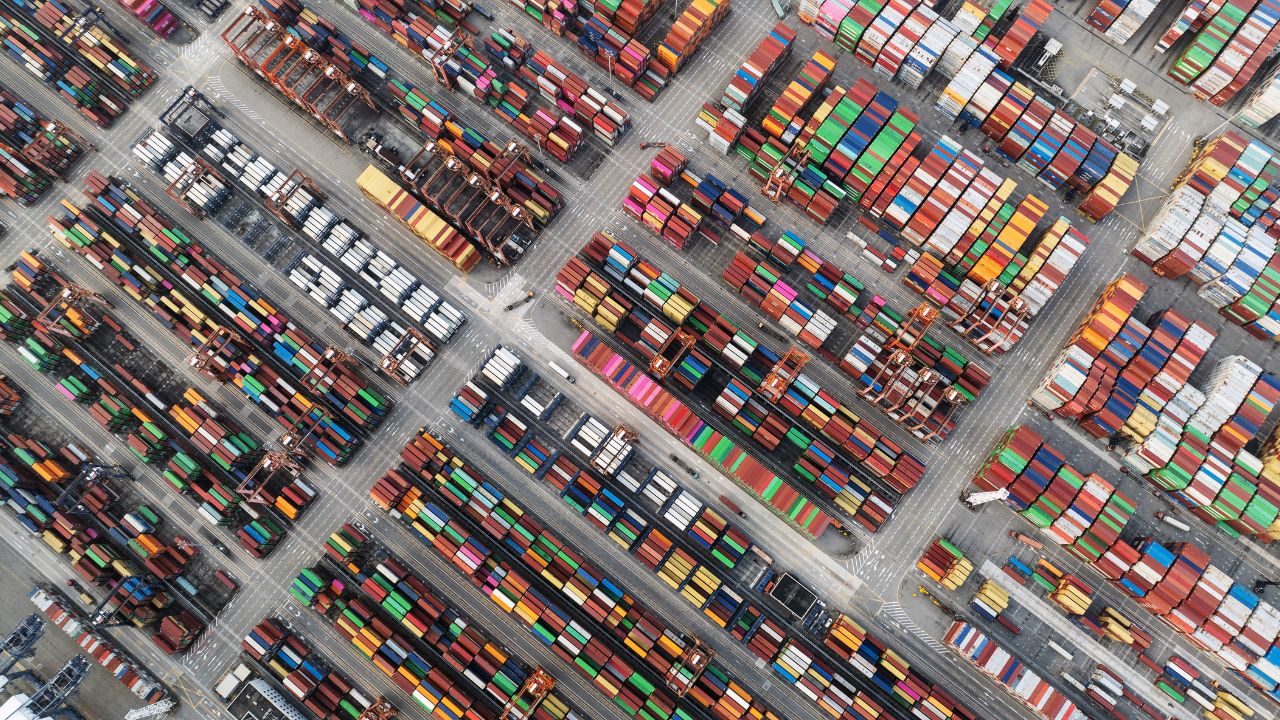
The strategic play for global observers is to watch the "empty container" count at major Chinese hubs. A buildup of empty units signals that the outbound flow has hit a hard ceiling, regardless of what the official manufacturing PMIs suggest. The friction is no longer in the factories; it is in the water.
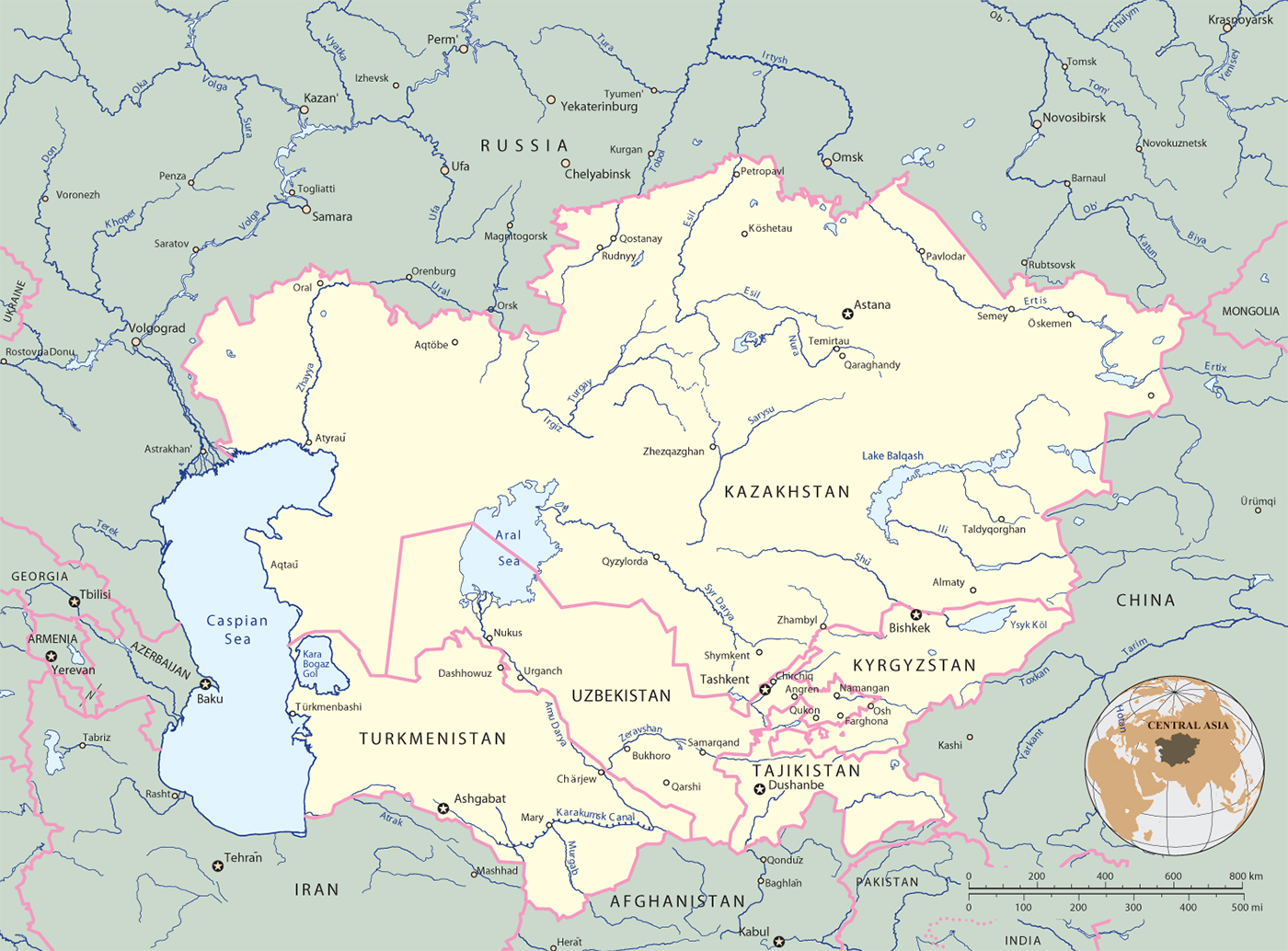
The second half of the year depends entirely on whether China can leverage its "Land Bridge" rail alternatives through Central Asia. While rail capacity is currently less than 5% of sea volume, a massive state-led surge in rail subsidies could bypass the Persian Gulf bottleneck, providing a high-cost but reliable "safety valve" for critical exports. Those who track the tonnage moving via the China-Europe Railway Express will have the most accurate lead indicator for the recovery, or further decay, of Chinese export dominance.