The ink on the Mecca Joint Defence Agreement is barely dry, and the commentariat is already hyperventilating. Headlines across international media breathlessly frame the trilateral pact between Saudi Arabia, Turkey, and Pakistan as an Islamic NATO, a seismic shift in regional security, and an ironclad shield designed to obliterate Houthi missile threats and check Iranian influence.
It is none of those things. If you found value in this article, you might want to look at: this related article.
This alliance is a classic exercise in diplomatic window dressing, designed to project strength where profound vulnerability exists. When analysts look at Pakistani soldiers and Turkish military hardware deploying to the Kingdom, they see an unstoppable deterrent. I see three sovereign states with radically incompatible foreign policies, strapped for cash, hedging their bets against an American security umbrella that is rapidly fraying.
To understand why this pact will fail to deter anyone who matters, you have to strip away the grand rhetoric coming out of Riyadh, Ankara, and Islamabad and look at the cold, hard operational math. For another angle on this event, refer to the latest coverage from Associated Press.
The Myth Of Collective Security Without Collective Risk
The foundational premise of the Mecca Pact mimics Article 5: an attack on one is an attack on all. It sounds heavy. It sounds serious. But let us look at the actual commitments being made on the ground.
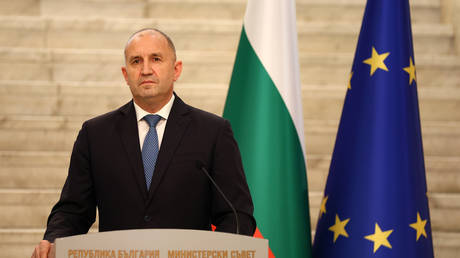
Turkish Defense Minister Yasar Guler has publicly and explicitly ruled out Turkish troops engaging in frontline combat against the Houthis. Pakistan has repeatedly stressed that its deployments are strictly defensive, aimed at protecting infrastructure and training, while domestic analysts openly warn Islamabad to draw hard red lines to prevent its forces from getting dragged into offensive ground operations in Yemen.
Let that sink in. The primary military heavyweights of this new "collective defence" alliance have already explicitly negotiated their way out of the actual fighting.
This is not deterrence by punishment. At best, it is a localized deterrence by denial using secondhand logistics, intelligence sharing, and electronic warfare support. The Houthis do not care if Pakistani officers are running a secretariat in Riyadh or if Turkish generals are inspecting bases. When ballistic missiles and explosive drones are inbound toward Saudi Aramco facilities, administrative committees and mutual defense paperwork intercept nothing.
The Geopolitical Schisms No Treaty Can Hide
An alliance is only as strong as the shared threat perception of its members. On paper, Riyadh, Ankara, and Islamabad share a Sunni-majority identity and a mutual anxiety over regional instability. In reality, their strategic orbits are dangerously misaligned.
Pakistan shares a porous, volatile border with Iran. Islamabad's domestic stability relies heavily on managing a massive domestic Shia population and maintaining a delicate diplomatic tightrope between Tehran and Riyadh. When push comes to shove, Pakistan cannot afford an open, active war with Iran or its regional proxies without risking internal sectarian fracture. That is precisely why Pakistani policymakers spent the early months of these crises playing intermediary roles rather than preparing for offensive deployments.
Turkey, meanwhile, plays a double game that leaves Gulf capitals perpetually nervous. Ankara maintains complex, transactional relations with Tehran, navigates its own domestic economic pressures, and balances its NATO commitments with unilateral adventures across Syria and the Caucasus. Expecting Turkish President Recep Tayyip Erdogan to commit blood and treasure to secure Saudi oil fields against a resilient, asymmetric actor like the Houthis ignores every lesson of modern Turkish foreign policy. Ankara sells hardware—such as Bayraktar drones—it does not bleed for other monarchies.
Saudi Arabia is left funding a coalition where its partners want the economic and diplomatic benefits of a security pact without the body bags.
The Houthi Calculus Will Not Change
The architects of the Mecca Pact believe that stacking three powerful militaries onto a single ledger will psychologically cow the Houthi movement and its backers in Tehran. This bet fundamentally misunderstands who they are fighting.
The Houthis have spent years fighting a Saudi-led coalition armed with advanced Western weaponry, multi-billion-dollar air defense networks, and overwhelming air superiority. They emerged from that meat grinder more entrenched, more technologically sophisticated, and more politically confident than ever. A defensive pact involving Islamabad and Ankara does not alter the asymmetric reality of drone warfare. A cheap delta-wing drone launched from Yemeni highlands costs a fraction of the Patriot interceptor required to blow it out of the sky.
When government forces pull back from coastal strongholds and Houthi units edge closer to strategic positions near Aden, paper agreements signed in opulent summits do not halt territorial momentum.
The Real Agenda: Hedging Against Washington
Why sign a treaty everyone knows has sharp teeth only on paper? Because this alliance is not actually about the Houthis.
It is an insurance policy against the United States.
With Washington showing deep exhaustion regarding Middle Eastern "forever wars" and shifting its strategic gaze toward great power competition elsewhere, Gulf states can no longer sleep soundly assuming US carriers will automatically rush to defend their airspace. Riyadh is diversifying its security portfolio. By tying Turkey and Pakistan into a multilateral framework, Saudi Crown Prince Mohammed bin Salman is creating a redundant security architecture—a coalition of the willing that can provide political legitimacy and non-combat muscle when Washington blinks.
For Pakistan, the pact is a lifeline to secure vital financial support, oil credits, and economic packages to stave off chronic bankruptcy, traded against the token deployment of military advisors. For Turkey, it is an instrument to project defense-industrial influence and cement Ankara as an indispensable security provider from the Gulf to South Asia.
Everyone is getting what they want out of the deal. None of them are getting the one thing they claim to be buying: actual deterrence against a determined asymmetric foe.
Stop calling it an Islamic NATO. Stop pretending a secretariat in Riyadh changes the balance of power in Yemen. It is a mutual survival pact for regimes terrified of abandonment, wrapped in the comforting illusion of collective might.
When the next wave of drones hits critical infrastructure, the signatories will not invoke Article 5. They will call a committee meeting.