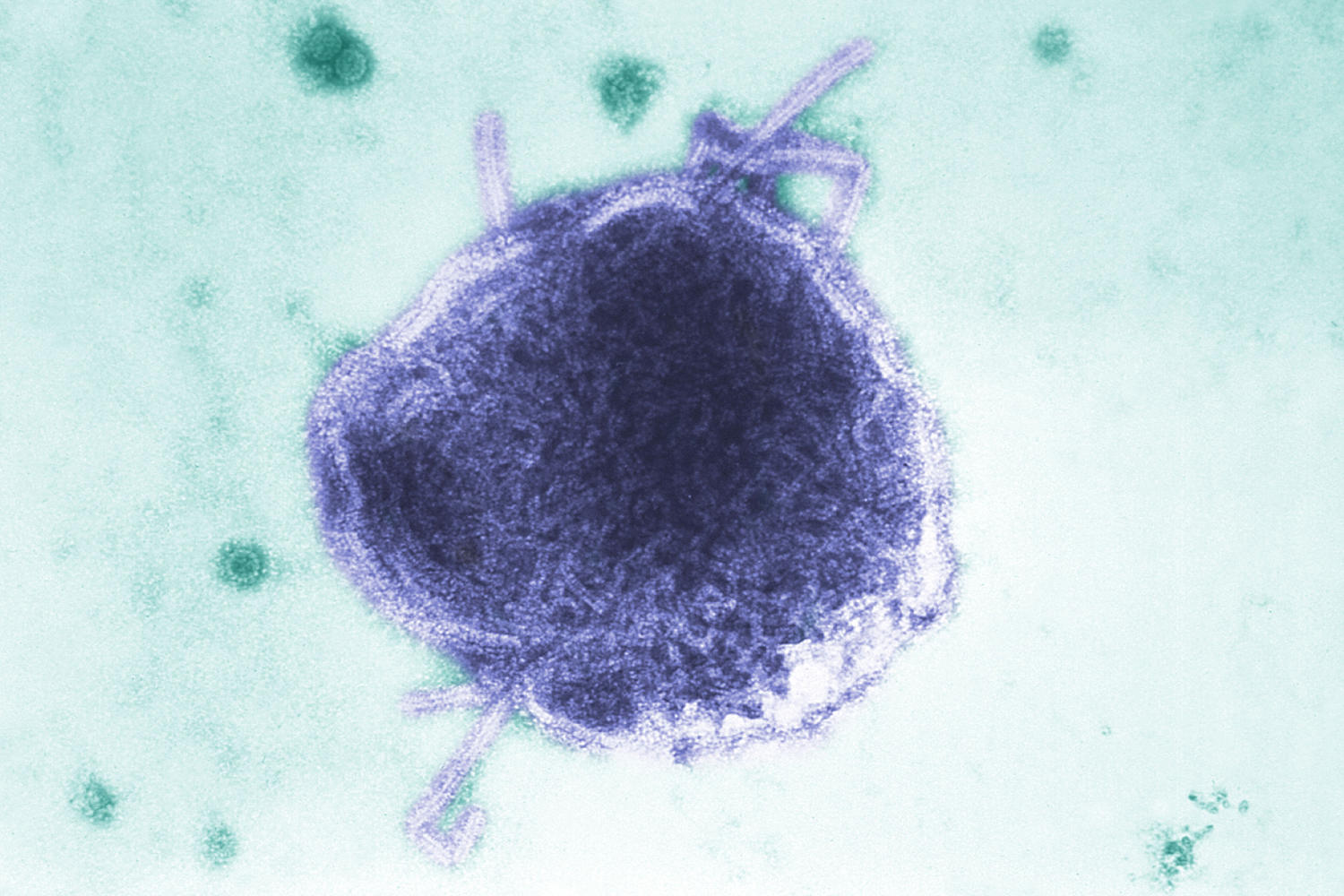
The recent reporting of fatal measles cases in Pennsylvania exposes a critical vulnerability in public health infrastructure: the degradation of population-level immunological thresholds. When a vaccine-preventable disease results in mortality, the failure is rarely isolated to clinical treatment protocols. Instead, it reflects systemic erosion in epidemiological defenses, spatial clustering of vaccine hesitancy, and the rapid degradation of herd immunity coefficients. Understanding this breakdown requires moving past emotional commentary and examining the mathematical, biological, and logistical variables governing measles transmission dynamics.
The Transmission Mechanics and the R Nought Threshold
Measles remains one of the most contagious pathogens known to medical science. Its transmission potential is defined by the basic reproduction number, commonly designated as R0. This metric represents the average number of secondary infections generated by a single infected individual in a completely susceptible population. For measles, the R0 ranges from 12 to 18.
This hyper-infectious baseline creates severe operational constraints for public health containment. To achieve herd immunity and protect non-eligible populations—such as infants too young for the first dose of the measles, mumps, and rubella vaccine and immunocompromised individuals—population immunity must exceed the threshold dictated by the formula:
$$Critical Immunity Threshold = 1 - (1 / R_0)$$
With an R0 of 15, the required population immunity is approximately 93% to 95%. When vaccination coverage dips even a few percentage points below this threshold within localized geographic pockets, the virus encounters a continuous chain of susceptible hosts. The Pennsylvania cases underscore what happens when local immunization rates drop below this critical dampening coefficient. The virus bypasses scattered individual resisters and exploits high-density networks of non-vaccinated clusters, turning a theoretical vulnerability into acute clinical mortality.
The Cost Function of Vaccine Hesitancy
Public health systems operate on high fixed costs and low marginal tolerances. Herd immunity is a classic public good exhibiting non-excludability and non-rivalry. When individuals opt out of immunization, they free-ride on the collective protection generated by the vaccinated majority while imposing a massive externalized risk on vulnerable cohorts.
The cost function of this behavior is nonlinear. As vaccination rates decline linearly from 95% to 90%, the risk of outbreaks increases exponentially, not additively. This non-linear explosion stems from network topology. Human social structures are scale-free networks characterized by highly connected hubs—schools, daycare facilities, and community centers. When a pathogen enters a network where clustering coefficients of unvaccinated individuals exceed a critical limit, superspreading events occur with near-certainty.
Clinicians managing the recent Pennsylvania cases faced the downstream economic and human costs of this network failure. Treating acute measles complications, including subacute sclerosing panencephalitis, viral pneumonia, and acute encephalitis, demands intensive care resources. The economic burden shifts immediately from preventative primary care to high-cost acute tertiary intervention, demonstrating that lower upfront investments in vaccine compliance yield catastrophic downstream expenditures in morbidity and mortality.
Epidemiological Surveillance Gaps and Clinical Blind Spots
A major factor in fatal measles outcomes is the lag time between symptom onset and clinical confirmation. Because measles has become rare in many developed regions due to historical vaccination success, modern clinicians outside of pediatric infectious disease specialties frequently fail to recognize early prodromal symptoms.
The initial presentation—high fever, cough, coryza, and conjunctivitis—mimics numerous common viral infections. The hallmark maculopapular rash does not appear until days after infectiousness begins. This diagnostic delay creates a window where nosocomial transmission occurs unchecked within emergency departments and waiting rooms, exposing vulnerable infants before isolation protocols can be enforced.
To mitigate this operational risk, healthcare delivery systems must deploy algorithmic triage protocols. Frontline intake staff must screen for travel history and immunization status at the first sign of febrile illness accompanied by respiratory symptoms, bypassing standard queue logic to achieve immediate negative-pressure isolation.
The Pediatric Vulnerability Window
Infants occupy a precarious position in epidemiological models. Maternal antibodies provide passive immunity during the first months of life, but this protection wanes predictably, often leaving infants susceptible before they reach the routine vaccination age of twelve to fifteen months.
When community transmission rates rise, the duration of vulnerability for this cohort expands. If ambient viral circulation is low, an infant is unlikely to encounter the pathogen before receiving the vaccine. If community circulation spikes due to falling herd immunity, the probability of exposure during the vulnerable window approaches certainty. The infant mortality reported in Pennsylvania is the direct statistical outcome of this shifted probability distribution.
Strategic Operational Intervention for Public Health Systems
Halting the resurgence of preventable viral mortality requires a shift from passive immunization tracking to active, geospatial risk mitigation. Public health agencies must abandon broad, generalized awareness campaigns and implement targeted interventions based on micro-neighborhood vaccination registries.
- Micro-Geographic Surveillance: Deploy real-time spatial analytics to identify zip codes and community clusters where kindergarten exemption rates exceed 5%.
- Ring Vaccination Protocols: Treat measles exposure with the same urgency as smallpox containment, utilizing post-exposure prophylaxis via the MMR vaccine within seventy-two hours of exposure and immune globulin for vulnerable infants within six days.
- Primary Care Integration: Incentivize pediatric practices to systematically close immunization gaps during every patient encounter, treating missed doses as critical safety anomalies rather than routine scheduling delays.
The containment of measles mortality does not depend on novel pharmaceutical breakthroughs. The tools exist and have proven efficacy. Preventing future fatalities requires treating immunization compliance as an essential component of national security and critical infrastructure defense, enforcing rigorous accountability across institutional and geographic boundaries.


