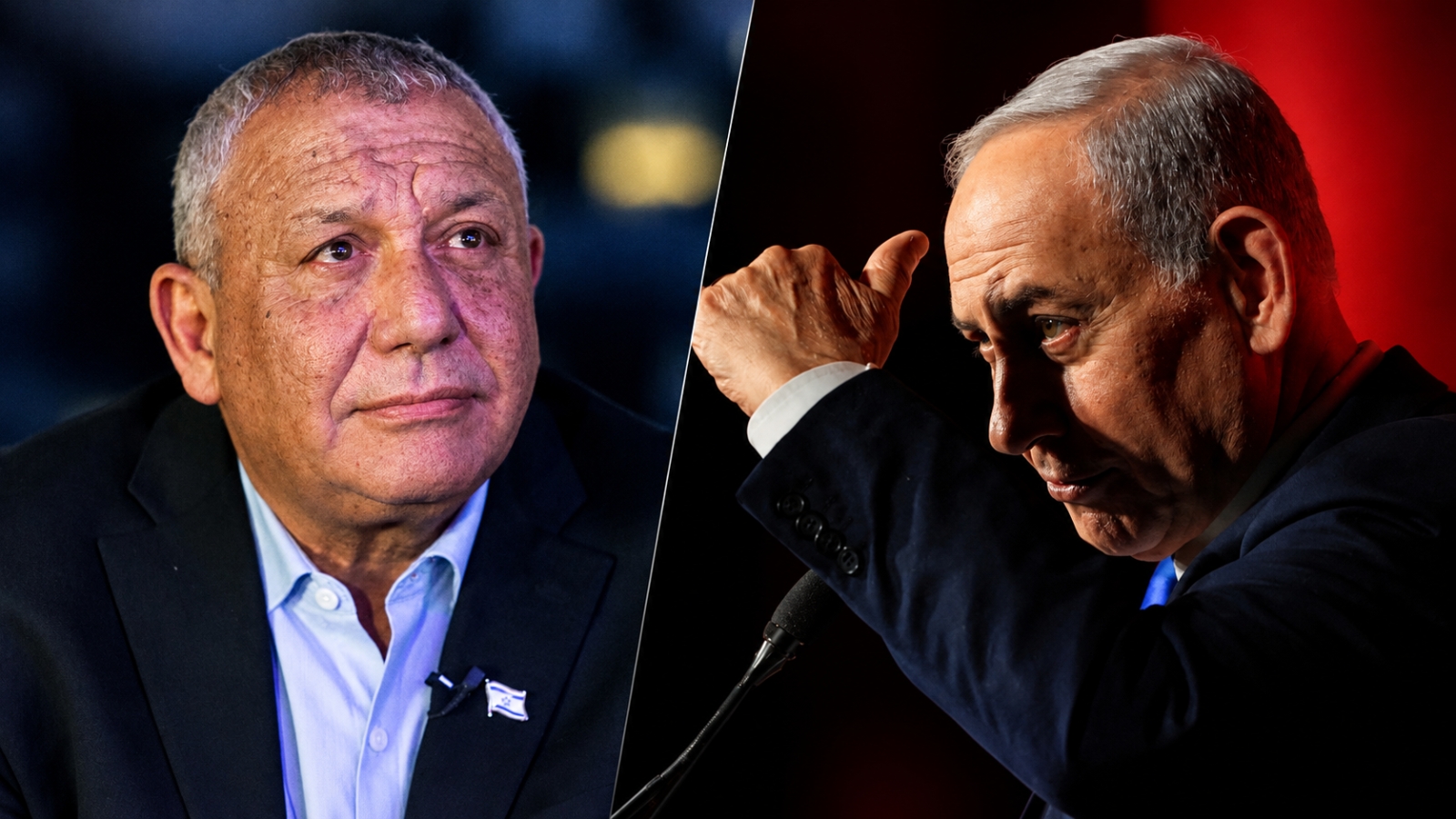
The October 27, 2026, legislative election for Israel's 26th Knesset did not produce a governing majority; it engineered a structural veto trap. While Benjamin Netanyahu's outgoing coalition lost 11 seats—dropping to 53 mandates—and Gadi Eisenkot's opposition bloc captured 48 Jewish-majority seats alongside 19 Arab-party seats, neither leader possesses an unencumbered path to the 61-seat threshold required to govern. Standard political commentary treats this outcome as a temporary negotiation bottleneck between two rival personalities. In reality, the 2026 election results represent a rigid mathematical deadlock governed by incompatible policy constraints, spatial voting theory, and asymmetric survival incentives.
To understand why the 26th Knesset cannot easily assemble 61 mandates, one must strip away campaign rhetoric and examine the mechanics of Israel's closed-list proportional representation system. Every potential coalition path requires at least one major faction to violate a core existential commitment—a move that would trigger immediate party fragmentation or voter defection in a subsequent election.
The Seat Distribution and the Mechanics of Wasted Votes
Israel operates as a single nationwide constituency where 120 Knesset seats are distributed proportionally among lists crossing a 3.25% electoral threshold. In the October 27 vote, turnout surged to 77.98%, a 7.35 percentage-point increase over the previous cycle. High turnout compresses the vote share of micro-parties, raising the raw vote floor needed to clear the 3.25% barrier. Over 300,000 ballots were cast for lists that failed to cross this threshold—including Yoaz Hendel's Reservists Party and Ofer Winter's Amcha Israel. Under the Bader-Ofer method of remainder allocation, those discarded votes were redistributed proportionally among the 11 surviving factions, artificially inflating the seat counts of the largest lists.
The certified distribution of the 120 seats divides cleanly into three non-overlapping blocs:
- The Incumbent Right-Religious Bloc (53 Seats): Likud leads with 27 seats (down 9 from 2022), followed by Otzma Yehudit (7), United Torah Judaism (7), Shas (6, down 5), and the Religious Zionist Party-Zehut joint list (6).
- The Zionist Opposition Bloc (48 Seats): Gadi Eisenkot's new party, Yashar, emerged as the primary challenger with 21 seats. It is flanked by Naftali Bennett's Together (12), Yair Golan's Democrats (8), and Avigdor Lieberman's Yisrael Beiteinu (7).
- The Arab-Majority Bloc (19 Seats): Driven by exceptional turnout in Arab municipalities, the reunited Joint List (Hadash, Ta'al, and Balad) secured 11 seats, while Mansour Abbas's Ra'am captured 8.
This 53–48–19 split creates an immediate structural asymmetry. No single bloc can govern alone, and any two-bloc combination requires bridging an ideological chasm that the 2026 campaign specifically hardened.
The Four Coalition Pathways and Their Structural Veto Points
Applying coalition formation theory—specifically Riker's size principle, which posits that political actors seek minimum winning coalitions to maximize per-capita payoffs—reveals why standard bargaining fails in the 26th Knesset. A minimum winning coalition of 61 to 67 seats is mathematically available through four distinct configurations, yet each contains a built-in self-destruct mechanism.
1. The Opposition Plus Arab-Party Configuration (67 Seats)
On paper, Gadi Eisenkot holds the clearest numerical advantage. Following President Isaac Herzog's consultations, 67 incoming Knesset members recommended Eisenkot for the mandate to form a government, compared to 46 for Netanyahu. Combining the 48 seats of the Zionist opposition with the 19 seats of the Joint List and Ra'am yields a 67-seat majority. Even excluding the Joint List and relying solely on Ra'am's 8 seats leaves Eisenkot at 56 seats—five short of a majority, forcing him to govern as a minority administration dependent on external parliamentary abstentions.
The Veto Mechanism: Right-wing elements within the Zionist opposition—specifically Bennett's Together (12 seats) and Lieberman's Yisrael Beiteinu (7 seats)—ran explicitly against dependence on non-Zionist parties. While Ra'am participated in the 2021–2022 Bennett-Lapid government, the post-October 7 security environment altered the domestic political calculus. Incorporating the Joint List (which includes the nationalist Balad faction) into a formal coalition would trigger immediate defections from Bennett and Lieberman's right-flank lawmakers, collapsing the 67-seat arithmetic before the government could pass a state budget. Conversely, attempting to govern as a 56-seat minority cabinet—an option Yashar officials threatened to bring to a Knesset vote before the December 6 mandate deadline—leaves the executive branch vulnerable to daily legislative paralysis. Every controversial security or budget bill would require ad-hoc deals with the Joint List, handing Netanyahu's opposition an effortless narrative to attack Eisenkot's legitimacy among center-right voters.
2. The Haredi Defection Model (61 to 66 Seats)
To bypass the Arab parties entirely, Eisenkot must peel away the ultra-Orthodox (Haredi) factions—United Torah Judaism (7 seats) and Shas (6 seats)—from Netanyahu's orbit. Adding all 13 Haredi seats to the 48 Zionist opposition seats yields an exact 61-seat Jewish-majority coalition.
The Veto Mechanism: This pathway crashes directly into the single most volatile domestic issue of the 2026 campaign: mandatory military conscription. Following the manpower strains of the multi-front war that began in October 2023, Eisenkot, Bennett, and Lieberman campaigned on universal national service and the termination of blanket yeshiva draft exemptions. United Torah Judaism briefly exited Netanyahu's previous coalition in 2025 over delays in passing a statutory draft exemption law, signaling friction within the right-religious camp. However, Haredi leadership views the Zionist opposition's conscription demands as an existential threat to their community's autonomous way of life. While UTJ declined to block Eisenkot from receiving the initial mandate, Shas leader Aryeh Deri explicitly ruled out joining an opposition government without Likud. Without Shas's 6 seats, UTJ's 7 seats bring the opposition to only 55—still six mandates short of 61.
3. Incumbent Expansion via Individual Defections (61 Seats)
Netanyahu's bloc sits at 53 seats, requiring eight additional mandates to restore a right-religious majority. Because no entire opposition party will join a coalition alongside Itamar Ben-Gvir's Otzma Yehudit and Bezalel Smotrich's Religious Zionist Party, Likud's only route to 61 runs through poaching individual lawmakers from Bennett's Together or Lieberman's Yisrael Beiteinu.
The Veto Mechanism: Israeli parliamentary law imposes severe institutional penalties on Knesset members who defect from their faction without splitting at least one-third of the party's seats. A rogue lawmaker declared a "defector" is barred from running on any existing party list in the next election and cannot be appointed as a minister or deputy minister in the sitting government. To bypass this constraint, Netanyahu would need to engineer a coordinated split of at least four members from Bennett's 12-seat faction simultaneously. Even if personal incentives were offered, any former opposition lawmaker joining Netanyahu's coalition would immediately inherit the Haredi conscription crisis—the exact issue that drove their voters away from Likud in the first place.
4. The National Unity or Rotation Government (61 to 82 Seats)
A grand coalition uniting Likud (27) and Yashar (21), supplemented by either the Haredi parties (13) or moderate opposition factions like Together (12), easily clears 61 seats while neutralizing both the far-right and the Arab lists. Netanyahu publicly called for a "responsible unity" government without Arab parties in mid-November 2026, framing the move as a national security imperative.
The Veto Mechanism: Principal-agent misalignment renders a Netanyahu-Eisenkot partnership structurally unworkable. Eisenkot's entire political brand rests on institutional accountability—specifically establishing a state commission of inquiry into the October 7 intelligence and operational failures, restoring judicial independence, and enforcing term limits. For Netanyahu, now 77 and facing ongoing corruption proceedings alongside international legal pressures, ceding the premiership or allowing an independent state inquiry represents an unacceptable personal and political risk. Because neither leader can trust the other to honor a rotational power-sharing agreement—a lesson seared into Israeli politics after the collapse of the 2020 Netanyahu-Gantz rotation deal—negotiations over who serves first become a zero-sum stalemate.
Asymmetric Payoff Matrices: Why Stalemate Favors the Incumbent
A critical error in surface-level election analysis is assuming both Netanyahu and Eisenkot share the same cost function for negotiation failure. Under Israel's Basic Law: The Government, if Eisenkot fails to form a government within his 28-day window (plus a possible 14-day presidential extension), the mandate passes to Netanyahu or directly to a 21-day Knesset plenary period. If all avenues fail, the 26th Knesset automatically dissolves, triggering new elections roughly 90 days later—likely in early 2027.
Throughout this entire caretaker period, Benjamin Netanyahu remains Prime Minister with full executive authority.
This creates an asymmetric payoff matrix:
- Netanyahu's Dominant Strategy is Obstruction: Every month of parliamentary deadlock extends Netanyahu's tenure without requiring him to pass a new budget or resolve the Haredi draft law. By framing any potential Eisenkot government as illegitimate due to its reliance on Arab-party votes—a narrative reinforced by Likud's aggressive post-election scrutiny of Arab polling stations—Netanyahu increases the political cost for Bennett and Lieberman to compromise. If the Knesset dissolves for a spring 2027 election, Netanyahu enters the campaign from the Prime Minister's office, banking on opposition voter fatigue.
- Eisenkot's Dominant Strategy is Speed, Yet His Coalition Requires Time: Eisenkot recognized this temporal trap when his party announced plans to force a Knesset confidence vote before December 6 rather than letting the clock run out. However, rushing a minority government to the floor without ironclad commitments from Bennett, Lieberman, and Ra'am risks an embarrassing defeat on the plenum floor, which would immediately hand the initiative back to Likud.
The Policy Bottlenecks Blocking Cross-Bloc Compromise
Even if coalition negotiators bypassed partisan taboos, three hard policy constraints prevent the formation of a stable 61-seat governing program:
- The Conscription Fiscal-Manpower Cliff: Israel's defense establishment requires expanded standing army service terms and sustained reserve mobilization to manage ongoing security commitments across Gaza, Lebanon, Syria, and the Iranian theater. Treasury economists have repeatedly warned that exempting tens of thousands of working-age Haredi men from both military service and labor force participation creates an unsustainable fiscal drag. No government containing both Lieberman's secular-nationalist base and UTJ's rabbinical council can draft a coherent defense budget without triggering an immediate walkout.
- The October 7 State Commission of Inquiry: Under Israel's Commissions of Inquiry Law, a formal state commission's members are appointed by the President of the Supreme Court, granting it subpoena power and authority to recommend the removal of senior officials. Netanyahu's bloc spent the final months of the 25th Knesset resisting this mechanism in favor of a government-appointed probe. Establishing this commission is a non-negotiable condition for Yashar and the Democrats, creating an absolute barrier to any Likud-opposition alignment.
- Judicial Review and Institutional Guardrails: The outgoing government's legislative push to curtail judicial oversight and restructure media regulation remains incomplete. Reversing these statutory changes is the primary unifying glue holding together the ideological spectrum from Yair Golan's left-wing Democrats to Naftali Bennett's right-wing Together. Conversely, preserving these institutional shifts is the core demand of Netanyahu's base and his religious-nationalist partners.
Limitations of Polling and Historical Precedents
Analysts frequently invoke the precedents of 1992 and 1999—when former IDF Chiefs of Staff Yitzhak Rabin and Ehud Barak unseated Likud prime ministers—to argue that Eisenkot holds a historical advantage. This comparison fails on structural grounds. In 1992, Rabin's Labor party won 44 seats outright, allowing him to command a 61-seat blocking minority with Meretz and external Arab support from a position of overwhelming plurality. In 1999, Israel briefly used direct prime ministerial elections, giving Barak an independent executive mandate regardless of Knesset fragmentation.
In 2026, Eisenkot's Yashar holds just 21 seats—six fewer than Likud's 27. He lacks both the plurality legitimacy of 1992 and the direct-election shield of 1999. Attempting to govern with a fragmented 48-seat Zionist bloc reliant on outside support from 19 Arab mandates—where internal divisions between Islamist Ra'am and secular-nationalist Joint List factions already complicate unified voting—creates a government with virtually zero margin for legislative error.
The Strategic Play for the 26th Knesset
Because no stable 61-seat majority exists under the current party alignment, the decisive battle is no longer about forming a four-year governing coalition; it is about controlling the caretaker government during the inevitable transition to a repeat election in 2027.
For Gadi Eisenkot and the Zionist opposition, the optimal tactical move is to abandon negotiations for a broad, policy-heavy coalition and instead execute a strictly procedural single-issue minority government prior to the December 6 mandate expiration. By securing external abstentions from Ra'am and the Joint List solely for a confidence vote—without offering cabinet portfolios or formal coalition agreements—Eisenkot can clear the 61-seat hurdle on an absolute majority of voting members if sufficient opposition lawmakers are present, or pass via simple plurality on the investiture vote itself (which under Basic Law: The Government requires only a majority of those voting, provided abstentions reduce the threshold).
Once sworn in, this transitional administration should restrict its legislative agenda to three high-consensus actions that lock in institutional gains before the coalition inevitably fractures over the 2027 budget: formally chartering the independent State Commission of Inquiry into October 7, repealing the outgoing government's judicial and media-control statutes, and passing an interim universal service framework. Executing this limited-duration maneuver strips Netanyahu of the caretaker premiership, neutralizes his institutional leverage ahead of a 2027 election, and forces the right-religious bloc to campaign from the opposition benches for the first time since 2022.


