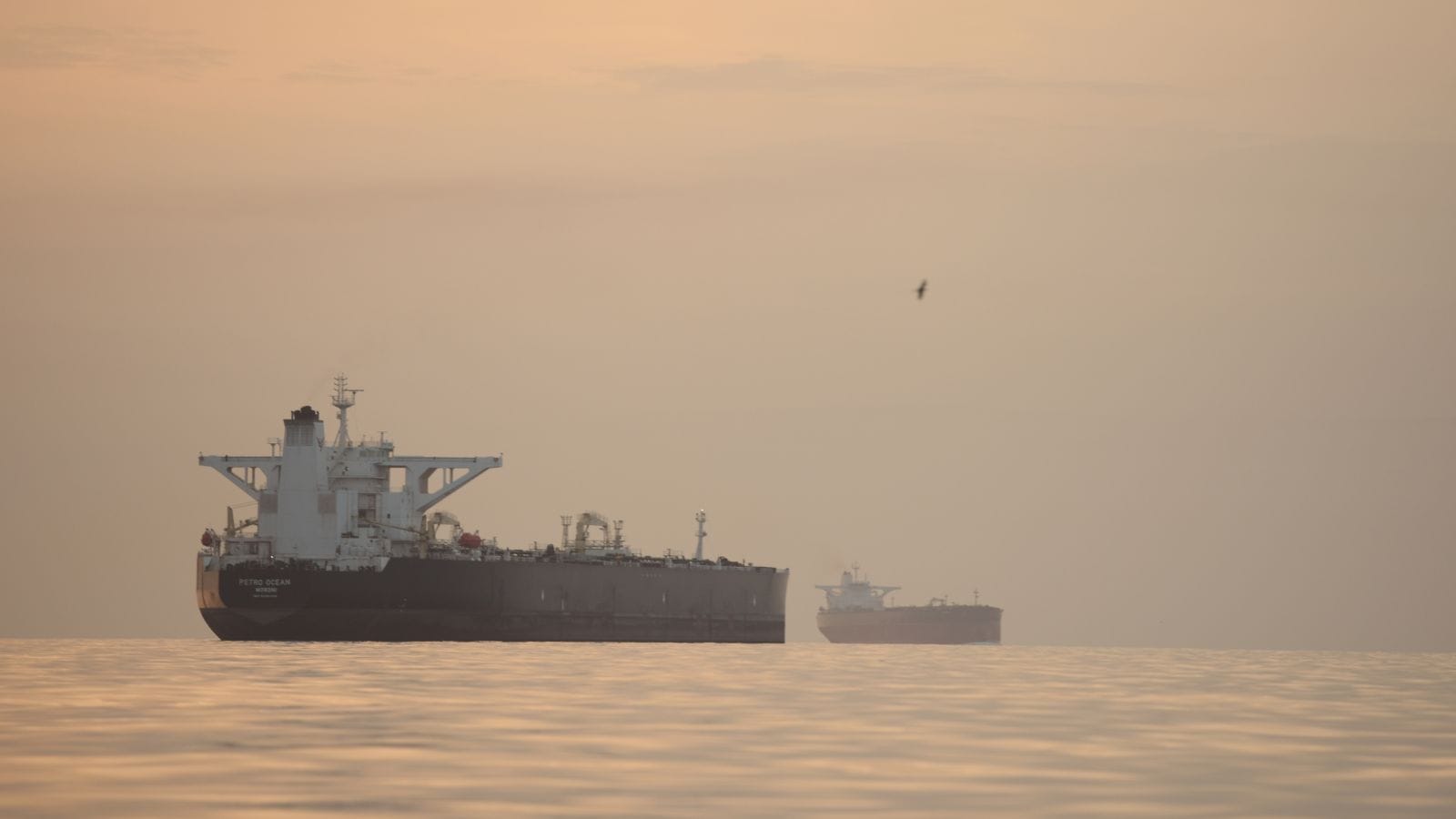
The seizure of an Iranian-flagged container ship by U.S. forces represents a deliberate shift from passive containment to active friction in maritime security. This operation is not merely a tactical interception; it is a calculated application of "Escalation Dominance," a strategic framework where one party controls the intensity and timing of a conflict to force a specific behavioral change in the adversary. By targeting a commercial vessel—the lifeblood of the Iranian economic engine—the U.S. executive branch is signaling a transition toward a high-resolution interdiction strategy designed to disrupt dual-use logistics chains and sanction-evasion networks.
The Tripartite Architecture of Maritime Interdiction
To understand the weight of this seizure, one must analyze it through three distinct operational pillars: Legal Jurisdiction, Kinetic Capability, and Economic Signaling. Don't forget to check out our recent coverage on this related article.
1. The Legal Jurisdictional Framework
The authority to board a sovereign-flagged vessel in international waters is governed by the United Nations Convention on the Law of the Sea (UNCLOS) and specific executive orders targeting Proliferation Security Initiatives (PSI). Under international law, the "Right of Visit" is generally restricted to suspicions of piracy, slave trade, or unauthorized broadcasting. However, the U.S. typically bridges this gap by citing sanctions violations—specifically the transport of refined petroleum or missile components—which classifies the cargo as contraband under domestic and international anti-proliferation statutes.
2. Kinetic Capability and Force Projection
The seizure process follows a standardized escalation of force (EOF) ladder: To read more about the history of this, Reuters offers an excellent summary.
- Phase I: Electronic Identification. Utilizing AIS (Automatic Identification System) data to cross-reference the vessel’s declared manifest against real-time imagery from overhead persistent infrared (OPIR) sensors.
- Phase II: Verbal Challenge. Communication via bridge-to-bridge radio to establish intent and request voluntary boarding.
- Phase III: Vertical Insertion. If the vessel refuses to yield, specialized units (often Navy SEALs or Coast Guard Tactical Law Enforcement Teams) utilize Fast Rope Insertion Extraction System (FRIES) techniques from rotary-wing aircraft to secure the bridge and engine room simultaneously.
3. Economic Signaling
Seizing a container ship creates immediate volatility in the maritime insurance market. The Joint War Committee (JWC) of Lloyd’s of London reacts to such events by adjusting "War Risk" premiums. For Iran, this increases the "Cost of Doing Business" (CODB), as shipowners demand higher freight rates to compensate for the risk of seizure or retaliatory strikes.
The Strategic Logic of Asset Forfeiture
Seizing the vessel serves a dual purpose: intelligence harvesting and resource depletion. When a ship is brought into a friendly port, it undergoes a forensic audit. Analysts deconstruct the ship’s logbooks, digital navigation systems, and cargo manifests to map the "Dark Fleet"—the network of aging tankers and container ships that turn off their transponders to bypass global sanctions.
The ship itself becomes a pawn in the "Maximum Pressure" campaign. Under U.S. law, seized assets can be liquidated through the Department of Justice’s Asset Forfeiture Program, with proceeds often diverted to victims of state-sponsored terrorism. This transforms a military operation into a self-funding mechanism for geopolitical litigation.
Identifying the Operational Bottlenecks
The effectiveness of maritime interdiction is limited by the "Geography of Choice." Most interceptions occur at maritime chokepoints—the Strait of Hormuz, the Bab el-Mandeb, or the Suez Canal.
- The Surveillance Gap: Despite advanced satellite arrays, "spoofing" (transmitting false GPS coordinates) remains a viable tactic for Iranian vessels. This forces the U.S. Navy to rely on human intelligence (HUMINT) and physical patrols, which are resource-intensive.
- The Sovereign Friction: Every seizure risks a symmetrical response. Iran has historically retaliated by detaining Western-linked tankers in the Persian Gulf, creating a "Tit-for-Tat" cycle that can spiral into a total blockade of the Strait of Hormuz.
The U.S. strategy assumes that Iran’s economic threshold for pain is lower than the U.S. military’s threshold for operational cost. This creates a dangerous asymmetry; while the U.S. can afford to maintain a carrier strike group in the region indefinitely, Iran cannot afford the loss of high-value hull assets and their corresponding cargo.
Technological Multipliers in Contemporary Seizures
The modern interdiction environment is increasingly defined by Unmanned Surface Vessels (USVs) and Artificial Intelligence (AI) predictive modeling.
The U.S. 5th Fleet’s Task Force 59 utilizes high-endurance drones to maintain a continuous "Pattern of Life" analysis in the Persian Gulf. When a vessel deviates from its historical route or enters a known transshipment zone, the system flags it for human review. This automation allows for a higher "Interception-to-Sighting" ratio than was possible during the Tanker Wars of the 1980s.
The integration of blockchain-based supply chain tracking further complicates Iranian evasion. By digitizing bills of lading, the U.S. Treasury can identify discrepancies in cargo weights and origins, making it harder for Iranian entities to disguise oil or weapons as civilian consumer goods.
The Cost Function of Retaliation
Every seizure must be weighed against the probability of asymmetric retaliation. Iran’s "Grey Zone" tactics involve:
- Limpet Mine Attacks: Small, magnetic explosives attached to the hulls of commercial ships.
- Drone Swarms: Utilizing low-cost loitering munitions to overwhelm the Aegis Combat Systems of escorting destroyers.
- Cyber Sabotage: Targeting the port management software of U.S. allies in the region.
The U.S. executive branch operates on the hypothesis that by seizing a ship directly, rather than simply sanctioning the owner, they are forcing the Iranian leadership into a defensive posture. This consumes Iranian command-and-control bandwidth, as they must scramble to secure their remaining fleet rather than planning offensive operations.
Deployment of the Sovereign Immunity Doctrine
A critical legal nuance often missed is the concept of "Sovereign Immunity." Generally, warships and other government-operated vessels are immune from the jurisdiction of any state other than the flag state. By flagging these container ships as commercial vessels, Iran inadvertently strips them of the protections afforded to the Iranian Navy (IRIN) or the Islamic Revolutionary Guard Corps Navy (IRGCN). This allows the U.S. to treat the ship as a private criminal entity rather than a military asset, lowering the legal threshold for kinetic intervention and avoiding an immediate "Act of War" declaration.
The Strategic Shift Toward Cargo Kineticism
The move to seize a container ship—rather than a tanker—suggests a focus on "high-tech" smuggling. While tankers move bulk commodities (oil), container ships move components: centrifuges, missile guidance systems, and drone engines. Disruption of these specific supply lines has a non-linear impact on Iran’s military industrial complex. The loss of a single container of specialized carbon fiber or CNC machines can delay missile production cycles by months, whereas the loss of an oil tanker is merely a financial setback.
The operational focus is now on the "Middle Mile" of the Iranian logistics network. By intercepting these assets in international waters, the U.S. maintains the initiative, forcing the adversary to adapt to a landscape where their commercial fleet is no longer a safe conduit for military proliferation.
The next logical progression in this strategy is the expansion of "Multilateral Interdiction Circles." The U.S. will likely pressure regional partners—the UAE, Bahrain, and Saudi Arabia—to deny port access to any vessel that has shared ownership with the seized ship. This creates a "Commercial Quarantine" that effectively removes the target vessel's sister ships from the global trade pool, magnifying the impact of a single seizure across an entire shipping line. To maintain dominance, the U.S. must ensure that the "Speed of Seizure" outpaces the "Speed of Re-flagging," a bureaucratic race that determines the ultimate success of maritime economic warfare.