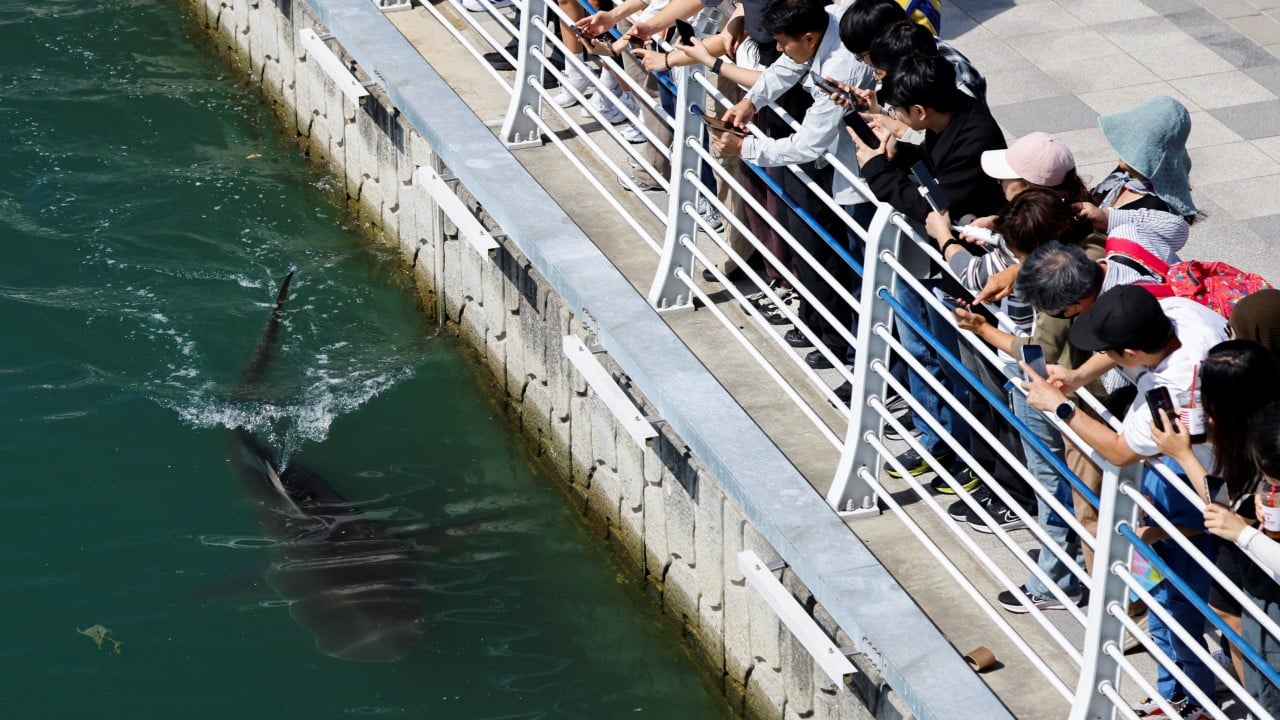
Control over maritime peripheries rarely shifts through decisive naval engagements. Instead, territory is incrementally compressed through persistent, low-intensity pressure that exploits the legal and operational thresholds below the trigger point for conventional military defense. The recurring confrontations between the Taiwan Coast Guard and Chinese maritime assets in the waters surrounding the Dongsha, or Pratas, Islands represent a textbook application of this doctrine. To understand these incidents is to understand how modern state actors weaponize administrative presence, bureaucratic friction, and asymmetrical asset sizing to alter strategic facts on the water.
The Pratas Atoll occupies an outsized geopolitical footprint relative to its physical acreage. Situated roughly 240 nautical miles southwest of Kaohsiung and 160 nautical miles southeast of Hong Kong, the island group commands the northern entrance to the South China Sea and sits directly astride vital commercial shipping lanes and submarine cable corridors. Control of this node dictates surveillance vectors into the Bashi Channel, a primary transit zone for People's Liberation Army Navy submarines moving from coastal bases into the Western Pacific.
When Coast Guard cutters from Taipei intercept mainland fishing vessels, sand dredgers, or nominally civilian maritime militia units within these restricted zones, observers frequently misinterpret these events as isolated law enforcement actions. They are not. They form part of a coordinated, multi-layered pressure campaign designed to exhaust defender resources, establish jurisdictional ambiguity, and normalize a new baseline of operational access.
The Tripartite Architecture of Gray Zone Operations
The friction in Dongsha waters operates across three distinct functional layers: jurisdictional contesting, physical exhaustion, and diplomatic signaling. Each layer serves a specific systemic objective.
+-------------------------------------------------------+
|             Layer 3: Diplomatic Signaling             |
|   (Shifting the baseline of sovereign recognition)     |
+-------------------------------------------------------+
                           ^
                           |
+-------------------------------------------------------+
|             Layer 2: Physical Exhaustion              |
|     (Depleting fuel, hull life, and crew stamina)     |
+-------------------------------------------------------+
                           ^
                           |
+-------------------------------------------------------+
|            Layer 1: Jurisdictional Contest            |
|    (Normalizing presence through maritime militia)    |
+-------------------------------------------------------+
The first layer involves the deployment of non-military commercial and paramilitary hulls. By utilizing steel-hulled fishing vessels and large-scale aggregate dredgers operating in coordinated clusters, Beijing introduces ambiguity. These actors blur the line between commercial economic activity and state-directed coercion. When Taiwanese patrol vessels respond, they are forced to make a strategic choice between ignoring a clear violation of territorial waters or expending finite resources on minor infractions.
The second layer is economic and operational attrition. The Taiwan Coast Guard operates under severe constraints of vessel numbers, maintenance cycles, and fuel
The Geopolitical Cost Function of Maritime Gray Zone Friction in the Dongsha Archipelago
news, business
Geopolitical friction in peripheral archipelagos rarely escalates through sudden, catastrophic theater-wide conflict. Instead, it manifests as a slow accumulation of asymmetric pressure, logistical strain, and sovereignty erosion. The operational encounters between the Taiwan Coast Guard and Chinese fishing vessels or maritime militia units near the Dongsha, or Pratas, Islands represent a textbook application of maritime gray zone operations. This friction is designed to impose asymmetric costs on defensive actors while operating just below the threshold of kinetic warfare. Evaluating this dynamic requires stripping away journalistic sensationalism to analyze the structural mechanics, logistical vulnerabilities, and strategic cost functions governing control over these remote maritime corridors.
The Mechanics of Maritime Gray Zone Friction
Gray zone conflict functions by weaponizing legal ambiguity, civilian cover, and administrative persistence. In the waters surrounding the Dongsha Atoll, maritime incursions rely on a triad of operational components: irregular maritime militia deployment, coast guard escorts, and systematic economic pressure on fisheries management.
When civilian-flagged vessels operate within contested sovereign zones, they force a defensive dilemma upon the opposing state. If the defending coast guard enforces sovereignty through detention and asset seizure, it absorbs high operational expenditures—fuel, vessel wear, personnel deployment, and legal processing costs—while risking diplomatic escalation. If the defending state does not respond, the baseline of effective control shifts incrementally. This operational model transforms routine maritime policing into a war of attrition.
The strategic utility of this friction lies in resource asymmetry. The Coast Guard of Taiwan operates finite hulls with fixed operational lifespans and strict maintenance schedules. Conversely, the deployment vectors available to the opposing side can rotate indefinitely, backed by massive shipbuilding capacity and state-subsidized fuel reserves. Over a multi-year horizon, this creates a structural imbalance in operational endurance.
Logistical Vulnerabilities and Geographic Isolation
The Dongsha Islands occupy a precarious geographic position, situated approximately 240 nautical miles southwest of Kaohsiung and nearly 160 nautical miles from the Guangdong coast. This isolation dictates the entire strategic calculus of reinforcement and sustainment.
[Guangdong Coast: 160 nm] ---> [Dongsha Atoll: Contested Zone] <--- [Kaohsiung: 240 nm]
This distance establishes a profound logistical handicap. Resupply, troop rotations, and emergency medical evacuations rely entirely on maritime transport and limited aviation capabilities vulnerable to adverse weather or interdiction.
- Fuel and Maintenance Bottlenecks: Sustaining high-tempo patrols around the atoll requires continuous fuel logistics. Every vessel deployed to Dongsha represents capacity diverted from the Taiwan Strait mainline.
- Communications and Surveillance Latency: Maintaining real-time situational awareness across dispersed reefs requires robust radar and satellite telemetry, which remain susceptible to electronic warfare, signal jamming, and physical cable disruption.
- Infrastructure Limitations: The islands lack deep-water port facilities capable of supporting heavy surface combatants. Consequently, defense relies on shallow-draft cutters and garrison forces stationed on fragile coral ecosystems.
These physical constraints mean that any escalation initiated by external actors forces Taiwan into a defensive reactive posture, absorbing the initiative and dictating the timing of operational friction.
The Economic and Operational Cost Function
To quantify the impact of these continuous incursions, analysts must examine the economic equation governing coast guard operations. The total cost function of defense ($C$) is defined by the sum of direct resource consumption and systemic risks:
$$C = C_{fuel} + C_{maintenance} + C_{personnel} + C_{opportunity} + R_{escalation}$$
Where:
- $C_{fuel}$ represents the escalating cost of extended patrol hours.
- $C_{maintenance}$ accounts for accelerated hull degradation resulting from rough South China Sea operating conditions.
- $C_{personnel}$ measures crew fatigue and mental attrition rates during protracted deployments.
- $C_{opportunity}$ reflects the strategic cost of pulling assets away from vital economic maritime lanes near the main island.
- $R_{escalation}$ is the compounding risk of an accidental tactical clash triggering a wider geopolitical crisis.
When external actors systematically increase the frequency of incursions, they artificially inflate every variable in this equation. The defending state is compelled to scale its budgetary allocation toward maritime security simply to maintain status quo equilibrium. This is the core objective of gray zone attrition: to inflict a death by a thousand cuts on state resources without firing a single conventional weapon.
Strategic Implications for Maritime Governance
The friction around Dongsha highlights the limitations of traditional Westphalian legal frameworks in modern maritime disputes. International law relies on clear delineations of exclusive economic zones and territorial waters, but gray zone tactics deliberately exploit the enforcement gap between local policing and national defense.
When fishing fleets act as political proxies, the legal machinery of arrest, detention, and judicial prosecution breaks down under the weight of diplomatic protests and retaliatory economic measures. A coast guard officer executing an interdiction is no longer merely enforcing fisheries conservation laws; they are acting as the frontline agent of a disputed sovereignty claim. This politicization degrades the baseline operational efficiency of maritime law enforcement agencies, forcing them to balance tactical enforcement with grand strategy.
Furthermore, the environmental degradation caused by illegal dredging, poaching, and anchoring on fragile coral ecosystems adds an ecological cost dimension. The destruction of marine habitats undermines the long-term sustainability of regional fisheries, compounding economic losses for local communities that rely on these stocks.
Strategic Outlook
Mitigating the vulnerabilities exposed by maritime gray zone tactics requires moving beyond reactive interdiction toward integrated deterrence frameworks. This involves several critical structural shifts:
- Deploying distributed, unmanned surface surveillance networks to maintain persistent domain awareness without risking crewed hulls.
- Establishing pre-engineered logistical caches and hardened infrastructure on the atoll to reduce dependency on vulnerable supply lines.
- Integrating coast guard command structures directly with naval defense networks to ensure rapid reinforcement protocols can be executed under contested conditions.
- Shifting the financial burden of incursions back onto the aggressor through targeted diplomatic costs, international coalition pressure, and coordinated maritime transparency initiatives.
Relying on traditional coast guard paradigms in an era of asymmetric maritime warfare guarantees strategic attrition. Security in the South China Sea and its peripheral archipelagos will not be determined by sporadic tactical victories, but by systemic logistical endurance and the structural capacity to absorb gray zone friction indefinitely.