The mud on the boots never quite washes out. You can soak them in a utility sink, scrub them with a stiff wire brush until your knuckles bleed, and leave them on the porch to bake in a dry July wind. Still, when autumn humidity rolls back in, the ghost of that particular soil—fine, chalky, mixed with crushed shale and old diesel—wakes up.
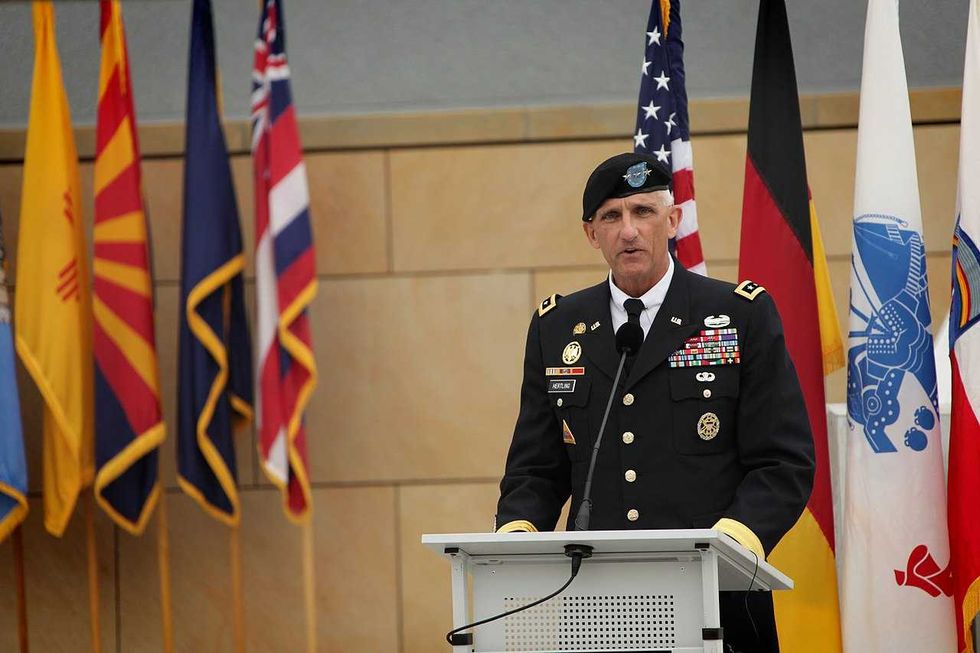
General officers understand this better than anyone who has never worn the weight of a pack.
Civilians look at a military exercise on a map and see a chess match. Blue arrows sweep across a contour line. Red boxes retreat behind a river basin. A press release tells the public that three thousand troops participated in a combined arms maneuver to test interoperability. The words slide off the brain like water on oil. They sound clean. They sound like spreadsheets and procurement budgets approved by committees that meet in rooms smelling of industrial carpet and lukewarm coffee.
Stop. Look closer.
(Note: The following scenario is a composite based on standard operational protocol.)
Imagine a twenty-two-year-old corporal named Miller. He is sitting in the back of a Stryker vehicle at four o'clock in the morning. The cabin smells like stale Doritos, wet wool, and the metallic tang of unwashed skin. He hasn't slept in thirty-six hours. His radio is crackling with static that sounds like a nest of angry hornets. He is holding a rifle he has cleaned four times today just to have something to do with his hands.
Miller is not thinking about geopolitics. He is not thinking about alliance structures or deterrence doctrine. He is wondering if his right boot has rubbed a blister through his wool sock, and whether the sergeant will notice if he adjusts his laces during the next halt.
That is what a military exercise actually is. It is not a demonstration for cameras. It is a crucible designed to see how many small, agonizing human failures a system can absorb before it shatters.
Generals do not order these massive, expensive deployments because they want to impress foreign attachés. They do it because they are terrified. They know a secret that peacetime populations desperately want to forget. Armies do not rise to the occasion when war comes; they sink to the level of their training.
If your training is a PowerPoint presentation, your war will be a disaster.
Consider what happens when a logistics convoy misses a turn in a blinding German fog during a NATO drill. In a sterile simulation, the computer recalculates the route in milliseconds. In reality, a twenty-ton truck slides into a drainage ditch. The driver’s coffee thermos shatters against the dashboard. The fuel line kinks. Suddenly, an entire battalion three miles up the road is running dry on ammunition just as the sun breaks over the tree line.
The general sitting in the command tent fifty miles away looks at the red blinking light on his tactical display. His coffee is cold. His shoulders are knotted with tension. This is the moment the exercise earned its multimillion-dollar price tag. Not when the missiles fly, but when the lieutenant colonel has to decide whether to abandon the supply truck or risk an ambush trying to winch it out.
Mistakes made in a digital sandbox cost nothing. Mistakes made in the mud cost lives.
That is the real purpose of these vast, lumbering exercises. They are stress tests for human endurance, institutional stubbornness, and administrative stupidity. They are designed to fail. That sounds counterintuitive, but listen. Every good exercise is engineered to break down somewhere. The planners inject friction. They cut off communications. They flood supply chains with phantom shortages. They throw monkey wrenches into the gears precisely because they want to see where the metal snaps.
When a general watches a battalion fail to coordinate its artillery strikes because the radio frequencies were jammed, he is not angry. He is enlightened. He has just found the weak link in the chain without paying for it in blood.
We live in an era that worships efficiency. We want our technology frictionless, our commutes seamless, our lives optimized by algorithms that predict our desires before we form them. But violence—organized, state-sponsored, industrial violence—is the ultimate anti-efficiency. It is chaos wearing a uniform. It is confusion shouting over the roar of a jet engine.
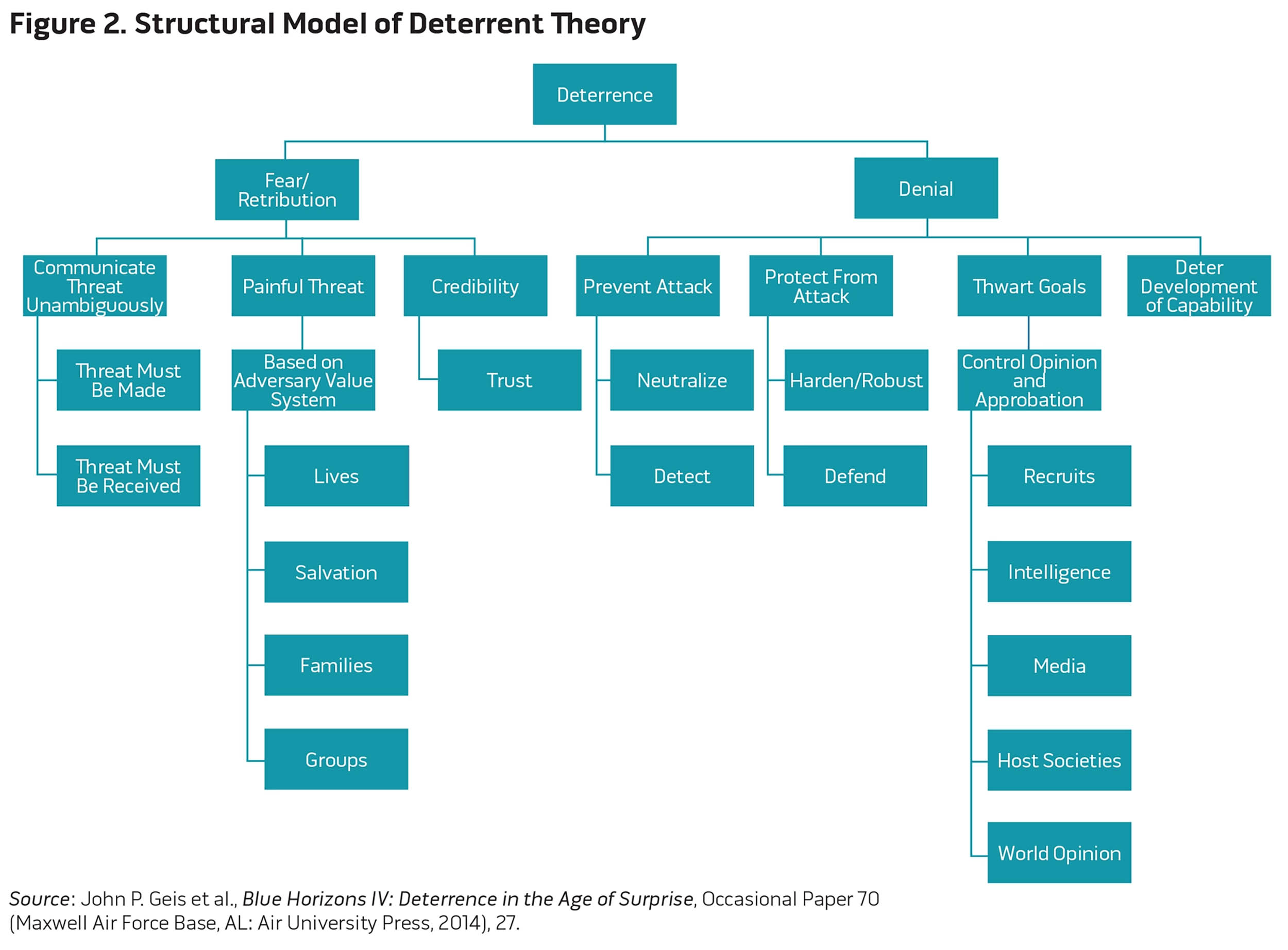
When people criticize these exercises as provocative posturing or expensive theater, they miss the invisible stakes. They see the saber-rattling on the evening news and assume the goal is intimidation. Intimidation is a byproduct, not the point. The point is survival. The point is ensuring that when a nineteen-year-old kid from Ohio is told to cross an open field under fire, the sergeant beside him knows how to manage the panic, the radio works, the medic has blood plasma that isn't expired, and the rifle doesn't jam from the dust.
The public rarely sees the quiet aftermath of these drills.
They don't see the debriefing rooms where colonels sit in exhausted silence, tearing apart their own decisions with brutal, unsparing honesty. They don't see the grease-stained mechanics working by floodlights at midnight, welding a cracked suspension arm because the part they need is four thousand miles away in a Georgia warehouse.
There is a profound humility in that labor. It is the work of preparing for the worst possible day of your life while praying to God it never arrives.
Peace is not a natural state. It is a fragile truce maintained by people who spend their entire professional lives obsessing over how quickly that truce can unravel. They map out every nightmare scenario so that politicians never have to live through them.
Next time you see a headline about war games in the Baltic or amphibious landings in the Pacific, look past the hardware. Look past the political posturing. Picture Corporal Miller in the back of his Stryker, rubbing his blistered heel, waiting for the hatch to open. Understand that the generals running that exercise are trying to keep him alive by making him miserable today.
The map is not the war. The exercise is not the battle. They are the scars we put on ourselves on purpose, so we never have to bear the deeper ones.