Paper crackles in a quiet room before a storm.
That sound is what I remember most from every summit hall I have ever sat inside, notebook open, listening to diplomats and thinkers try to stitch together a world that keeps fraying at the seams. Coffee grows cold in ceramic mugs. Badges dangle from lanyards like tiny passports to a parallel universe where trade routes, border lines, and alliances are spoken of in smooth, measured cadences. Outside those glass doors, buses roar, monsoon air or winter chill presses against concrete, and ordinary families calculate the price of flour, fuel, and schooling. Inside, people gather to argue over what comes after the rules we grew up trusting stop working.
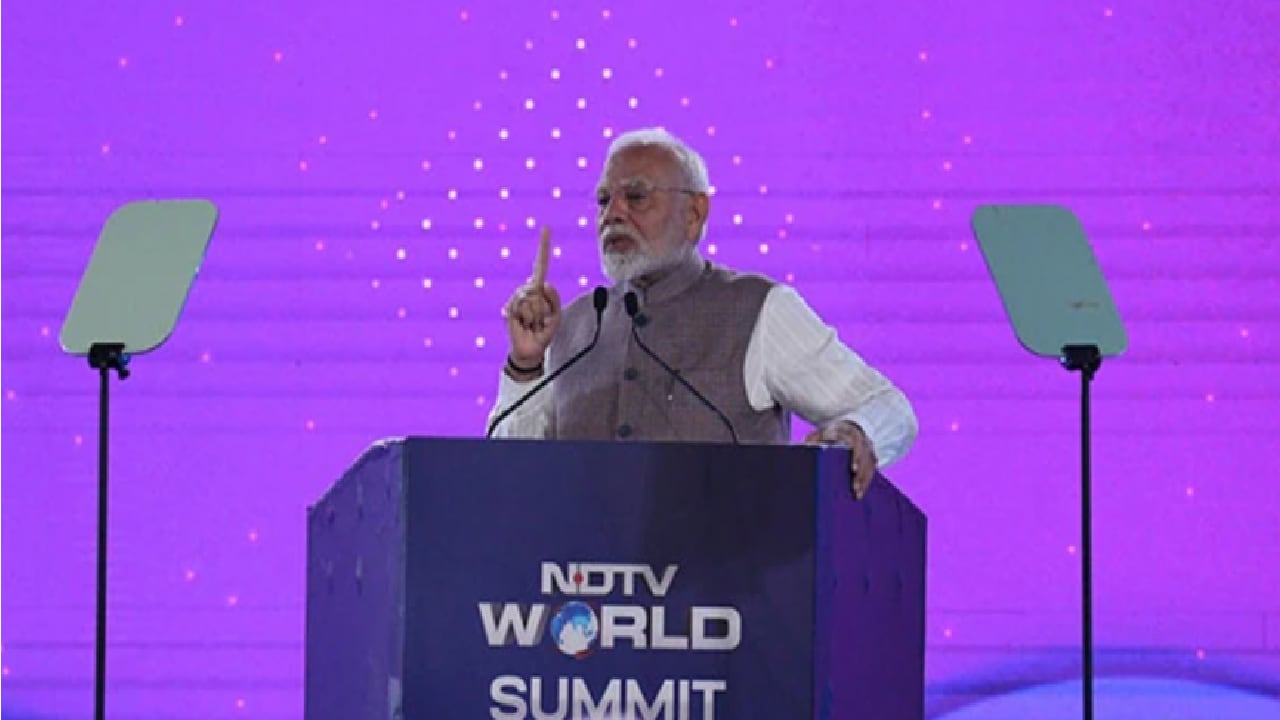
This is the quiet tension behind the NDTV World Summit 2026. When a gathering brings together policymakers, economists, strategists, and public voices as the world searches for a new order, it is easy to yawn and reach for the next headline. Another panel. Another round of speeches about shifting power and global friction. Yet beneath the press releases sits a question that hits closer to home than most of us care to admit: when the old assumptions of security, trade, and cooperation crack, who gets a seat at the table that draws the next map?
I will be honest with you. Even after years of covering global affairs and watching grand promises dissolve into committee memos, I still find the sheer scale of today's shifts disorienting. You read about supply chains rerouting, rival blocs hardening their edges, and technology rewriting how nations talk and spy and trade, and your mind reaches for a neat summary. There isn't one. Not yet. And pretending we already know how the story ends is a luxury nobody can afford.
The Crack Beneath the Floorboards
To understand why forums like the NDTV World Summit 2026 draw sharp attention, we have to look past the stage lights and ask what actually broke.
Consider a hypothetical scenario. Imagine a mid-sized manufacturing town in southern Europe or western India—let us call it a port-adjacent city where two generations of machinists built precision parts for buyers thousands of miles away. For thirty years, the rules felt simple enough to live by: make a reliable component at a competitive price, ship it through familiar maritime lanes, get paid in stable currency, and plan your daughter's university tuition with a straight face. Then tariffs shift overnight, a canal chokepoint or regional conflict rattles insurance premiums, and a factory owner stares at a ledger where every line item suddenly carries a geopolitical price tag.
That is not an abstract theory from a university syllabus. That is the daily weather of a changing global order.
Historically, major shifts in international arrangement rarely arrive with a single dramatic gavel strike. After 1945, institutions like the United Nations, the Bretton Woods framework, and later post-Cold War trade agreements tried to build guardrails around a world scarred by industrial war. When the Soviet bloc dissolved in the early 1990s, many observers spoke as if history had settled into a single track—market integration, predictable alliances, and steady globalization. We know now how fragile that confidence was. Financial shocks, regional wars, supply-chain vulnerabilities, and fierce competition over semiconductors, energy, and influence have reminded us that global order is never a permanent monument. It is a truce that has to be renegotiated every time power moves.
Why does a gathering hosted in New Delhi carry particular weight in that negotiation? Because India sits right where old binaries blur. It is a major economy, a populous democracy with deep historical ties across continents, and a player that routinely refuses to be boxed into a rigid camp. When voices from across regions convene at an international summit there, the conversation rarely stays confined to a single Western or Eastern capital. It becomes a collision of perspectives—from states worried about maritime security and border stability to economies racing to build domestic capacity without getting crushed between rival giants.
Voices in the Room, Stakes Outside It
Critics sometimes dismiss international summits as talking shops where polished sentences substitute for hard bargains. Fair enough. Anyone who has watched a three-day conference end with a polite communique knows rhetoric is cheap.
Still, dismissing every gathering misses how influence actually moves. Ideas rarely jump straight from a lonely researcher's desk into national policy without passing through rooms where people argue face-to-face, test their assumptions against skeptical peers, and signal what matters to their constituencies. A summit does not sign every treaty on stage. What it does—when it works—is surface the fault lines early, force rival arguments into the same air, and reveal which questions leaders can no longer dodge.
Picture another hypothetical character: a young policy analyst sitting in the back row of a packed hall, fingers hovering over a keyboard. She has spent months studying climate finance, digital trade rules, or cross-border migration. On stage, a veteran minister speaks about national resilience; a business leader talks about capital flows; a commentator presses on public trust and media credibility. Each of them brings a piece of the puzzle, and each of them has blind spots. The minister thinks in decades and borders; the entrepreneur thinks in quarters and risk; the citizen sitting at home thinks in grocery bills, job security, and whether their kids will breathe cleaner air.
When those viewpoints rub against one another, something useful can happen. Assumptions get challenged in real time. A neat slogan about "global cooperation" meets a blunt question about who bears the cost of transition. A narrow definition of "national security" meets the reality that pandemics, climate extremes, and cyber disruptions do not check passports.
I have sat in rooms where a single sharp question from the floor broke through twenty minutes of rehearsed talking points. You feel the temperature in the room shift. People sit up straighter. For a brief moment, the theater drops and the real stakes show up: jobs, sovereignty, dignity, survival.
Why Ordinary People Feel a "World Order" Shift
Most people do not wake up thinking about multipolarity or diplomatic architecture. They wake up to an alarm clock, check their phone, make tea, and worry about whether their paycheck stretches to the end of the month.
Think of the global order like the plumbing inside an apartment building—a metaphor that helps explain why invisible systems matter so much. As long as water flows cleanly from the tap and drains quietly away, nobody thinks about pipes, valves, or municipal pressure. You only curse the plumbing when a joint leaks behind the drywall or the pressure drops on the fourth floor. Global trade, energy networks, diplomatic norms, and cross-border institutions work much the same way. They are background infrastructure until a shock hits the line.
When that background infrastructure strains, the effects ripple outward in ways that feel deeply personal:
- Cost of living: Energy shocks, shipping delays, and trade disputes show up directly in fuel prices, freight costs, and what families pay at the market.
- Jobs and opportunity: Shifts in manufacturing, investment, and technology determine which regions gain industries and which ones watch factories hollow out.
- Security and peace of mind: Rising friction between major powers or neighboring states makes regional flashpoints harder to contain and raises anxiety about stability.
- Information and trust: Rapidly changing media and AI tools make it harder for citizens to tell verified reporting from manipulation at the exact moment decisions matter most.
People often ask what an international summit actually changes for someone living hundreds or thousands of miles away. Honestly, not everything changes overnight, and anyone promising instant miracles is selling snake oil. Yet the priorities debated in major forums shape the policies that eventually land on local desks—rules on trade, climate commitments, tech governance, and diplomatic alignment. Ignoring those debates does not protect you from their consequences; it simply leaves you out of the conversation while decisions take shape.
What Is Worth Watching When Leaders Gather
If you tune into coverage of the NDTV World Summit 2026—or any high-stakes global forum trying to read a fractured era—you do not need a diplomatic degree to spot what matters. Listen for substance over slogans.
Watch how speakers handle trade-offs. Any politician can promise growth, security, and fairness at the same time in a speech. The real test comes when two goals collide: say, protecting domestic workers while keeping goods affordable, or securing critical supply chains without sparking endless economic retaliation. Listen for honesty about those trade-offs. When a leader admits a problem is hard, you learn more than when they recite a brochure.
Pay attention, too, to who is missing or underrepresented in the room. Global reordering affects billions of people whose voices rarely dominate prime-time panels—small island nations facing rising seas, informal workers navigating economic upheaval, younger generations inheriting debt and ecological strain. A summit becomes more credible when it reckons with those realities rather than treating them as an afterthought.
And keep an eye on the tension between speed and legitimacy. In an era of rapid crises, leaders feel pressure to act fast—executive orders, bilateral deals, unilateral moves. Yet rules built purely on raw power without broad legitimacy tend to snap later. Finding durable agreements in a crowded, contested world takes patience, friction, and a willingness to listen even when you disagree sharply.
The Unfinished Draft
History does not hand out clean transitions. Every time an older international balance weakens, there is a messy, uncomfortable interval—a stretch of years where old habits linger while new habits have not yet hardened. We are living inside one of those intervals right now.
Doubt is natural here. Skepticism toward grand speeches is healthy, especially when we have seen how often lofty promises collide with narrow self-interest. Still, cynicism is an easy coat to put on and a heavy one to carry. If we walk away from every serious public debate convinced nothing can shift, we hand the pen entirely to whoever shouts loudest or holds the biggest leverage.
The real work of a changing world happens in hundreds of decisions—in parliaments, boardrooms, newsrooms, classrooms, and voting booths—long after the stage lights at a summit go dark. Forums like NDTV World Summit 2026 matter most when they spark sharper questions, force uncomfortable truths into the open, and remind us that global order is not fate written in stone.
It is a draft on the table, ink still wet, waiting to see who has the courage to write responsibly.


