A young man sits in a high-rise office in São Paulo, tapping a glowing screen that tracks cargo ships moving through the Indian Ocean. He isn't looking toward London. He isn't waiting for a wire transfer to clear from New York. Two thousand miles away in Nairobi, a software engineer buys server space hosted in Singapore, paying for it in a currency that bypassed the Federal Reserve entirely before breakfast.
The center has stopped holding. For five centuries, the architecture of global power resembled a wheel. Every spoke led to a Western capital. Every rule, every currency exchange, every strategic calculation traced its lineage back to Washington, London, or Brussels. We grew comfortable with that gravity. We mistook it for a permanent law of physics.
It was never a law. It was an era.
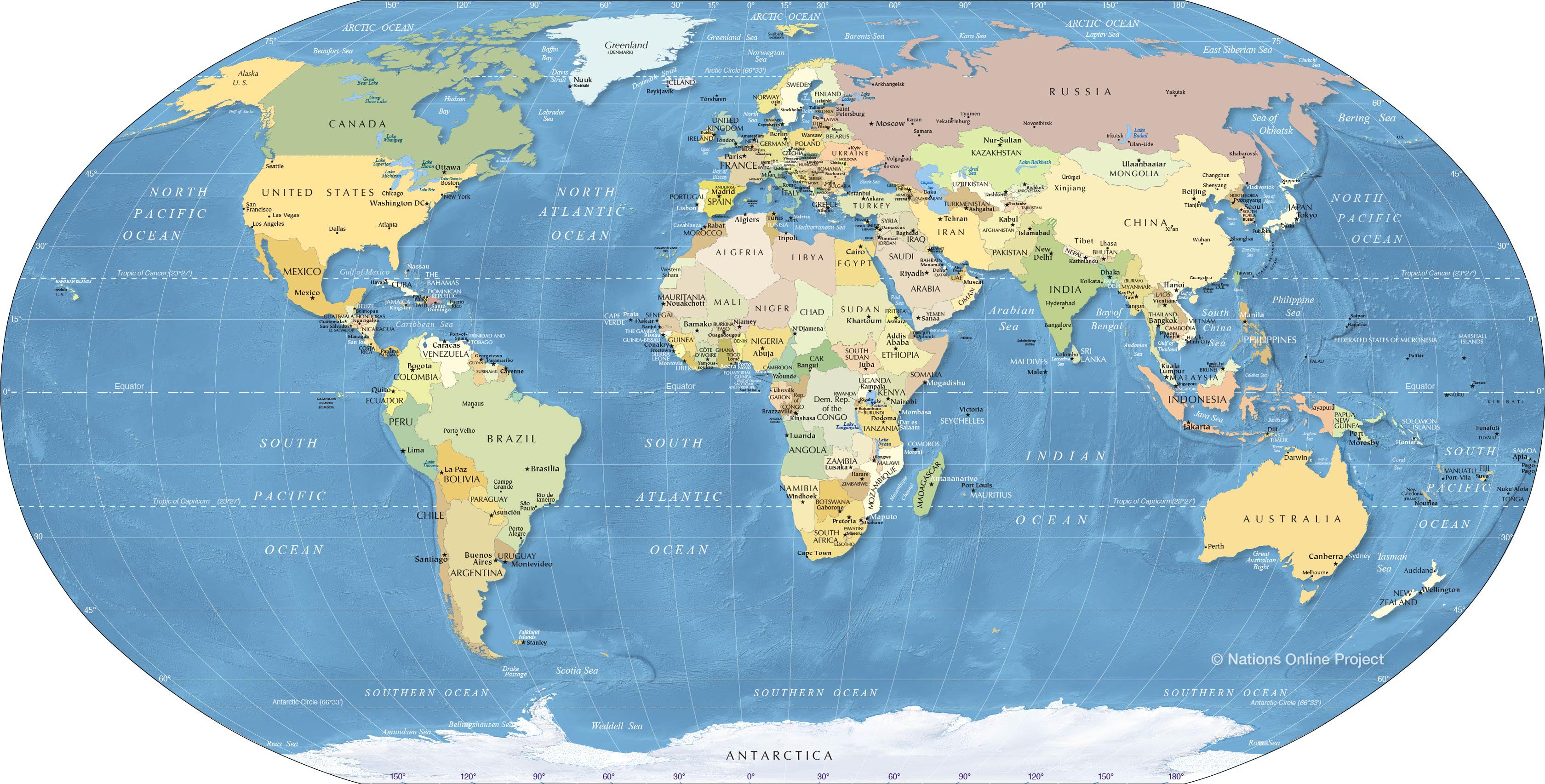
Step back into the archives of the twentieth century, and the map was colored with absolute clarity. Power had an address. If you wanted to build a dam, negotiate a trade treaty, or reprice a barrel of oil, you traveled north. The global south was a periphery, a vast expanse of resources and raw potential waiting for an authorizing stamp from the core.
That map is rotting.
Consider a hypothetical merchant in Jakarta trading nickel with a manufacturer in Seoul. Ten years ago, that transaction likely would have settled in US dollars, cleared through a correspondent bank in Manhattan, and carried the invisible tax of Western financial hegemony. Today, they settle in local currencies or digital alternatives. They deal directly. They do not consult the old map because the old map no longer matches the geography on the ground.
This post-Western reality is not defined by a dramatic collapse, a sudden war, or a cinematic explosion of the old order. It is arriving through a million quiet transactions, through the dull hum of data servers in Mumbai, through sovereign wealth funds in the Gulf buying stakes in Latin American logistics, through infrastructure financed by Beijing that binds continents together without ever touching a Western port.
We are watching the emergence of a multipolar network.
Power is dispersing like heat through a liquid. When economic mass shifts, political gravity follows. For decades, the intellectual software of the world was written in Western universities and broadcast outward. Democracy, market capitalism, international law—these concepts were exported like finished goods. But trade now flows sideways. South-South trade volume has surpassed traditional North-South corridors in many sectors. When nations no longer depend on Western aid packages or security guarantees, they stop looking westward for validation.
This brings a distinct kind of vertigo.
I remember standing in a trading hall a few years ago, listening to seasoned analysts argue over interest rate hikes by the Federal Reserve as if they were dictates from an emperor. They spoke with the exhausted certainty of men who believed history had ended with a single victor. They were wrong. History does not end; it merely changes rooms.
The discomfort we feel now—the sense of displacement in Western boardrooms and government ministries—is the feeling of a former landlord realizing the tenants have built their own houses.
To understand what comes next, we have to look past the rhetoric of ideological crusades. The post-Western world is stubbornly transactional. It is pragmatic, fragmented, and remarkably impatient with moral lectures from capitals that spent centuries writing the rules they now expect others to follow. When a developing nation in Africa negotiates for green energy technology, it does not ask whether the supplier matches its domestic political values. It asks who delivers the panels faster and cheaper.
This is where the old guard stumbles. Western diplomacy has long relied on a vocabulary of universal values. But universal values ring hollow when the plumbing of global finance and manufacturing belongs increasingly to diverse coalitions with entirely different historical memories.
Look at trade agreements signed over the last five years. Regional pacts span oceans without a single Western signature. Supply chains have reconfigured themselves into regional webs rather than global highways. If a factory in Vietnam closes, the disruption ripples through Bangkok and Jakarta before anyone in Frankfurt even notices the missing shipment.
We are witnessing the fragmentation of global governance. Institutions built in 1945 at Bretton Woods and San Francisco—the IMF, the World Bank, the United Nations Security Council—now resemble grand old ocean liners navigating modern waters with rudders that no longer respond. They were designed for an era when three or four powers carved up the globe. They cannot accommodate twenty centers of gravity pulling in different directions.
As a result, new institutions are rising in the shadows of the old ones. Development banks headquartered in Shanghai, trade corridors bypassing traditional maritime chokepoints, and security partnerships forged in regional capitals are creating a parallel architecture. It is messy. It is competitive. It lacks the cohesive, if often brutal, order of the Pax Americana.
And yet, there is an undeniable vitality to it.
For the first time in modern history, millions of people outside the traditional centers of wealth are writing their own rules of engagement. They are modernizing on their own terms, blending digital capitalism with state-directed industrial policy in ways that defy standard Western economic textbooks. They are creating cultural products, technological standards, and diplomatic norms that reflect their own histories rather than Western anxieties.
The challenge for those who grew up in the comfort of the unipolar moment is learning how to listen in a room where no single voice commands absolute silence. We are entering an age of translation. No single culture or capital holds the monopoly on the future.
The map has been torn up, the pieces scattered across hemispheres, waiting for a generation brave enough to navigate without a center.