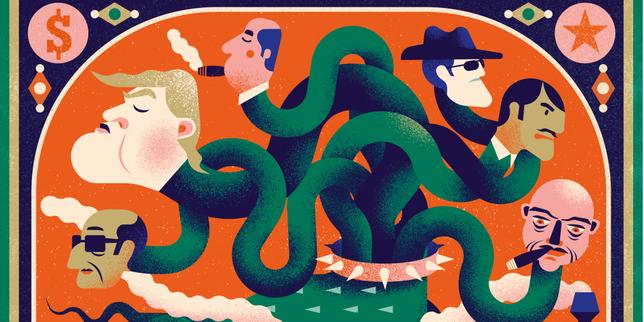
You probably don't remember the exact names of the websites. Domains like WorldPoliticus.com or TrumpVision365.com dominated social feeds during a chaotic election cycle. They blasted out sensational, entirely fabricated stories about American politics. But the people writing those headlines weren't political operatives sitting in Washington or Moscow. They were teenagers sitting in a quiet, economically depressed Balkan town thousands of miles away.
Veles, a modest city in North Macedonia with a population of around 44,000, became an accidental global epicenter for pro-Donald Trump disinformation back in 2016. While international media outlets framed it as a quirky story about bored youth, the reality was far more pragmatic. It was about raw, unadulterated cash.
The Economics of Outrage in Veles
Let's clear up one major misconception right away. The kids running these sites didn't care about American conservative ideology. They didn't care about the Republican platform or immigration policy. They cared about Google AdSense and Facebook referral traffic.
North Macedonia features high youth unemployment rates and limited local career prospects. When a few enterprising locals realized that scandalous headlines about American politicians generated massive viral engagement, copycats flooded the market.
The formula was simple. You take a grain of truth, twist it past the breaking point, and wrap it in a screaming headline like "Pope Francis Shocks World, Endorses Donald Trump for President" or claims that Hillary Clinton had been indicted. You drop the link into pro-Trump Facebook groups. You watch the shares roll in. Every click translated straight into ad revenue. Successful operators pulled in thousands of euros a month, transforming modest apartments into high-yield digital clickbait factories.
Who Was Actually Pulling the Strings
Initial journalism painted a picture of solitary, rogue teenagers hacking away in their bedrooms. Subsequent investigations by groups like the Organized Crime and Corruption Reporting Project revealed a more complex ecosystem. Local mentors, such as self-taught web marketing specialist Mirko Ceselkoski, ran online courses teaching locals how to optimize social media traffic and maximize ad revenue.
Other networks involved a mix of local attorneys, international political actors, and American fringe writers who supplied the raw ideological narratives. It wasn't just a spontaneous youth movement. It was an industrialized cottage industry optimized for the modern attention economy.
Why American Audiences Fell For It
The internet loves to mock the people who fell for these obvious hoaxes. But the success of the Veles content farms exposed deep fractures in how information spreads online.
Confirmation bias plays a massive role. Researchers from Stanford University and other institutions noted that American partisan audiences were uniquely primed to share content that validated their preexisting worldview. If a story painted an opponent in a dark enough light, critical thinking went out the window. Verification stopped. The share button became a weapon.
Platforms like Facebook bore the brunt of the criticism, and algorithms eventually shifted to choke off the easy flow of unverified sensationalism. Ad networks tightened their rules. Yet the playbook invented in Veles didn't disappear. It merely evolved.
The Legacy of the Balkan Clickbait Machine
Today, the digital landscape has mutated far beyond simple WordPress blogs run from central Macedonia. Generative AI tools and automated bot networks have lowered the barrier to entry even further. You don't need a handful of teenagers copying and pasting articles anymore; automated scripts can churn out thousands of hyper-partisan articles a day.
Veles proved that modern digital borders are entirely porous. A group of individuals with zero connection to a country's culture can heavily influence its national discourse simply by understanding the financial incentives of social media algorithms.
If you want to protect yourself from manipulation, look past the source. Ask yourself who benefits from your outrage. When a headline makes your blood boil instantly, pause. That spike in your pulse is exactly what someone halfway across the world is cashing in on.