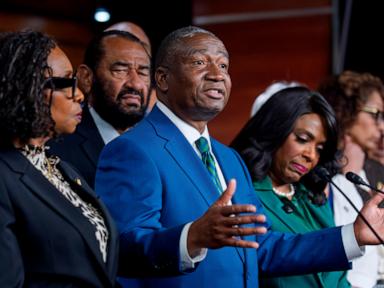
Democratic U.S. Representative Cleo Fields won't seek reelection to Congress after Louisiana lawmakers dismantled his majority Black district. Instead of fighting uphill in a redrawn district built for Republicans, Fields announced he'll step aside from Capitol Hill and run for the Louisiana state Senate.
This decision marks a major turning point in southern political representation. It comes right after a high-stakes decision by the U.S. Supreme Court struck down Louisiana's 6th Congressional District map as an unconstitutional racial gerrymander. Don't miss our earlier article on this related article.
If you've been following the legal fights over Southern electoral maps, this move isn't completely out of nowhere. It's the direct result of months of legal battles, political maneuvering in Baton Rouge, and national partisan strategy.
How Cleo Fields Found Himself Without a Congressional Seat
To understand why Cleo Fields made this choice, you have to look back at how Louisiana's voting map ended up in court in the first place. To read more about the context here, NBC News offers an excellent breakdown.
After years of legal battles brought by voting rights groups, Louisiana state legislators met in early 2024 to redesign the state's six congressional districts. At the time, Louisiana's population was roughly one-third Black, yet only one of its six congressional seats was a majority Black district—the 2nd Congressional District represented by Democrat Troy Carter.
Under court pressure to comply with Section 2 of the Voting Rights Act, the state legislature crafted a new map in early 2024. That map created a second majority Black district, stretching diagonally across the state from Shreveport down through Baton Rouge.
In November 2024, Cleo Fields ran for that newly configured 6th District. He won easily, flipping the seat blue and giving Democrats two of Louisiana's six U.S. House seats for the first time in a decade.
It didn't stay that way for long.
The Supreme Court Ruling That Changed Everything
Conservative voters and activists quickly challenged the 2024 map in court, arguing that state lawmakers relied too heavily on race when drawing the sprawling 6th District. The legal challenge, titled Louisiana v. Callais, worked its way to the U.S. Supreme Court.
In April 2026, the Supreme Court ruled against the state's map. The justices determined that drawing a long, narrow district specifically to reach a target Black voter percentage violated the Equal Protection Clause.
That decision forced Governor Jeff Landry and the Republican-controlled legislature back to the drawing board in May 2026.
What the New Louisiana Map Looks Like Now
The legislature didn't waste time. Republican lawmakers redrew the 6th District to make it far more compact and significantly more Republican.
Instead of reaching northwest to Shreveport, the new 6th District clusters tightly around predominantly white suburbs in the Baton Rouge area and surrounding southern parishes.
The math changed overnight:
- The previous 6th District had a Black voter population of over 54%.
- The redrawn 6th District overwhelmingly favors GOP voters.
- The 2nd District represented by Troy Carter remains Louisiana's only majority Black congressional seat.
Louisiana Republicans briefly considered an aggressive six-zero map that would attempt to eliminate both Democratic seats. However, spreading Republican voters too thin across all six districts risked creating competitive pockets where Democrats could pull off upsets.
Instead, they chose a safe five-one Republican map. That locked in five solid GOP seats while concentrating most Democratic voters into Troy Carter's New Orleans-based district.
Why Fields Chose the State Senate Instead of a House Fight
When a politician's seat gets redrawn out from under them, they usually have three options:
- Run in the new district anyway despite bad demographics.
- Move to a neighboring district and primary a fellow party member.
- Walk away from Congress entirely.
Fields chose the third option. Trying to win a House race in a district designed for a Republican supermajority is a costly, brutal battle.
Running against Troy Carter in the 2nd District would mean an expensive primary battle between two established Black Democrats in South Louisiana. That kind of primary division serves nobody in the party.
"After a great deal of prayer and reflection, I have decided not to seek reelection to Congress in the 6th District or any other district in Louisiana," Fields stated when making his announcement.
By returning his focus to the Louisiana state Senate, Fields stays active in policy decisions without burning tens of millions of dollars on an impossible federal campaign. He previously served in the state legislature for decades, making this a comfortable home base rather than a complete exit from public life.
The Broader National Picture for Midterm Elections
This shakeup in Louisiana isn't happening in isolation. It's part of a broader nationwide fight over congressional boundaries heading into the 2026 midterm elections.
With control of the U.S. House of Representatives decided by a handful of votes, every single seat matters.
In recent months, the Supreme Court has issued several rulings touching on state maps:
- Louisiana: The Court struck down a map that created a second majority Black district, resulting in a net loss for Democratic election prospects.
- Alabama: The Court permitted a map that favored Republicans to stand for the 2026 cycle.
Because Louisiana reverted to its traditional jungle primary system—rescheduled for November 3, 2026, with potential runoffs in December—candidates from all parties will appear on one ballot. Without Fields on that ballot for the 6th District, Republicans have a clear runway to reclaim the seat.
What Political Watchers Should Watch Next
The fallout from Fields' departure will ripple through both state and national politics for the remainder of 2026.
Here are the key factors to monitor over the coming months:
- GOP Primary Candidates in District 6: Expect a crowded field of Republicans jumping into the race for the newly secured 6th District seat now that an incumbent Democrat isn't running.
- Legal Appeals and Future Voting Rights Act Cases: Civil rights group lawsuits continue to challenge map boundaries across the South. What happens in Louisiana could set precedents for pending cases in Georgia and Texas.
- Turnout Effects in South Louisiana: Without a high-profile federal race in the 6th District, local advocacy groups will have to work twice as hard to maintain voter engagement among Black communities in the Baton Rouge region.
If you're tracking congressional control in 2026, flip Louisiana's 6th District back into the probable Republican column on your electoral map.
To keep up with changing district lines in your state, check your local secretary of state website or county registrar office to verify your current congressional district boundaries before voter registration deadlines hit this fall.