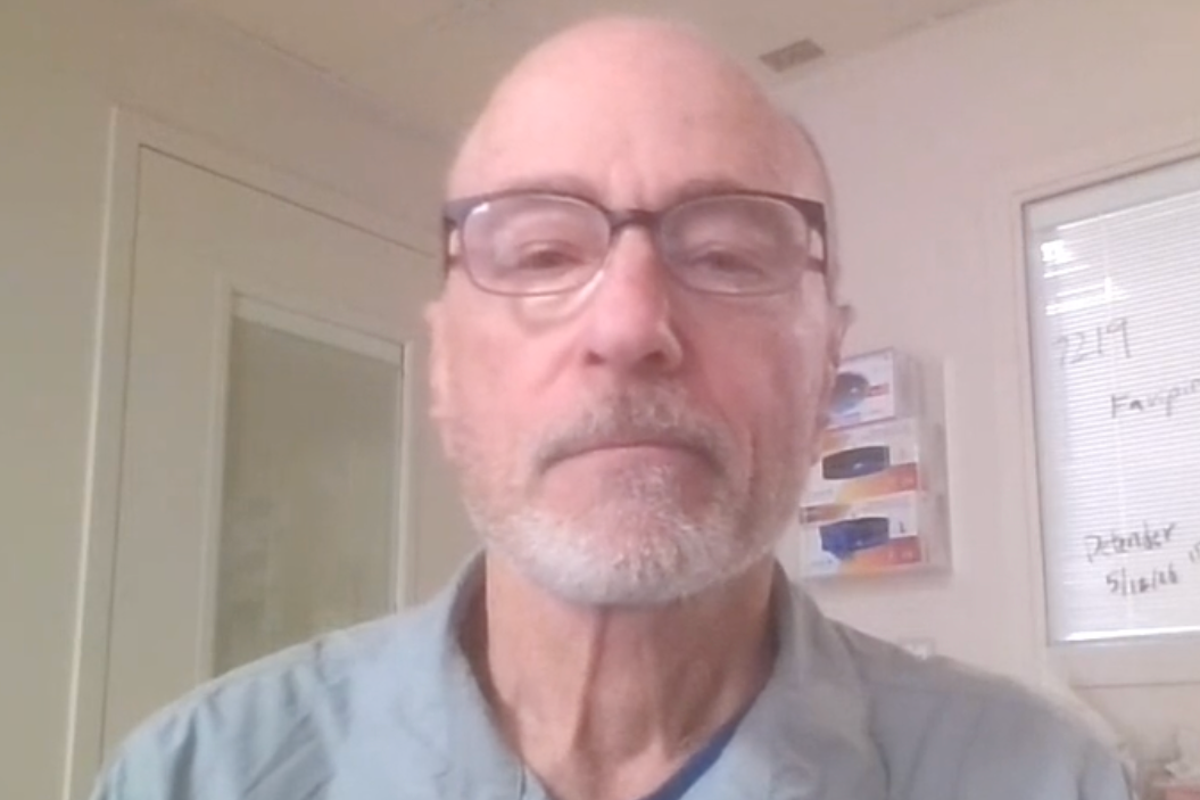
The air inside a luxury cruise cabin is famously still. It is a climate-controlled, sanitized silence that usually signals relaxation. But for Dr. Scott Lindquist, an epidemiologist from Oregon, that silence recently took on a heavier, more clinical weight. He wasn’t just a passenger anymore. He was a data point.
He sat within the plush confines of the California Star, a vessel that had become a floating petri dish for a virus most people associate with dusty rural sheds and mountain cabins, not the buffets and linen service of a high-end vacation. Lindquist had tested positive for Hantavirus.
The word itself carries a jagged, frightening edge in the medical community. It is a pathogen that doesn't usually play by the rules of common respiratory bugs. It prefers the shadows of the American West, hitching a ride on the breath of deer mice. When it leaps to humans, it often brings a terrifying fluid buildup in the lungs.
Yet, there was Lindquist, a man who spends his professional life tracking outbreaks, staring at his own positive result while the Pacific Ocean churned outside his window.
The Invisible Stowaway
Hantavirus is a master of the low-stakes entry and the high-stakes finish. Most people infected don't even know the moment it happened. A stray breath of dust while sweeping a garage. A hand brushed against a contaminated surface in a cabin. On a cruise ship, the cognitive dissonance is jarring. You expect norovirus. You expect the common cold. You do not expect a virus that carries a mortality rate of roughly 38 percent.
Lindquist understood the math better than anyone. He knew the incubation periods. He knew the way the viral load peaks and then retreats, or in the worst cases, overwhelms. But knowledge is a cold comfort when your own body becomes the laboratory.
Consider the mechanics of the wait. When you are a doctor who has seen the jagged lines of a failing lung on an X-ray, every deep breath becomes an interrogation. Is that a slight tightness in the chest? Or is it just the anxiety of the isolation? Is that a flush of fever, or the afternoon sun hitting the balcony glass?
He chose a different path than panic.
The Psychology of the Quarantine
Time behaves differently when you are confined to a few hundred square feet. It stretches. It warps. For many, the walls of a cabin would start to feel like a cage within the first forty-eight hours. But Lindquist spoke of a strange, unexpected optimism.
"It’s amazing how quickly time flies," he remarked, a sentiment that feels almost heretical to anyone who has ever been stuck in a waiting room for twenty minutes.
This wasn't just a brave face for the cameras or a bit of professional stoicism. It was a masterclass in the human ability to reframe a crisis. Lindquist transformed his isolation into a period of observation. He wasn't a victim; he was a witness. He watched the way the crew handled the protocols. He noted the efficiency of the communication. He turned the clinical eye outward because looking inward too closely can lead to a spiral that no medicine can cure.
There is a specific kind of mental grit required to stay buoyant when you are essentially waiting to see if your lungs will fill with water. In the world of epidemiology, we often talk about "pathogen surveillance"—the act of watching the horizon for the next threat. Lindquist was practicing a form of personal surveillance. He was monitoring the "invisible stakes" of his own biology.
Beyond the Deer Mouse
To understand why this matters, we have to look at how Hantavirus typically interacts with the human host. It isn't like the flu. There is no "herd immunity" for Hantavirus because it doesn't typically spread from person to person. It is a lonely sickness.
When the virus enters the system, it targets the endothelium—the thin layer of cells lining the blood vessels. It makes them leak. In the most severe form, Hantavirus Pulmonary Syndrome (HPS), the capillaries in the lungs begin to weep plasma into the air sacs. The patient essentially drowns from the inside out.
$$V_l = P_c - \pi_c$$
This simple relationship of pressures—the Starling equation—governs whether a patient stays in the "optimistic" category or moves into the "critical" one. Lindquist knew this formula. He knew that as long as his pressures stayed balanced, he was winning.
The cruise ship setting adds a layer of surrealism to the pathology. Usually, Hantavirus is a disease of isolation—the hiker in the Sierras, the rancher in Montana. Bringing it into the high-density environment of a cruise ship, even if it isn't spreading between passengers, creates a unique logistical nightmare. It forces a collision between the world of leisure and the world of high-consequence infectious disease.
The Perspective of the Professional Patient
There is a hidden cost to being an expert in your own illness. You lose the bliss of ignorance. You cannot tell yourself "it's probably nothing" because you know exactly what "nothing" looks like and how quickly it can turn into "everything."
But Lindquist’s experience suggests that there is a flip side to that coin. Expertise can also be a shield. By understanding the virus, he stripped it of its mystery. It wasn't a monster under the bed; it was a sequence of RNA with a predictable, if dangerous, behavior.
He leaned into the routine. He found rhythm in the monotony of the sea. While the world outside his door was likely buzzing with the "Hantavirus Cruise" headlines, he was focusing on the passage of hours.
The real story isn't the virus itself. The real story is the human capacity to find a steady pulse in the middle of a storm. We live in an era where we are hyper-aware of our vulnerabilities. Every headline is a new reason to retreat. Lindquist’s optimism serves as a necessary friction against that narrative of constant fear.
The Mechanics of Recovery
As the days ticked by, the expected "crash" didn't come. The tightness didn't materialize. The fever stayed away.
In the medical world, a "mild" case of Hantavirus is a gift. It suggests that either the viral load was low or the host’s immune system managed to mount a defense before the vascular leakage began. For Lindquist, the positive test became a footnote rather than a finale.
But the lesson remains. We are all, in some sense, on a journey with invisible passengers. We share our spaces with pathogens we don't fully understand and risks we can't always calculate. The difference between a crisis and a story is often just the perspective of the person telling it.
The California Star eventually docked. The passengers disembarked. The news cycle moved on to the next anomaly. But for one doctor from Oregon, the voyage was a reminder that time only drags if you are fighting it. If you move with it, even in isolation, it flies.
He walked down the gangway not as a survivor of a tragedy, but as a man who had simply spent a few quiet days at sea, watching the horizon and waiting for the tide to turn in his favor.
The ocean remains indifferent to the viruses we carry, but the way we carry them—with panic or with a quiet, calculated hope—defines everything about the trip back to shore.