The death of retired Hong Kong police officer Leung Kwok-wing, two decades after sustaining a debilitating cervical spine injury during a targeted operational assault, forces a rigorous examination of the long-term medical, financial, and institutional liabilities associated with acute occupational trauma. While news reports frame the event primarily as a tragic delayed fatality, a structural systems analysis reveals a complex matrix of chronic physiological degradation, lifetime institutional resource allocation, and the cascading secondary complications that govern the prognosis of high-cervical spinal cord injuries.
To evaluate the trajectory of such cases, one must move past the immediate emotional narrative and deconstruct the systemic factors governing survivability, institutional duty of care, and the physiological cost function of permanent paralysis over a multi-decade horizon.
The Physiological Mechanics of High-Cervical Spinal Cord Injury
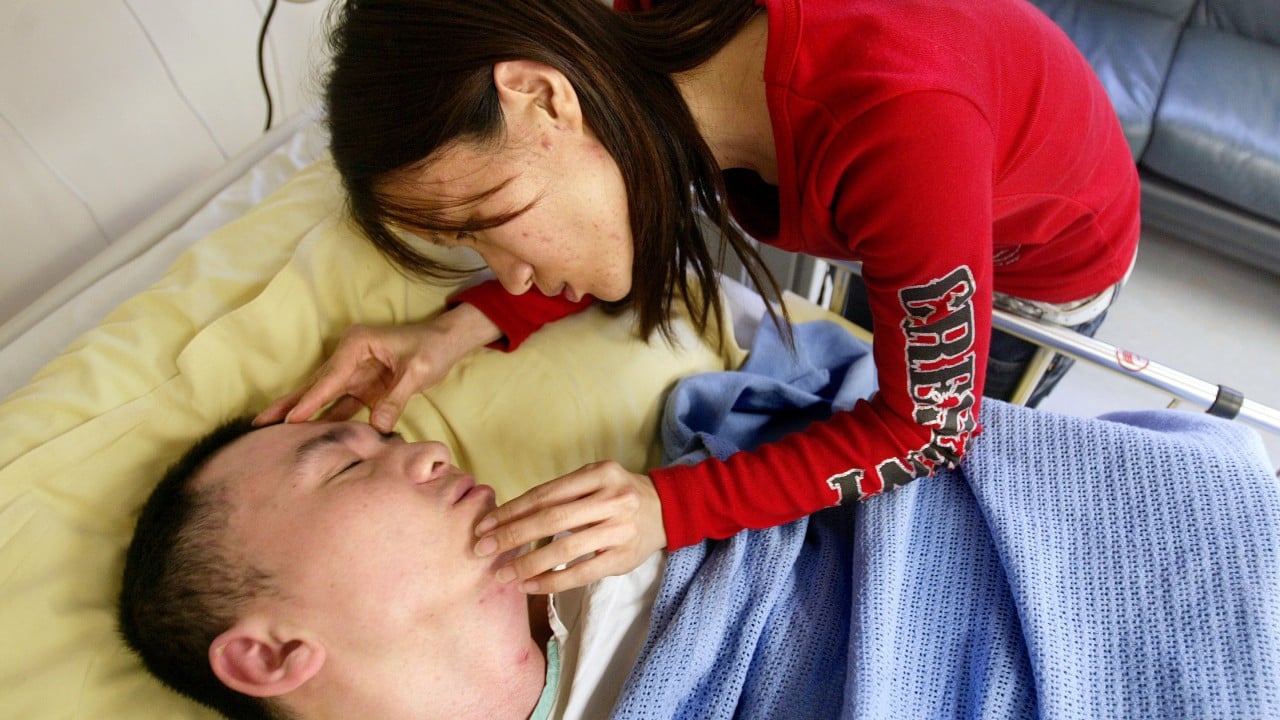
When an impact or laceration severs or severely compresses the cervical spine at the C4-C5 level—as occurred during the 2005 incident involving Leung Kwok-wing in a chaotic confrontation in Kwun Tong—the primary damage is immediate. However, the true operational challenge for modern medicine lies in managing the secondary cascade of physiological failures that persist for the remainder of the patient's life.
The primary mechanical insult destroys neural pathways. The secondary injury phase, which extends across decades, introduces a multi-systemic breakdown characterized by several distinct vectors:
- Autonomic Dysreflexia: Disruption of the sympathetic nervous system below the level of the lesion causes severe, episodic hypertension triggered by minor noxious stimuli such as bladder distension or pressure sores.
- Respiratory Compromise: Paralysis of the diaphragm and intercostal muscles necessitates chronic mechanical ventilation or leaves the pulmonary system highly vulnerable to hypostatic pneumonia and atelectasis.
- Metabolic and Circulatory Decay: Prolonged immobilization drastically accelerates muscle atrophy, bone mineral density loss, and cardiovascular deconditioning, compounding the risk of deep vein thrombosis and pulmonary embolism.
In the case of Leung, surviving twenty-one years post-injury demands an exceptionally rigorous standard of clinical intervention, nursing care, and environmental management. The eventual mortality, even decades removed from the index event, is rarely an isolated coincidence; rather, it represents the statistical convergence of chronic systemic vulnerabilities inherent to C-spine transection.
The Institutional Cost Function and Duty of Care
When a state actor—such as a law enforcement officer—is permanently incapacitated in the line of duty, the sovereign employer incurs a lifelong liability function. This function can be broken down into three quantifiable components: direct medical expenditure, long-term specialized care infrastructure, and systemic risk mitigation.
Public sector institutions operate under a distinct economic model compared to private insurers. The lifetime cost of round-the-clock nursing, specialized wheelchair procurement, home modification, pharmaceutical management, and frequent acute-care hospitalizations for secondary infections (such as urinary tract infections and sepsis) scales non-linearly over time. As a patient ages with a spinal cord injury, the physiological cost of aging compounds the financial expenditure. Tissues become more fragile, metabolic rates drop, and the frequency of interventions increases.
The Hong Kong Police Force, alongside the wider government framework, faced an obligation not merely of immediate compensation, but of maintaining an operational safety net capable of sustaining life across multiple decades of technological and medical evolution. The provision of lifetime care highlights a critical governance metric: how well public safety infrastructure absorbs the catastrophic tail risk borne by its frontline personnel.
Deconstructing the Operational Incident
The 2005 attack in Kwun Tong, where Leung was slashed in the neck while attempting to subdue a suspect, underscores the inherent volatility of frontline policing and the thin margins separating routine containment from permanent disability. In operational security analysis, such events are evaluated through the lens of tactical exposure and kinetic threat mitigation.
The mechanics of knife attacks at close quarters present a severe challenge to standard defensive equipment. Unlike projectile threats mitigated by ballistic vests, cervical and facial zones remain structurally exposed to edged weapons unless specialized tactical collars are deployed—gear that is rarely practical for standard beat patrols due to mobility and heat dissipation constraints.
Consequently, the incident exposes the residual risk threshold of urban policing. No institutional policy can eliminate 100% of asymmetric, close-quarters physical assaults. Therefore, the resilience of the system is measured entirely by its post-incident architecture: how efficiently emergency medical services secure the airway, how rapidly surgical intervention preserves residual spinal cord function, and how sustainably the bureaucracy supports the officer and their dependents once the acute phase concludes.
The Long-Term Prognostic Variables
Evaluating the twenty-year survival window of a high-cervical injury patient requires analyzing the variables that dictate longevity against baseline epidemiological expectations.
- Infection Control: The primary cause of mortality in long-term spinal cord injury is not the neurological deficit itself, but recurrent urological and respiratory infections progressing to septic shock.
- Pressure Injury Management: Chronic tissue ischemia resulting from immobility creates grade IV pressure ulcers that serve as constant vectors for systemic bacteremia.
- Psychological and Cognitive Adaptation: Maintaining neuro-endocrine stability and psychological resilience across decades of complete physical dependency requires a robust social and institutional support network to mitigate stress-induced systemic inflammation.
Leung's longevity indicates a high baseline of institutional and domestic care infrastructure. Statistically, survival past twenty years with high-level cervical paralysis demands near-zero tolerance for lapses in daily prophylactic care protocols.
Strategic Resource Allocation for Occupational Hazard Mitigation
The structural lessons derived from multi-decade tracking of severe line-of-duty injuries dictate necessary adaptations in modern operational planning. Agencies managing high-risk personnel must shift from reactive compensation models to predictive health-asset preservation frameworks.
Future deployment strategies must incorporate dynamic threat-assessment protocols that factor in the delayed financial and human capital costs of catastrophic injuries. When the true cost function of a single permanent disability includes twenty or more years of intensive medical support, the economic justification for advanced preventive gear, enhanced tactical intelligence, and rigorous extraction protocols becomes absolute.
Institutions must audit their long-term care pipelines, ensuring that medical inflation and technological advancements in paralysis management—such as functional electrical stimulation and advanced seating ergonomics—are seamlessly integrated into the lifetime care packages of injured personnel. The metric of success is not merely the initial survival statistic, but the minimization of systemic degradation across the entirety of the injured individual's lifespan.