The tea in Tehran is never just tea. It is a ritual of patience. In the small, steam-fogged cafes of the Grand Bazaar, the porcelain cups are filled with a liquid the color of dark amber, and the conversation usually drifts toward the price of saffron or the heat of the coming summer. But lately, the steam carries a heavier scent. It is the smell of a clock ticking toward an hour nobody wants to name.
Behind the headlines of "shunned peace talks" and "defiant rhetoric" are millions of people living in a state of permanent flinch. They watch the news from Washington with the practiced exhaustion of those who have seen this movie before. They know that when two giants lock eyes across a narrow stretch of water, it is the people on the shore who get wet.
The current standoff isn't merely a disagreement between diplomats in polished shoes. It is a collision of two entirely different versions of reality. On one side, there is the American administration, wielding sanctions like a blunt instrument, convinced that enough pressure will eventually crack the foundation of the Islamic Republic. On the other, there is a hardline leadership in Tehran that views every concession as a death warrant. They aren't just refusing to talk; they are performing a high-stakes play for an audience of their own survivalists.
The Mechanics of the Flinch
Consider a man named Reza. He is a hypothetical shopkeeper, but his reality is shared by millions. Reza doesn't care about the intricacies of the 2015 nuclear deal or the specific wording of a UN resolution. He cares that the price of imported medicine for his daughter has tripled in six months. He cares that the rial, his country’s currency, has become a ghost of its former self.
For Reza, the "defiance" reported in Western media looks less like a geopolitical strategy and more like a tightening noose. When Tehran shuns a peace talk, the stock market in his head crashes. He knows that every time a leader in the West issues a threat on social media, the price of bread in his neighborhood might go up by five percent.
The strategy of "maximum pressure" is designed to make the Iranian government choose between its nuclear ambitions and its economic survival. But history suggests that governments under pressure rarely choose the path of humble apology. Instead, they retreat into the bunkers of nationalism. They tell their people that the hunger they feel isn't the fault of the state, but the fault of an external bully. And in the heat of a crisis, that message starts to stick.
The Mirror of Threat
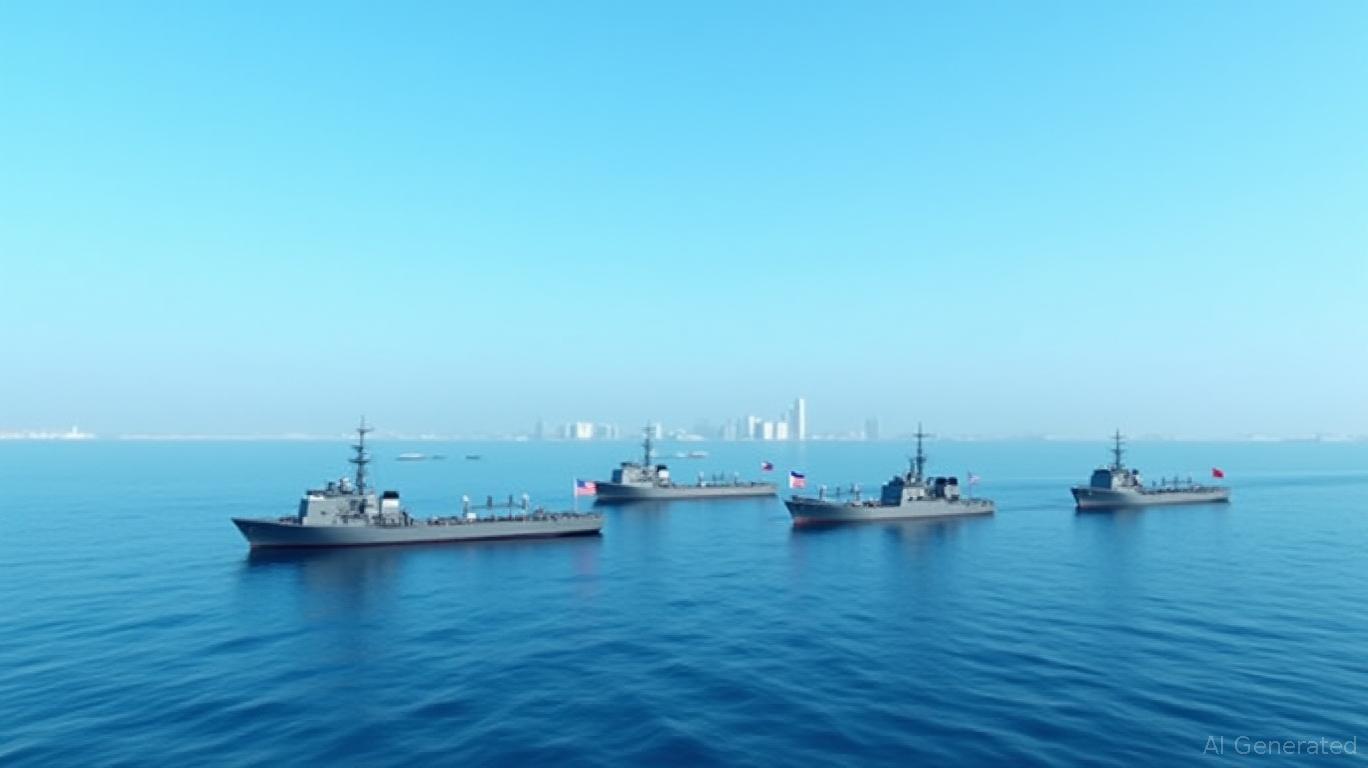
Across the water, the aircraft carriers sit like steel islands. To the American sailors on board, they are symbols of stability and deterrent power. To the Iranian Revolutionary Guard boat captains buzzing around them in fast-attack craft, they are existential threats parked in their front yard.
This is the fundamental danger of the current impasse: the total absence of a shared vocabulary.
When the United States offers a "deal," the Iranian leadership hears a "surrender." When Iran speaks of "resistance," the United States hears "terrorism." We are witnessing a dialogue of the deaf, where the only thing being communicated is the intent to strike first if the other side flinches.
The threats from the White House are intended to be a deterrent, a way to force Tehran back to the table through sheer intimidation. But intimidation only works if the party being intimidated has a face-saving way out. Currently, there is no door marked "exit." The hardliners in Tehran have tied their entire identity to standing tall against the "Great Satan." If they sit down now, under the shadow of direct threats, they lose the only thing that keeps them in power: the image of the defiant underdog.
The Invisible Stakes of the Strait
If you look at a map of the Strait of Hormuz, you see a tiny bottleneck. It is the jugular vein of the global economy.
One-fifth of the world’s oil passes through this narrow passage. It is thirty miles wide at its narrowest point, but the shipping lanes are even tighter. If the "war that might explode" actually does, the explosion won't stay in the Middle East. It will ripple into every gas station in Ohio, every factory in Guangdong, and every heating bill in Berlin.
The "shunned talks" aren't just a snub to a president; they are a gamble with the global status quo. Tehran knows this. Their defiance is rooted in the knowledge that they hold a match to the world’s fuse. They don't need a massive navy to cause chaos. They only need to make the water unsafe.
But the tragedy of this leverage is that it is a suicide vest. If Iran chokes the Strait, its own economy—already gasping for air—dies instantly. It is a standoff where both sides are holding a gun to the same hostage: the global consumer.
The Psychology of the Bunker
Why won't they talk?
To understand the refusal to engage, you have to understand the Iranian memory. They remember 1953, when a CIA-backed coup toppled a democratically elected prime minister. They remember the brutal eight-year war with Iraq in the 1980s, where they felt the world stood by as they were gassed in the trenches.
This isn't an excuse for the current regime’s behavior, but it is the soil in which their defiance grows. When a leader in Washington says they want a "better deal," the leadership in Tehran hears a demand for regime change wrapped in the language of diplomacy. They aren't looking for a seat at the table; they are looking for a guarantee that the table won't be flipped over the moment they sit down.
The "threats" issued by the U.S. administration are designed to project strength, but in the halls of power in Tehran, they are used as proof that the West can never be trusted. Every tweet and every military maneuver is a gift to the Iranian hardliners. It allows them to point at the screen and tell the moderate factions, "See? We told you they only understand force."
The Human Cost of Silence
While the politicians posture, the human element of this story is being ground into the dust. It isn't just about the soldiers who might fight; it’s about the students who can’t get visas, the scientists who can’t collaborate, and the families separated by a digital curtain of sanctions and travel bans.
There is a specific kind of exhaustion that comes from living in a "pre-war" state for decades. It creates a society that lives in the short term. You don't start a business. You don't plan a wedding for next year. You buy gold, you store grain, and you wait for the sound of the sirens.
We often talk about war as a sudden event—a flash of light, a roar of engines. But for those living in the shadow of the Iran-U.S. conflict, the war has been happening in slow motion for years. It is a war of attrition against the middle class. It is a war against the possibility of a normal life.
The Narrow Path
Is there a way out?
The current path is a straight line toward a cliff. History shows that when two nations stop talking and start signaling through military exercises, the margin for error disappears. A single nervous radar operator, a misidentified drone, or a stray ship in the night can trigger a chain reaction that no amount of diplomacy can stop.
The tragedy is that both sides actually want something the other could give. The U.S. wants a stable region without the threat of a nuclear-armed Iran. Iran wants the ability to trade with the world and ensure its own security. But the bridge between those two points is currently guarded by pride, history, and a deep-seated fear of looking weak.
To move forward, the conversation has to stop being about who is "winning" the sanctions war. It has to become about de-escalation as a form of strength, not a sign of surrender. It requires a level of political courage that is currently in short supply in both capitals—the courage to speak to an enemy without a fist raised.
The tea in the Grand Bazaar is getting cold. The shopkeepers are closing their shutters for the night, checking the exchange rates one last time on their phones before they head home. They aren't looking for a "game-changer" or a "robust strategy." They are looking for a tomorrow that looks exactly like today, without the sound of planes overhead.
In the end, the most powerful thing in the world isn't a carrier group or a ballistic missile. It is the simple, quiet ability of a father to promise his daughter that the world will still be there when she wakes up. Right now, that is a promise that nobody in the Persian Gulf can make with a straight face.