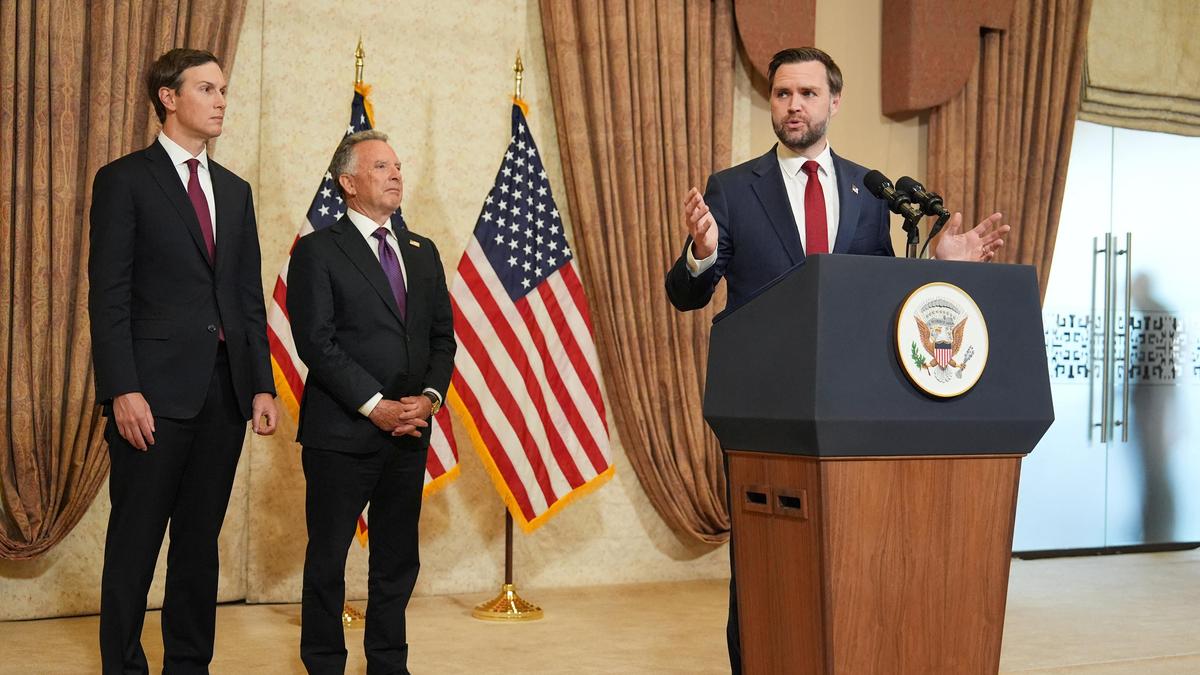
The air in a windowless briefing room in Washington D.C. smells of stale coffee and the ozone of high-end encryption. Here, the world is reduced to maps, colored pins, and the agonizingly slow movement of diplomatic chess. A team of American negotiators is currently packing leather briefcases, checking passports, and preparing for a flight to Islamabad. They are moving toward a Pakistani capital that has seen these faces many times before. But as the engines of their transport plane whine to life, a heavy, familiar silence drifts across the border from Iran.
Geography is a cruel master. To understand why a meeting in Pakistan matters, you have to look at the map not as a collection of borders, but as a series of pressure points. Tehran has made its stance clear: there will be no direct talks with the Americans. It is a door slammed shut, but the reverberations are shaking the entire region.
The Ghost at the Table
Imagine a dinner party where the most important guest refuses to enter the house. They stand on the porch, visible through the window, occasionally shouting through the glass, but never sitting down to break bread. This is the current state of U.S.-Iran relations.
The negotiators heading to Islamabad are tasked with navigating a labyrinth. They are dealing with regional security, the fallout of a fractured Afghanistan, and the ever-present shadow of nuclear proliferation. Yet, every conversation they have in Pakistan will be haunted by the ghost of the Iranian delegation that isn't there. Without Tehran’s direct participation, the Americans are forced to play a game of telephone, relying on intermediaries and subtle signals to gauge the temperature of a regime that views them with ingrained suspicion.
The stakes are not abstract. They are measured in the price of oil, the stability of shipping lanes in the Strait of Hormuz, and the lives of soldiers and civilians across the Middle East. When diplomacy stalls, the vacuum is filled by something far more dangerous: assumption.
The Weight of a Handshake
For a seasoned diplomat, a handshake is more than a greeting. It is a data point. It tells you about the other person’s confidence, their willingness to engage, and the microscopic cues that a printed statement can never convey. By refusing direct talks, Iran is intentionally depriving the U.S. of that data.
They are choosing a policy of strategic ambiguity.
In Islamabad, the American team will sit across from Pakistani officials who are caught in a permanent squeeze. Pakistan shares a 560-mile border with Iran. They cannot afford a total breakdown in communication, yet they remain a critical, if complicated, partner for Western interests. The Americans are coming to Islamabad because it is one of the few places left where the threads of these conflicting worlds still touch.
The negotiators carry folders filled with intelligence reports and economic projections. But more than that, they carry the burden of a decades-long stalemate. Each side is waiting for the other to blink, to offer a concession that doesn't look like a surrender.
Why the Direct Line Went Cold
To understand Iran's "no," we have to look back at the scars of 2018. The withdrawal from the nuclear deal wasn't just a policy shift for Tehran; it was a betrayal of a handshake. In the Iranian political psyche, direct talks are now framed as a trap. If you agree to meet, you are seen as weak. If you reach an agreement, there is no guarantee the next administration won't tear it up before the ink is dry.
This creates a paradox. To solve the issues that lead to sanctions and regional tension, you must talk. But to talk is to risk the very legitimacy of the hardliners holding the strings in Tehran. So, they send messages through the Swiss. They send messages through the Qataris. They send messages through the Omanis.
It is a slow, agonizing process. A message sent on Monday might receive a response by Friday, stripped of all nuance and context. It is like trying to perform heart surgery with a pair of ten-foot poles.
The View from the Bazaar
In the streets of Tehran and the markets of Islamabad, the geopolitical posturing translates into the price of bread and the availability of medicine. A mother in a grocery store doesn't care about the protocol of direct versus indirect talks. She cares that the currency in her purse is losing value by the hour.
This is the human cost of the silence.
The American negotiators know this. Or they should. Behind the "dry facts" of the diplomatic cables are millions of people whose futures are tethered to these meetings. When the U.S. delegation lands in Islamabad, they aren't just there to discuss border security or counter-terrorism. They are there to manage a fire that has been smoldering for nearly half a century.
The Pakistani hosts will offer tea and polite conversation. They will speak of mutual interests and regional "connectivity"—a favorite buzzword that masks the grinding friction of reality. Outside the gated compounds of the diplomatic enclave, the world continues to churn. The refugee camps on the border are still full. The smuggling routes are still active. The drones are still overhead.
The Limits of Middlemen
There is a specific kind of exhaustion that comes with being a middleman. Pakistan has often found itself in this role, acting as the bridge between the West and the parts of the East that the West cannot reach. But a bridge is only useful if people are willing to cross it.
The U.S. trip to Islamabad is an attempt to keep the bridge from collapsing. It is a signal to the world that the machinery of diplomacy is still grinding away, even if the gears are rusted and screaming. By going to Pakistan, the U.S. is signaling that it is still "in the game," even as Iran remains behind its fortress walls.
But there is only so much a third party can do. You can relay a message, but you cannot relay intent. You can pass a document, but you cannot pass trust. Trust is built in the quiet moments between formal sessions, the unrecorded conversations over coffee, the shared human recognition that usually happens when two people sit in the same room.
Iran’s refusal to engage directly is a calculated move to deny the U.S. that human connection. It keeps the conflict in the realm of the ideological and the abstract. It is much easier to hate a "Great Satan" than a person with a family and a law degree sitting three feet away from you.
The Silent Border
While the diplomats talk in Islamabad, the border between Iran and Pakistan remains a place of profound tension. It is a landscape of jagged mountains and sun-scorched plains, where the authority of central governments often feels like a distant rumor. Here, the "human-centric narrative" is written in the dust.
If a conflict were to spark, it wouldn't start in a briefing room. It would start here, with a misunderstood movement or a stray bullet. This is why the U.S. negotiators are making the trip. They are trying to build a sensor network of diplomatic relationships that can alert them to a fire before it consumes the house.
They are looking for "de-escalation," a word that sounds cold until you realize the alternative is a regional war that would dwarf anything we have seen in recent decades.
The silence from Tehran is a tactical choice, but it is also a tragedy of missed opportunities. Every month that passes without a direct line of communication is a month where the chance of a catastrophic mistake grows. You cannot manage a crisis through intermediaries when the crisis is moving at the speed of light.
The Flight Home
Eventually, the American team will board their plane and leave Islamabad. They will have notebooks full of "constructive dialogue" and "shared concerns." They will brief the Secretary of State, and perhaps the President. They will feel a sense of accomplishment for having showed up, for having kept the channels open.
But as they fly over the dark expanse of the Iranian plateau, they will look down at the lights of the cities below. Somewhere down there, their counterparts are also sitting in windowless rooms, reading the same reports, and coming to entirely different conclusions.
The two sides are like ships passing in the night, each refusing to turn on their lanterns for fear of being seen. The U.S. is reaching out a hand in Islamabad, but the hand it really needs to shake is the one that remains firmly in its pocket, three hundred miles to the west.
Diplomacy is often described as the art of the possible. Currently, it feels more like the art of the endurance. We wait. We send another delegation. We fly to another capital. We hope that the silence doesn't eventually break with a sound that no one can take back.
The most powerful thing a negotiator can say isn't a demand or a threat. It is the simple, human acknowledgment: "I am listening."
Until Tehran is willing to say those words, and until Washington is willing to hear them without a filter, the road to Islamabad will remain a long, lonely loop. The chairs in the meeting rooms will remain empty, the coffee will go cold, and the world will continue to hold its breath in the spaces between what is said and what is truly meant.