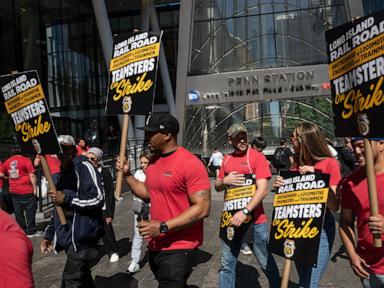
The mainstream media is running the same tired headline: the strike is averted, the trains are running, and political leadership saved the day. New York Governor Kathy Hochul stepped up to the microphones to claim a win for the commuting public. The union bosses shook hands with Metropolitan Transportation Authority officials, patted themselves on the back, and celebrated a "fair contract."
Everyone is smiling. Everyone is relieved. And everyone is completely wrong. Don't forget to check out our earlier article on this related article.
What the public just witnessed was not a triumph of labor negotiation or political leadership. It was a textbook capitulation that kicks an enormous financial can down a crumbling road. By celebrating the prevention of a shutdown, the public is cheering for its own financial strangulation. The lazy consensus says a transit strike is the worst-case scenario. The reality? A forced, economically illiterate settlement that locks in unsustainable operational costs is far more dangerous to the long-term survival of public infrastructure.
The Mirage of the Averted Crisis
The immediate reaction to any averted transit strike follows a predictable script. Commuters breathe a sigh of relief because their morning routine remains unbothered. Politicians bank easy public relations points for being the "grown-ups in the room." To read more about the background of this, NPR offers an excellent summary.
This short-term satisfaction blinds everyone to the structural rot underneath.
When a state executive steps into a labor dispute with the sole objective of avoiding a political headache, long-term fiscal discipline goes out the window. The MTA, which oversees the Long Island Rail Road, is already drowning in structural deficits. Funding gaps are routinely plugged with temporary tax hikes, congestion pricing schemes, and emergency state bailouts.
By forcing a resolution that satisfies union wage demands without demanding fundamental structural reforms in return, leadership didn’t solve a crisis. They subsidized inefficiency.
I have analyzed public transportation budgets and labor agreements for two decades. I have watched transit authorities burn through billions of dollars in emergency funding while productivity metrics plummet. The narrative that "keeping the trains moving at all costs" is a public good is a myth. Sometimes, the cost of keeping the trains moving is higher than the economic damage of a temporary halt.
The Cost of Labor Peace is Unaffordable Overtime
Let's dismantle the premise that these negotiations yield a fair balance for taxpayers. The core issue in commuter rail labor disputes is rarely just the base wage increase. It is the arcane work rules that dictate scheduling, pension calculations, and overtime eligibility.
Under decades-old collective bargaining agreements, archaic work rules ensure that public transit systems require far more headcount per track mile than modern international systems.
Imagine a scenario where a private logistics company operated under rules where an employee receives a full day’s pay for turning a wrench for twenty minutes, simply because that wrench belonged to a different union’s jurisdiction. In the public transit sector, this is standard operating procedure.
- The Overtime Loophole: Pension benefits are frequently calculated based on total compensation, including overtime, rather than base salary. This incentivizes a culture of systemic overtime manipulation during the final years of service.
- The Productivity Penalty: Modernization efforts, from automated scheduling to track maintenance technology, are routinely blocked or delayed because they threaten legacy job descriptions.
When politicians brag about stopping a strike, they are admitting they signed off on these exact inefficiencies. They bought temporary peace by ensuring future fare hikes and service cuts for the very riders they claim to protect.
The False Choice Between Commuters and Workers
The public debate is always framed as a binary war: you either support the hard-working transit employees or you support the struggling commuter. This is a false dichotomy designed to prevent anyone from asking hard questions about where the money actually goes.
Public transit workers deserve competitive compensation. The LIRR operates in one of the most expensive regions in the country. But true worker advocacy does not require defending a system that relies on compounding debt to pay for current operations.
When the MTA takes on massive debt loads to cover operating expenses—driven largely by legacy labor costs—it spends an increasing share of its budget on debt service rather than system maintenance.
The riders suffer through delayed trains, broken signals, and filthy stations because the money meant for infrastructure capital is diverted to pay off the bonds issued to cover yesterday’s labor settlement. This is not pro-worker; it is pro-status quo.
Dismantling the People Also Ask Premise
Look at the questions the public asks during these standoffs. The premises are completely flawed.
Wouldn't a strike paralyze the regional economy?
The standard economic models used by transit agencies to scare the public assume that if the trains stop, 100% of economic activity stops with them. This is an obsolete assumption. The post-pandemic shift to remote and hybrid work completely altered the elasticity of commuter demand.
A strike would undoubtedly cause logistical friction and hurt service-industry businesses in urban centers. But the regional economy possesses far more redundancy than it did twenty years ago. By overstating the apocalyptic impact of a shutdown, transit officials completely destroy their own leverage at the bargaining table.
Why can't the state just fund the deficit?
Because the state is not an infinite well of capital. Funding a transit deficit through general tax revenue means taking money away from public schools, healthcare infrastructure, and municipal services. Alternatively, it means raising taxes on a population that is already fleeing high-tax jurisdictions.
Treating public transit as a bottomless money pit removes any incentive for operational efficiency. It creates a moral hazard where management knows they will always be bailed out, and labor knows they can always demand more because the government cannot afford the political fallout of a disruption.
The Unpopular, Actionable Path to Actual Stability
If the goal is a viable, world-class transit system that lasts for the next half-century, the current playbook must be burned. True sustainability requires embracing friction, not running from it.
First, the state must be willing to take a strike. Management cannot negotiate effectively if the union knows the governor will step in and force a settlement the moment a deadline approaches. Legitimate collective bargaining requires both sides to face the actual economic consequences of a stalemate. If a shutdown happens, let it happen. Use that window to expose the unsustainable nature of the current work rules to the public.
Second, any future wage increases must be legally tied to verifiable productivity gains. If the union wants a 4% annual raise, management must secure a corresponding 4% reduction in operating costs through the elimination of redundant positions, the automation of legacy processes, and the overhaul of the overtime system. No productivity gains, no wage hikes.
Third, strip pension calculations of overtime distorting factors. Pensions should be based strictly on base salary. This single move would save hundreds of millions of dollars over the next decade and eliminate the systemic incentive to manufacture overtime hours.
The downside to this approach is obvious: it means pain. It means chaotic weeks of altered commutes, furious voters, and brutal press coverage. It requires political courage that is entirely absent in modern governance.
But continuing down the current path—celebrating hollow victories while the system slides further into bankruptcy—is a cowardly betrayal of the public trust. The Long Island Rail Road strike didn't end. The bill was just forwarded to your children.