The Weight of a Single Chair
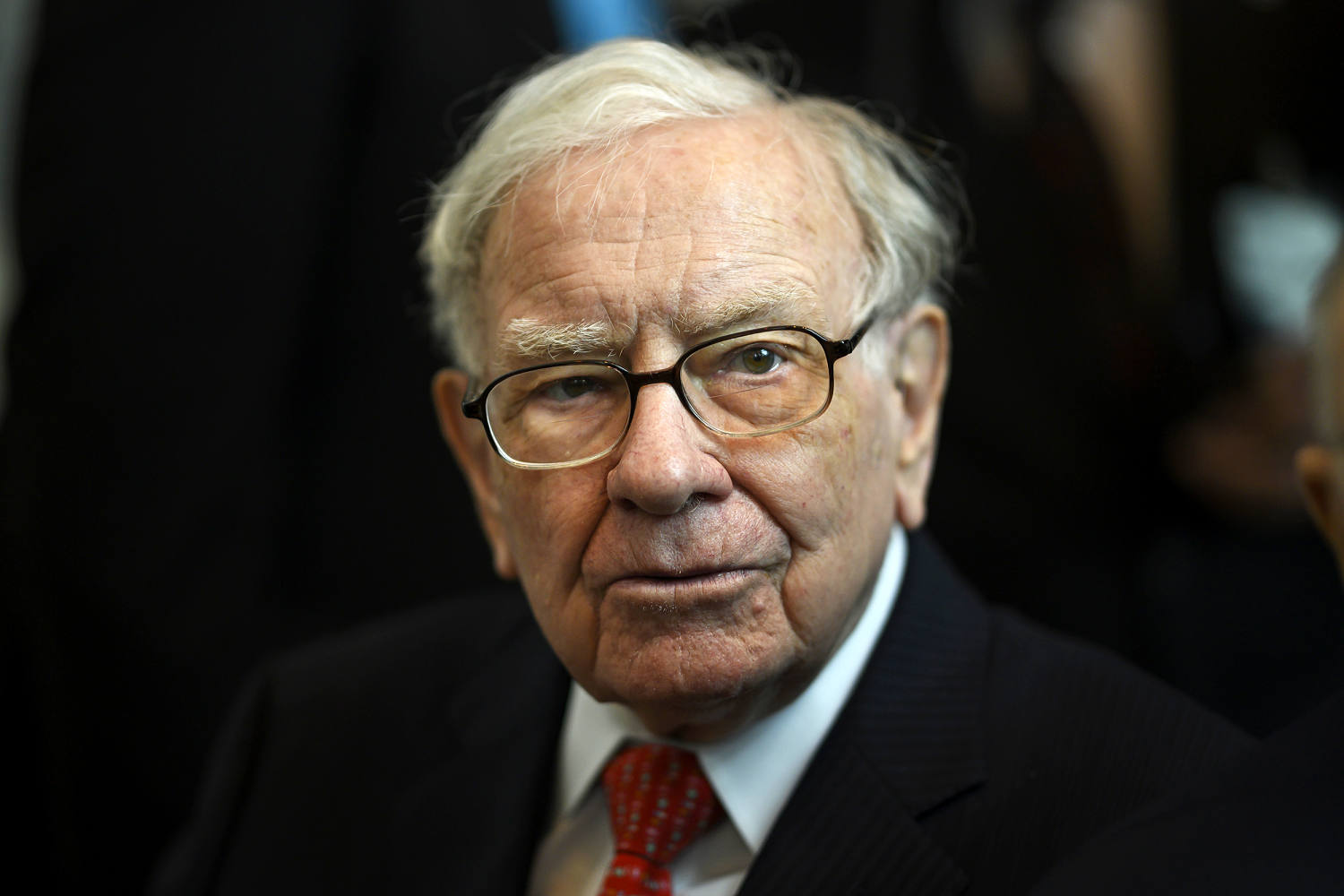
Warren Buffett is no longer chairman of Berkshire Hathaway. The announcement marks the definitive closure of the longest and most successful capital allocation run in corporate history. Decades of steady accumulation, opportunistic acquisitions, and folksy annual letters from Omaha have concluded. Markets reacted with measured anxiety rather than panic. Investors spent years pricing in the inevitable transition to Greg Abel. Yet sentiment is not strategy. The departure of the chief architect leaves an institutional vacuum that cannot be filled by a single successor.
For generations, Berkshire operated less like a traditional public corporation and more like an exclusive private partnership operating under public scrutiny. Shareholders bought pieces of businesses because they trusted one man's moral compass and mathematical precision. That era is over. The company now enters an unchartered corporate phase where bureaucratic momentum threatens to replace entrepreneurial zeal. Tens of thousands of pilgrims who flooded Omaha every spring did not come merely to analyze balance sheets. They came to witness an oracle who treated shareholders as rational co-owners rather than quarterly marks.
The transition raises fundamental questions about the future of American capitalism. Can a conglomerate holding hundreds of billions of dollars in cash and dozens of sprawling operating units maintain its compounding advantage without its founder? The answer requires looking past the comforting mythology of the Berkshire annual meeting. It requires examining the operational mechanics that actually built the empire and the structural headwinds facing it today. The cult of personality masked structural inefficiencies that will now demand active management.
The Anatomy of the Float Empire
Insurance sits at the core of Berkshire's financial engine. Few casual observers understand the exact mechanics of float. Policyholders pay premiums upfront. Berkshire holds those funds, invests them in high-yield equities or short-term treasuries, and pays out claims years later. This creates a massive pool of zero-cost capital. Buffett mastered this mechanic through strategic acquisitions like GEICO, National Indemnity, and General Re, turning insurance liabilities into an engine for equity accumulation.
Ajit Jain built the reinsurance operation into a fortress. His underwriting discipline protected the conglomerate from catastrophic losses that sank competitors during major hurricane seasons or financial panics. But insurance underwriting is cyclical and fiercely competitive. As global industry capacity grows, profit margins compress. Without Buffett's personal relationship network and willingness to write massive standalone policies on a handshake during market freezes, winning complex underwriting deals becomes significantly harder.
Furthermore, the sheer scale of the float creates a mathematical paradox. Berkshire generates billions in cash flow every quarter. Finding investments large enough to move the needle for a trillion-dollar enterprise is nearly impossible. Buying small companies does not register on the balance sheet. Buying large public equities invites regulatory scrutiny and market distortion. The float engine is powerful, but it is currently trapped inside its own massive gravity well. When interest rates fluctuate or bond yields drop, the earnings generated by that cash pool fluctuate wildly, exposing the underlying cyclicality that Buffett's stellar stock picking previously obscured.
The Succession Puzzle and Capital Allocation
Greg Abel commands deep respect inside the sprawling operating companies. He understands operations, energy markets, and managerial accountability. Yet capital allocation is a distinct discipline from operational management. Buffett spent decades sitting in his Omaha office reading annual reports, waiting for market dislocations, and deploying billions with surgical precision during panics. His decisions were instinctual, backed by a lifetime of studying corporate balance sheets and market history.
Abel inherits a different market reality. Modern public markets are saturated with private equity dry powder, activist investors, and algorithmic trading. Mispricings of the magnitude that rescued Berkshire during past financial crises are rarer. When brilliant opportunities do appear, regulatory barriers often prevent a single corporate entity from acquiring a controlling stake without triggering intense antitrust battles.
Investment managers Todd Combs and Ted Weschler handle a portion of the equity portfolio. Their performance has been respectable, yet their combined allocations represent a fraction of the total balance sheet. The major stock decisions remain tied to the institutional culture forged by Buffett and Charlie Munger. Without Munger's sharp philosophical counterweight and Buffett's ultimate veto power, the investment committee dynamic will inevitably shift. Bureaucratic consensus tends to dilute bold bets. Risk aversion replaces asymmetric upside hunting. Committees rarely swing for the fences with the conviction of a singular owner.
The Conglomerate Discount and Shareholder Psychology
Public markets historically applied a conglomerate discount to diversified holding companies. Berkshire evaded this penalty for decades. Investors willingly paid a premium because Buffett consistently outperformed the broader S and P index while maintaining a fortress balance sheet. That premium was effectively a behavioral tax on loyalty, sustained by annual letters that functioned as masterclasses in financial philosophy.
As the aura fades, market analysts will scrutinize individual business segments with harsher objectivity. BNSF Railway faces fierce competition from trucking, intermodal shifts, and labor cost pressures. Berkshire Hathaway Energy navigates complex regulatory shifts, grid modernization costs, and capital expenditures required for renewable transitions. Retail and manufacturing subsidiaries feel the pinch of inflationary wage pressures and changing consumer habits.
When a company grows this large, it mirrors the macroeconomic health of the entire nation. It ceases to be an agile stock picker and becomes a proxy for the domestic economy. If growth stalls, institutional shareholders accustomed to market-beating returns will begin demanding structural changes. Spinoffs and dividend reinstatements will move from whispered boardroom theories to aggressive public demands. The board will face unprecedented pressure to unlock sum-of-the-parts value through asset sales.
Structural Friction in the Absence of Buffett
Subsidiary CEOs enjoyed unprecedented operational freedom under the old regime. Managers ran their enterprises with minimal corporate interference as long as cash remittances arrived reliably in Omaha. This decentralized model worked because every subsidiary head feared disappointing Warren. That fear was rooted in profound respect and shared cultural alignment.
Corporate culture does not automatically survive the departure of its creator. New leadership often feels compelled to assert control through standardized reporting, centralized compliance, and corporate oversight. This administrative creep introduces friction. Talented entrepreneurs who sold their family businesses to Berkshire specifically to escape corporate bureaucracy may find the new environment increasingly bureaucratic.
If subsidiary autonomy erodes, the primary competitive advantage of selling a business to Berkshire disappears. Founders chose Omaha over private equity buyout shops because Berkshire offered permanent homes for their life work without immediate demands for cost-cutting or operational restructuring. If Abel or his successors introduce heavy corporate interference, the pipeline of proprietary acquisition deals will dry up. Sellers will take their companies elsewhere, depriving Berkshire of its traditional inbound deal flow.
The Final Accounting
The departure of Warren Buffett does not spell immediate ruin for Berkshire Hathaway. The balance sheet remains a fortress of liquidity, capable of weathering severe economic storms. Thousands of dedicated employees show up to work every day across dozens of essential industries. The infrastructure is resilient.
Yet the golden age of effortless compounding has passed. Size is the ultimate enemy of exceptional returns. The economic moat that protected the company for half a century must now be defended by committees, spreadsheets, and institutional processes rather than individual genius.
Investors cheering the smooth transition overlook the subtle erosion of competitive differentiation. Berkshire is becoming a normal corporation. For a titan built on defying normal rules, that transformation is the quietest and most dangerous revolution of all.