The lazy consensus of our era loves a tidy narrative of modernization. Politicians and progressive fans look at the 1985 Sporting Events Control of Alcohol Act through a lens of cultural cringe, framing it as an archaic relic of a bygone age of terraces, bovril, and leather jackets. The argument goes that because rugby fans and cricket spectators can sink pints in their seats without turning stadiums into war zones, English football should follow suit. Andy Burnham’s push to lift the ban on alcohol in view of the pitch is being cheered as a long-overdue victory for adult autonomy and matchday revenue.
It is a catastrophically superficial diagnosis.
The push to scrap the stadium drinking ban is built on a fundamental misreading of why football violence happened in the first place, how modern supporter psychology operates, and what happens when you monetize every square inch of the fan experience. We are being asked to trade structural safety for short-term concessions and hospitality upselling, under the guise of progress.
Let us examine the core mechanics of the law we are so eager to discard. The 1985 Act did not emerge from a vacuum of puritanical spite; it was an emergency legislative tourniquet applied after a decade where English football grounds routinely doubled as municipal riot zones. To pretend that the ban was merely decorative is historical illiteracy. By severing the link between continuous alcohol consumption and the immediate sensory trigger of the pitch, the law forced a cooling-off buffer. It changed the geometry of consumption.
The proponents of lifting the ban argue that if fans can drink in the stands, they will not feel rushed to down four pints of lukewarm lager in a fifteen-minute concourse window before kickoff. This sounds plausible in a boardroom presentation. In reality, it ignores the behavioral economics of mass crowds.
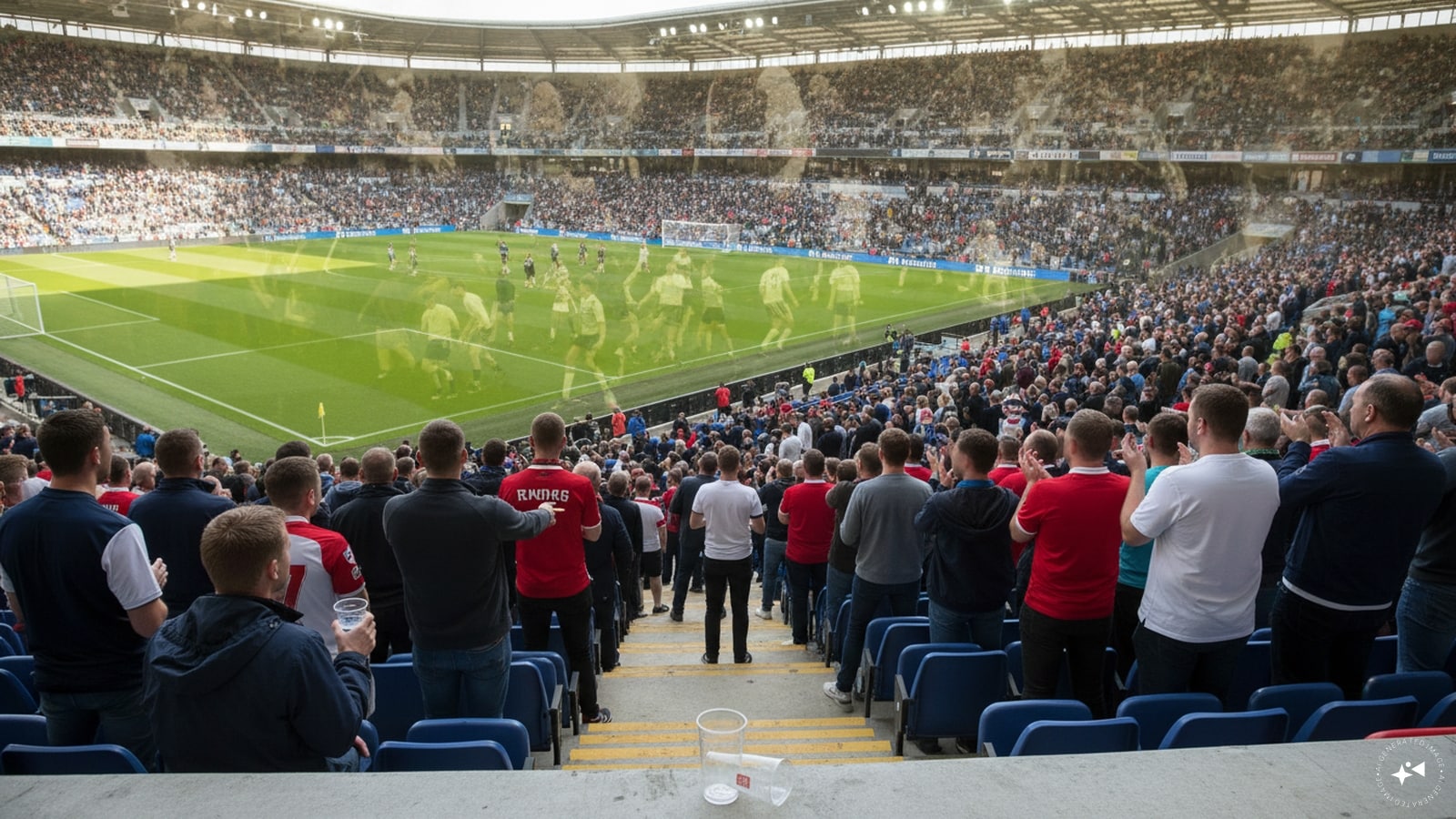
Imagine a scenario where thousands of fans are sitting in a packed lower tier during a high-stakes relegation battle or a bitter derby. Tensions are near boiling point. The referee makes a contentious decision. Now, instead of just hurling abuse or shaking fists, every single fan within arms-reach of a plastic cup holder has access to an endless, uninterrupted supply of high-percentage draft alcohol delivered directly to their seat or a nearby concourse kiosk throughout the entirety of the ninety minutes.
The comparison to rugby union is intellectually lazy. Rugby culture evolved in a different socio-economic ecosystem with different crowd densities, rival segregation protocols, and historical dynamics. Football is tribal in a way rugby has never pretended to be. The sheer volume of liquid throughput in a modern football stadium would transform the stands into an administrative nightmare for club safety officers and local police forces.
More importantly, let us talk about the economic Trojan horse hidden inside this debate. Clubs do not want to lift the ban because they care about your personal freedom to enjoy a craft IPA while watching a corner kick. They want to lift the ban because it unlocks an entirely new stream of captive-market hospitality revenue. When seats are converted into premium zones with in-seat alcohol service, the ordinary match-going fan is quietly squeezed out to make room for high-spending corporate tourists who treat the game like corporate theater rather than a living cultural institution.
We are told that other countries, such as Germany, allow beer in the stands without structural collapse. True. But German football culture features different stadium architectures, standing configurations, and a fundamentally distinct relationship between supporters and club management. Transplanting a localized regulatory model into the high-octane, hyper-commercialized environment of the English Premier League and the English Football League ignores the unique pressure cooker of British sporting passion.
The current system has flaws. The concourses are overcrowded, the queues are absurd, and the policing costs are astronomical. But opening the floodgates to continuous, in-view-of-the-pitch drinking will not solve stadium congestion; it will simply shift the battlefield from the concourse tunnel back to the rows where families, children, and lifelong supporters sit.
Stop pretending that every restriction from the past is a shackle that needs breaking. Sometimes, a boundary line is the only thing keeping the chaos at bay.
The next time someone tells you that modernizing football requires a pint in every hand, ask them who is going to clean up the mess when the whistle blows.