The room where it happens rarely looks dramatic. It is usually just a quiet office with beige carpeting, the faint hum of a cooling fan, and a glowing computer screen displaying a standard financial disclosure form. But when you look closely at the dates, the lines of black ink begin to tell a different story. They reveal a precise choreography between personal wealth and public power.
In the spring of 2026, public records pulled back the curtain on one such sequence. Financial filings revealed that Donald Trump acquired between $1 million and $5 million in stock in Axon Enterprise—the aerospace and defense company best known for manufacturing Tasers and body cameras. Also making headlines recently: Small Aircraft Scapegoating and the Big Lie of General Aviation Safety Culture.
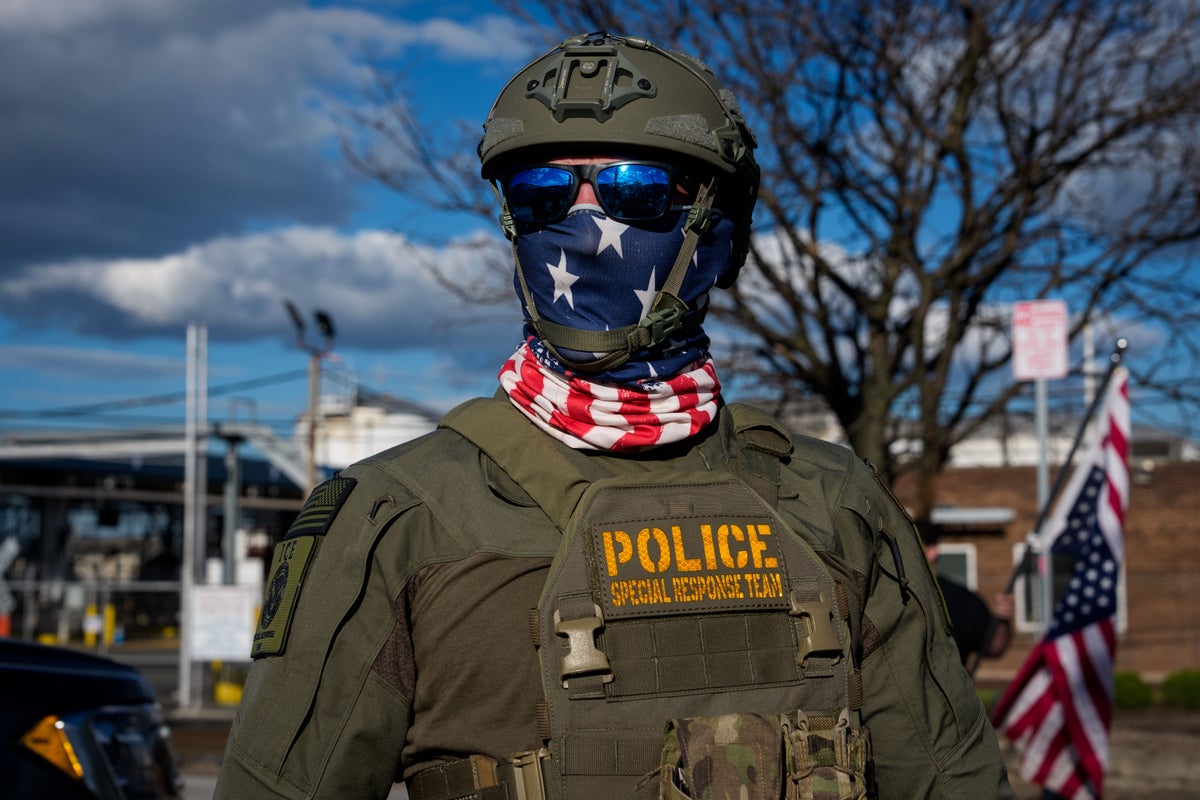
The purchase itself might have passed as a routine portfolio adjustment by a wealthy investor. But the calendar provided a starker context. Shortly after the investment was finalized, the federal government initiated a massive $220 million bidding process through Immigration and Customs Enforcement (ICE) for the exact technologies Axon specializes in.
This is not a story about a single transaction. It is a glimpse into a parallel legal universe where the people who shape national policy can simultaneously profit from the industries those policies enrich. Additional information on this are explored by The Washington Post.
The Friction of Timing
To understand how these worlds collide, consider a hypothetical federal procurement officer. Let's call her Sarah. Sarah spends her days reviewing thousands of pages of technical specifications, compliance metrics, and budgetary constraints. Her job is to ensure that when a government agency spends hundreds of millions of taxpayer dollars, the equipment works and the contract follows the letter of the law.
For someone like Sarah, the process is agonizingly slow. It requires months of internal deliberation, market analysis, and bureaucratic sign-offs before a public bid is ever announced. The public only sees the final announcement. The architecture of the deal, however, is built in secret long before the first press release hits the wire.
When a high-profile political figure buys a massive stake in a company right before that company's primary market expands via government fiat, it changes the gravity of the room. It introduces an uncomfortable question that haunts every level of public service: Who knew what, and when did they know it?
The financial markets thrive on anticipation. If an ordinary retail investor wants to buy stock, they rely on public news, quarterly earnings reports, and historical data. They look backward. But institutional players and individuals with deep political networks operate on a different timeline. They are often positioned to look forward, reading the subtle shifts in policy like a sailor reading the wind before the storm arrives on shore.
The Mechanics of the Market
Axon Enterprise has spent years cementing its status as an indispensable partner to American law enforcement. What began as a company selling non-lethal weapons has evolved into a massive digital ecosystem that manages cloud-based evidence, body-cam footage, and artificial intelligence tools for police departments and federal agencies alike.
When ICE announced its intention to overhaul its technological infrastructure with a $220 million contract, it was clear that only a handful of corporations possessed the scale to fulfill the order. Axon was the obvious frontrunner.
Consider how a stock price reacts to this kind of systemic guarantee. A government contract is not just a one-time cash infusion. It is a multi-year anchor that stabilizes a company’s revenue, funds its research and development, and signals to the rest of the market that this specific business has the official backing of the state.
For an investor holding up to $5 million in shares, even a minor upward tick in valuation following a contract announcement yields massive returns. A five percent bump on a multi-million-dollar position creates wealth overnight—wealth generated not by inventing a new product or finding a more efficient manufacturing process, but by successfully predicting the movement of government funds.
The ethics of this dynamic have long been a flashpoint in American governance. The Stop Trading on Congressional Knowledge (STOCK) Act was passed more than a decade ago to prevent lawmakers from using non-public information for personal financial gain. Yet, year after year, public disclosures show that high-ranking officials across the political spectrum consistently outperform the market. The rules exist, but the loopholes are wide enough to drive a fortune through.
The Invisible Stakeholders
Away from the stock tickers and the corporate boardrooms, the true impact of these financial decisions lands on the ground. Think of an immigration enforcement agent working a border checkpoint, or a family waiting in a detention facility. They are the actual end-users of the technology being bought and sold on Wall Street.
To an agent, a body camera or a Taser is a tool of survival and accountability. To an advocate, it is a mechanism of state surveillance. But to the investor, it is a line item on an asset spreadsheet. The human reality of enforcement—the tension, the fear, the complex legal battles over human rights—is flattened into a predictable stream of dividends.
This disconnect is where the real erosion occurs. When the public perceives that the deployment of law enforcement technology is tied to the personal stock portfolios of political leaders, trust dissolves. The policy itself becomes suspect. A mandate to increase body camera usage is no longer viewed strictly as a push for transparency; it becomes entangled with suspicions of insider enrichment.
The system relies heavily on the honor system and delayed transparency. Under current laws, transactions must be reported, but often weeks or months after they occur. By the time the public learns that an investment was made, the trade has cleared, the contract has been initiated, and the profit has been locked in. The post-mortem analysis can dominate the news cycle for a day or two, but the financial reality remains untouched.
A System of Permitted Anomalies
It is easy to get lost in the partisan outrage that inevitably follows these disclosures. Critics point to the conflict of interest as definitive proof of corruption, while defenders dismiss it as savvy investing or a coincidence born of a broad financial portfolio. But focusing entirely on individual intent misses the broader, more concerning truth.
The real issue is that the system permits it.
In almost any other highly regulated industry, an individual with direct influence over an organization's procurement decisions would be strictly barred from owning shares in a prospective bidder. A corporate executive cannot buy stock in a target company right before a merger is announced without triggering an immediate investigation by the Securities and Exchange Commission. The penalties are severe: fines, professional exile, and prison time.
Yet, in the highest corridors of political power, the boundaries remain remarkably fluid. The presidency and other high-level offices are frequently exempted from the stricter conflict-of-interest statutes that govern lower-level civil servants. The justification has traditionally been that these leaders must deal with every sector of the economy, making total divestment impractical.
But when the numbers reach the millions, and the contracts reach the hundreds of millions, that justification wears thin. It leaves the public to navigate a landscape of deep skepticism, wondering if policy drives investment, or if investment drives policy.
The ink on the ICE contract will dry, the equipment will be delivered, and the stock certificates will continue to sit in private portfolios, quietly accumulating value. The true cost of these transactions is never listed on the financial disclosures. It is paid over time, in the quiet, steady loss of faith in the integrity of public institutions.