Picture a server rack humming inside a windowless bunker somewhere in northern Virginia. It is three in the morning. Inside that steel cabinet, millions of microscopic switches are flipping billions of times a second, training a model that might one day predict protein folding, design a new jet engine, or crack an encryption key.
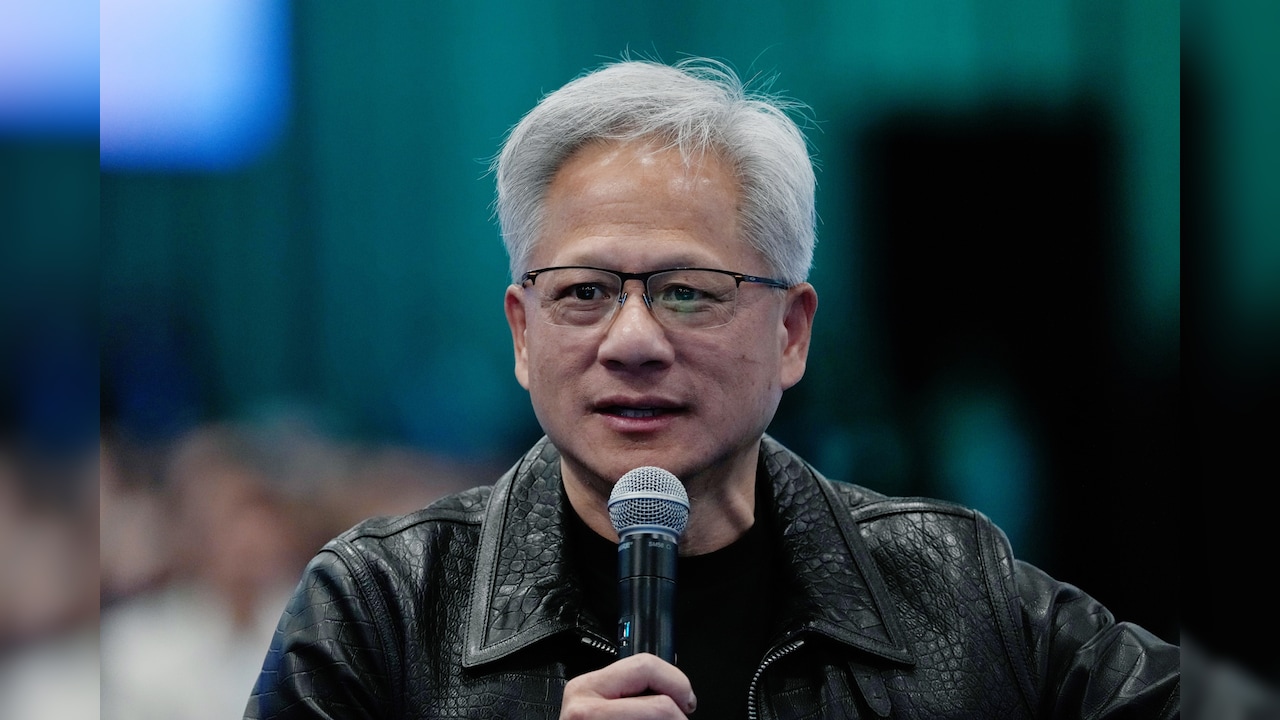
Now picture the man who built the engine inside that box. He wears a black moto-style leather jacket, speaks with the cadence of an electrical engineer who never quite left the lab, and holds a near-monopoly on the foundational hardware of the twenty-first century.
Jensen Huang.
For years, Huang operated in the rarefied air of Silicon Valley—admired by gamers, worshipped by Wall Street, and largely ignored by the cable news pundits who prefer their villains and heroes in tailored suits. Then, the geopolitical ice shifted. Suddenly, the quiet architecture of semiconductor supply chains collided headfirst with the loudest megaphone in American politics.
When Donald Trump stepped up to weigh in on what commentators hastily dubbed "Huang-gate"—a swirling controversy involving alleged Chinese espionage networks, export controls, and the former Nvidia chief's business ties—he didn't reach for the usual Washington script of condemnation. Instead, according to public remarks circulating across political and tech media, Trump praised Huang for doing a "fantastic job," even as critics across the aisle sounded alarms over national security vulnerabilities and alleged Chinese spy scandals touching the broader tech ecosystem.
To understand why that single compliment sent shockwaves from Capitol Hill to Taipei, you have to look past the headlines. You have to look at the invisible war being fought over tiny slivers of etched sand.
The Anatomy of a Modern Panic
I remember the first time I walked onto a cleanroom floor at a semiconductor fabrication plant. You don't just put on a hairnet; you disappear into a full-body bunny suit, scrubbed by air showers that blast away every stray skin cell. One speck of dust—a single microscopic flake—can ruin a wafer worth tens of thousands of dollars.
That fragility defines the entire artificial intelligence race.
In Washington, however, nuance rarely survives a news cycle. When reports surfaced alleging that foreign intelligence operatives were aggressively targeting American chipmakers, recruiting engineers, and exploiting gray-market loopholes to smuggle restricted GPUs across borders, the political reaction was immediate. Pundits slapped "-gate" onto Huang's name, turning a complex web of international trade compliance, corporate leadership transitions, and counterintelligence into a viral talking point.
Critics argued that any entanglement between American chip dominance and Chinese market interests represented an existential threat. In their telling, every high-end processor shipped abroad was another brick in a rival superpower's military architecture. National security hawks demanded tighter export walls, stricter vetting of corporate executives, and zero tolerance for ambiguity.
Yet, when Trump addressed the furor, he broke ranks with the chorus of alarmists. By calling Huang's stewardship "fantastic" despite the surrounding noise of the Chinese-spy scandal, Trump highlighted a fundamental tension that has paralyzed American industrial policy for a decade.
How do you keep a company dominant on the world stage without starving it of the global revenue that funds its research?
The Chessboard Nobody Sees
Let's strip away the partisan noise and look at the mechanics of the dilemma. Imagine a hypothetical American engineer—let's call her Maya—working on next-generation chip interconnects in Santa Clara. Maya's salary, her laboratory's multi-million-dollar lithography equipment, and the entire ecosystem of software developers building on her company's platform exist because that company sells chips at massive scale.
If you cut off half the world's market overnight, Maya's company doesn't just lose profit. It loses the capital required to stay five years ahead of its competitors. Worse, foreign rivals—suddenly denied access to Western hardware—pour billions of state-backed dollars into building their own domestic alternatives, accelerating the very independence Washington hoped to prevent.
This is the paradox at the heart of the Nvidia saga.
Under Huang's leadership, Nvidia transformed from a niche maker of video game graphics cards into the indispensable foundry of the AI boom. Its proprietary software layer, CUDA, became the universal language of machine learning. Developers didn't just buy Nvidia chips because they were fast; they bought them because every line of code they had written for ten years was built to run on them.
That dominance made Nvidia a crown jewel of American enterprise—and an irresistible target for foreign espionage.
Counterintelligence officials have warned for years that nation-state actors do not need to bomb a factory to steal an industry. They use shell companies in third-party countries to buy restricted hardware. They use venture capital funds to invest in quiet startups. They offer exorbitant consulting fees to mid-level engineers who hold the keys to proprietary schematics.
When those schemes come to light, the public looks for a single face to blame. In a polarized media environment, complex systemic vulnerabilities get flattened into personal scandals.
Why the Praise Matters More Than the Scandal
So why did Trump's endorsement of Huang land with such force?
Part of it is pure political instinct. Trump has long framed global competition not as an ideological crusade, but as a contest of winners and losers—a boardroom brawl on a planetary scale. In that worldview, a founder who builds a multi-trillion-dollar titan out of a Denny's booth in San Jose is the ultimate archetype of American prowess. To attack Huang, from this perspective, is to undercut one of the few executives who actually beat the rest of the world at manufacturing design.
At the same time, critics and national security analysts view that framing with deep skepticism. Several defense policy experts and lawmakers have argued that applauding corporate performance while brushing past espionage risks sends the wrong signal to Silicon Valley boardrooms. If national security becomes secondary to market capitalization, they warn, the United States risks trading long-term strategic survival for short-term stock gains.
Both sides are looking at the exact same object and seeing two entirely different realities.
One sees a fragile technological lead that must be locked inside a vault, even if the vault slows down innovation. The other sees a high-speed race where the only safety lies in running faster than anyone else can copy.
The Human Toll of the Silicon Cold War
It is easy to talk about export controls, spy rings, and executive endorsements as if they were moves on a Risk board. It is much harder when you sit across the table from the people caught in the gears.
Consider the reality inside major semiconductor firms today. Dual-citizen engineers who once moved seamlessly between conferences in Beijing, Hsinchu, and Austin now face months of background checks just to access internal code repositories. Compliance officers—once buried in the back offices of legal departments—now sit beside chief executives, vetting every purchase order from Singapore or Dubai to ensure a shipment of servers isn't bound for a hidden data center across the border.
I have spoken with hardware architects who describe the current atmosphere as walking through a minefield blindfolded. Build a chip too powerful, and the Commerce Department bans you from selling it abroad. Dial back the performance to comply with the law, and lawmakers accuse you of intentionally circumventing national security rules. Speak too warmly about international partnerships, and you risk becoming the centerpiece of a cable news outrage cycle.
Meanwhile, the actual spies—the intelligence officers operating behind layers of corporate proxies and encrypted messaging apps—don't care about cable news labels. They operate in the seams between jurisdictions, exploiting the very friction that keeps Washington and Silicon Valley at odds.
Beyond the Headline
When future historians look back at this era, they will likely not remember the phrase "Huang-gate." Political nicknames have the shelf life of milk left on a summer sidewalk.
What they will remember is the moment the United States realized that its greatest strategic asset was no longer an aircraft carrier or an oil reserve, but a network of private companies whose supply chains stretched across the Pacific.
The debate sparked by Trump's praise of Huang—and the fierce pushback from those focused on the Chinese espionage threat—is really a debate about trust. Can a private corporation, beholden to shareholders and global markets, ever be fully aligned with the security imperatives of a nation-state? Or does heavy-handed government intervention inevitably suffocate the very ingenuity that made that corporation valuable in the first place?
There is no clean formula to solve that equation. No executive order can wall off knowledge forever, and no earnings report can erase the reality of state-sponsored theft.
Somewhere tonight, in a quiet lab lit by the blue glow of diagnostic monitors, an engineer is testing the next generation of silicon—smaller than a fingernail, denser than a city map, and powerful enough to reshape the balance of global power. Outside that room, politicians will keep shouting, pundits will keep inventing nicknames, and intelligence agencies will keep hunting shadows in the supply chain. Inside, the machines just keep humming, waiting to see who gets to turn the key.