Los Angeles International Airport is famous for soul-crushing traffic, endless construction, and a delayed automated train system that tests everyone's patience. Yet tucked into the chaos of the arrivals level, you might stumble across Brian sitting behind a vintage typewriter, tapping out custom poems on the spot for stressed-out travelers.
It sounds fake. It isn't.
While billions of dollars in concrete guideways sit waiting for final testing outside the terminals, this lone poet offers an immediate, human antidote to the worst parts of modern air travel. If you're stuck on a long layover or waiting out a gridlocked pickup lane, finding him might be the single best way to salvage your trip through Southern California.
The Reality of the LAX Automated People Mover Delays
Anyone who has flown into Los Angeles over the last few years knows the horseshoe loop is a nightmare. Los Angeles World Airports (LAWA) launched the Landside Access Modernization Program specifically to fix this mess by building a 2.25-mile elevated electric train connecting the terminals to regional transit, a consolidated rental car facility, and off-site parking.
The project ran into massive schedule setbacks. Originally slated to open in 2023, the LAX Automated People Mover suffered repeated delays tied to contract disputes, testing hurdles, and systems integration issues between LAWA and the developer consortium, LAX Integrated Express Solutions. Those delays pushed passenger service timelines deep into 2026, leaving travelers reliant on crowded shuttle buses and bumper-to-bumper rideshare lots in the meantime.
When infrastructure projects stall for years, airports usually respond with apologetic signage and temporary barricades. They rarely respond with a guy on a manual typewriter.
Who Is Brian and What Does He Actually Do at LAX
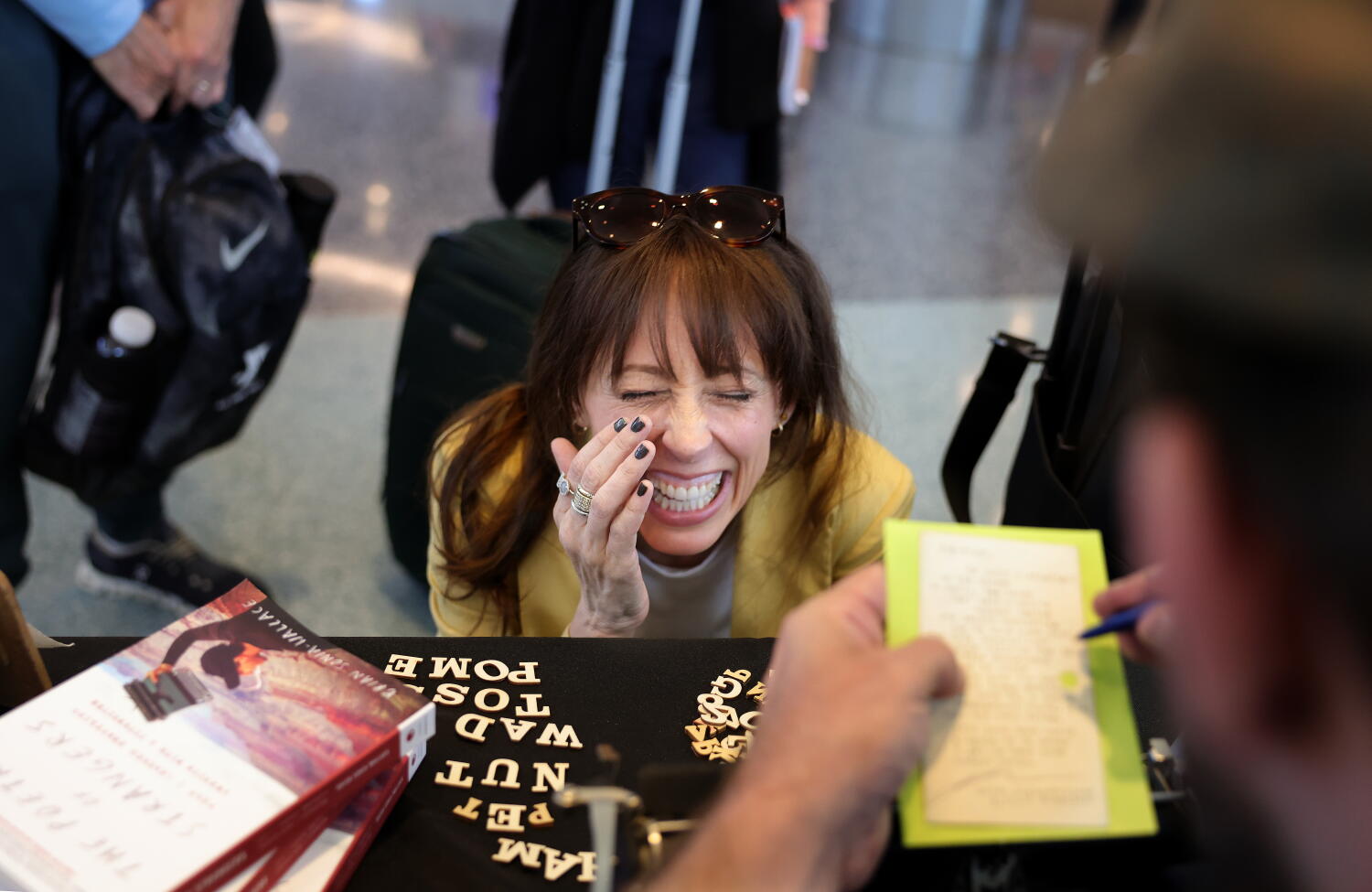
Brian isn't an automated kiosk, and he isn't handing out pre-printed tourist brochures. He's a typewriter poet who sets up in public spaces—including the arrivals areas of LAX—with a folding table, a classic mechanical typewriter, and a stack of heavy cardstock.
You walk up, give him a topic, a mood, or a few details about where you're flying, and he writes an original poem right in front of you in a matter of minutes.
The clacking of the keys cuts right through the rumble of rolling suitcases and overhead PA announcements. People stop because the sound is analog and unexpected in a building obsessed with QR codes and biometric boarding gates. You watch him pause, think for ten seconds, and hammer out lines that somehow capture why you're exhausted from a red-eye from New York or nervous about starting a new job in Santa Monica.
He works on a tip-based or "pay what you want" model, which keeps the interaction completely pressure-free. There's no corporate sponsorship plastered across his desk. It's just ink, paper, and human attention.
Why Analog Art Works Inside a Broken Transit Hub
Modern airports are engineered to move bodies through security checkpoints and retail corridors as efficiently as possible. When a major transit link like the people mover stays offline, that efficiency collapses, and anxiety spikes immediately.
Brian's typewriter setup works precisely because it violates every rule of airport design.
- It forces a real pause. You can't rush a mechanical typewriter. Waiting three minutes for a poem forces you to stand still and breathe instead of refreshing your rideshare app every four seconds.
- It creates a physical souvenir. Almost everything in travel lives on your phone screen now—boarding passes, hotel keys, baggage tags, and maps. Walking away with a sheet of textured paper stamped with fresh ink feels weirdly permanent.
- It restores human scale to a massive facility. LAX handles tens of millions of passengers every year, making it easy to feel invisible. Having a stranger listen to your story for thirty seconds and turn it into verse reverses that feeling instantly.
Honestly, more major hubs need low-tech disruptions like this. You can spend five billion dollars on elevated rail tracks, and people will still complain about the signage. Give them a thoughtful three-stanza poem while they wait for their luggage, and they'll tell friends about it for years.
How to Make the Most of an Unexpected Layover at LAX
You shouldn't bank your entire airport itinerary on tracking down one street poet, since independent artists keep fluid schedules depending on foot traffic and terminal operations. Still, if you find yourself stuck at LAX while the transit system finishes its final rollouts, you can use the exact same mindset to make the airport tolerable.
First, get out of the central terminal horseshoe if you have more than three hours between flights. The LAX-it rideshare and taxi lot sits east of Terminal 1, and walking there via the ground-level pedestrian path is almost always faster than waiting for the packed terminal shuttle buses during peak evening arrivals.
Second, look for the quieter corners inside the Tom Bradley International Terminal (Terminal B) or the upper-level connector walkways between Terminals 4, 5, 6, 7, and 8. The airside connectors let you walk across half the airport without clearing TSA security a second time, which opens up far better food options and seating away from cramped domestic gates.
Third, keep a few small bills in your carry-on bag. Whether you run into Brian typing poems near baggage claim or want to tip a shuttle driver hauling heavy bags through traffic, cash still solves problems faster than mobile payment apps when airport Wi-Fi drops out.
What This Says About the Future of Airport Experiences
Transit planners love talking about frictionless travel, autonomous shuttles, and smart terminals. Those upgrades matter, especially at an airport as congested as Los Angeles International, where getting from the curb to the 405 freeway can take longer than a short-haul flight from San Francisco.
Infrastructure takes years of concrete, steel, and regulatory sign-offs to fix. Human connection takes a folding chair and a working ribbon.
Next time you land at LAX and realize you're still taking a shuttle bus instead of a sleek automated train, skip the frustration at the curb. Walk slowly through the arrivals hall, listen for the sharp clack of metal keys hitting paper, and hand Brian a topic worth writing about.