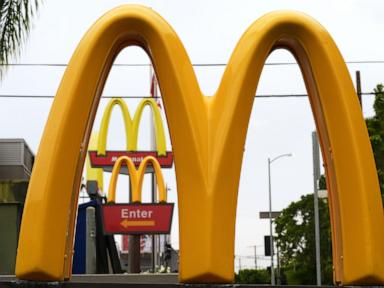
Every single headline covering the recent legal friction over automated pricing algorithms inside American franchise networks shares a single, lazy premise. The public narrative screams that corporate overlords are scheming to gouge teenagers buying chicken nuggets at midnight by letting cold silicon dictate whether a cheeseburger costs two dollars or five.
It is a remarkably shallow read of how supply chains, labor overhead, and local markets operate. I have spent years advising franchise operations on margin compression, inventory decay, and localized cost shocks, and I can tell you plainly that the outcry is built entirely on economic illiteracy. In other updates, read about: David Ellison Just Rewrote Hollywood and Warner Bros Discovery Will Never Be the Same.
The lawsuit targets the deployment of software designed to optimize local price points based on demand fluctuations, foot traffic, and regional overhead. Critics call it predatory. The reality is that uniform pricing across thousands of distinct zip codes is the real fiction, and keeping it alive actively harms both operators and consumers.
The Myth of the Flat Rate
For decades, national fast-food brands maintained flat pricing structures for a simple reason: printing new menu boards was expensive, and consumers expected predictability. A Big Mac cost the same in downtown Manhattan as it did in rural Kansas. Investopedia has analyzed this important subject in great detail.
What the consumer never saw was the brutal math required to sustain that illusion.
Rent in midtown Manhattan bears zero resemblance to lease terms in the Midwest. Municipal waste disposal fees, local property taxes, and regional minimum wage hikes create wildly divergent operational baselines for individual owners. When a franchisor forces every location to charge identical prices regardless of local overhead, the margins at high-cost urban stores evaporate.
To survive, those operators have to cut corners elsewhere. They reduce labor density, resulting in slower service and degraded food safety oversight. Or they quietly lobby for lower ingredient standards. Uniform pricing does not protect the consumer. It penalizes efficient operators and subsidizes inefficiencies elsewhere in the network.
When software steps in to calculate optimal local pricing based on real-time variables like local labor spikes, delivery platform commissions, and local demand surges, it is not an act of corporate malice. It is an act of economic realism.
Why Algorithmic Pricing Terrifies People
The psychological aversion to dynamic pricing is rooted in a fundamental misunderstanding of fairness. People believe that if a good or service costs a certain amount at noon, it should cost the exact same amount at midnight.
Airlines broke this illusion decades ago. Hotels abandoned it even earlier. Uber normalized surge pricing for transit, teaching a generation of commuters that convenience and availability carry a variable price tag. Yet, when the concept touches a fast-food counter, critics act as though a fundamental human right has been violated.
The fear is that a computer program will instantly exploit a customer standing in line by jacking up the price of fries because it senses hunger. That is not how these tools operate. Franchise-level pricing optimization software looks at macro trends, historical sales patterns, and localized cost fluctuations over days and weeks, not micro-targeting individual consumers with predatory surges at the register.
If a store faces a sudden surge in delivery orders during a torrential downpour, the cost of fulfilling that order—factoring in courier availability and safety incentives—spikes. Absorbing that cost means the franchise bleeds cash. Adjusting the price to reflect the true cost of fulfillment keeps the business solvent.
The Franchisee Dilemma
Let us talk about the people actually named in these business models: the franchise owners. These are small business operators, often owning three to five locations, risking their own capital against razor-thin margins.
The public imagines McDonald's headquarters as a shadowy boardroom of billionaires pulling levers to squeeze extra pennies from broke college students. In reality, the corporate office takes a percentage of gross sales, while the local owner bears 100 percent of the operational risk.
When ingredient costs swing wildly due to agricultural supply chain disruptions, the corporate office does not absorb that loss. The local owner does. When local municipal governments mandate sudden wage increases, corporate revenue remains insulated, but the franchise owner watches net profit vanish.
Denying these operators the tools to dynamically adjust pricing to match local economic realities is a recipe for consolidation. When independent franchisees can no longer weather cost shocks because their hands are tied by rigid pricing structures, they sell out to massive private equity-backed conglomerates that can absorb losses across hundreds of units. That concentration of ownership destroys local entrepreneurship. If you hate corporate consolidation, you should be cheering for tools that keep independent franchise units profitable on their own terms.
The Real Problem With the Software
I am not here to shill for software vendors. There is a legitimate failure mode in how these systems are deployed, and it has nothing to do with consumer exploitation.
The danger lies in poor calibration and a lack of transparency. When an algorithm is deployed without guardrails, it can create abrupt, jarring price swings that alienate loyal customer bases. Brand equity is fragile. If a regular customer notices their standard order fluctuates wildly in price from Tuesday to Wednesday with no discernible reason, trust erodes.
Furthermore, many legacy franchise systems suffer from poor data hygiene. If the software is fed garbage data regarding local inventory turnover or labor costs, the optimization engine makes destructive recommendations. I have seen poorly configured pricing tools tank a store's lunch rush volume simply because the algorithm miscalculated elastic demand thresholds in a specific neighborhood.
The lawsuits should not be targeting the existence of algorithmic pricing. They should be interrogating whether the corporate franchisors are forcing unvetted, poorly calibrated tools onto operators who lack the technical literacy to audit the software's outputs.
The Future Belongs to Localized Reality
The outcry over automated pricing is a dying gasp of industrial-era thinking. We live in a hyper-personalized, dynamically adjusted economic landscape. Everything from mortgage rates to insurance premiums shifts continuously based on risk and supply data.
Expecting fast food to remain frozen in a 1950s time warp where a burger costs fifteen cents everywhere, all the time, is economically illiterate.
The companies that win over the next decade will not be the ones that hide behind rigid pricing illusions. They will be the ones that master transparent, localized value delivery. Dynamic pricing is not the enemy of the consumer. Ignorance of how much it actually costs to put a hot meal in front of you in twenty seconds is.