Javier Tebas isn't holding back anymore. The outspoken La Liga president just took a massive sledgehammer to FIFA governance, demanding that president Gianni Infantino step down for destroying the global football industry.
Tebas delivered his scathing critique in an explosive interview with Italian newspaper La Gazzetta dello Sport, arguing that FIFA's relentless push to expand international tournaments is cannibalizing domestic leagues. With discussions circulating about expanding the 2030 World Cup to an absurd 64 teams, the structural tension between club competitions and international governing bodies has finally hit a breaking point.
Honestly, he has a point. Football doesn't start and end with a 40-day summer tournament, yet FIFA operates like domestic leagues are merely an afterthought.
The Growing War Between Domestic Leagues and International Expansion
At the heart of Tebas' argument is a simple economic reality: local club football pays the bills for the entire ecosystem. National leagues operate nine months out of the year, employing tens of thousands of staff, broadcast crews, venue workers, and academy coaches.
When FIFA expands international competitions, it squeezes the domestic calendar until something snaps.
"Increasing the number of national teams makes no sense," Tebas explained directly. "The football industry isn't just the World Cup, which is the most important event. But not everything can revolve around the World Cup. It's the national competitions that sustain this sport."
He isn't exaggerating the fatigue. FIFA expanded the 2026 World Cup format to 48 teams, and proposals floated by CONMEBOL president Alejandro Dominguez suggest pushing the 2030 edition to 64 teams across six nations. Add in bloated halftime entertainment breaks, extended hydration pauses, and the expanded Club World Cup, and player welfare collapses under the weight of commercial greed.
What Tebas Means by a Rotten System
Tebas openly admitted that while Infantino should step down, the current political structure makes an internal overhaul almost impossible. Infantino is planning to run for a fourth term as FIFA president in March 2027, and opposition candidates rarely bother putting their names on the ballot.
- Flawed voting power: Small national federations hold equal voting weight to massive domestic league nations, creating built-in political immunity.
- Widespread silence: Officials voice outrage behind closed doors but refuse to challenge Infantino publicly.
- Lack of opposition: Candidate challenges are rare because the election process heavily favors the incumbent.
Tebas called out this quiet compliance, stating that silence makes federations complicit in the damage football is suffering.
Political Interferences and Growing UEFA Rifts
The frustration goes far beyond fixture congestion. Tebas pointed out recent high-profile governance failures that demonstrate how arbitrary FIFA's decision-making has become.
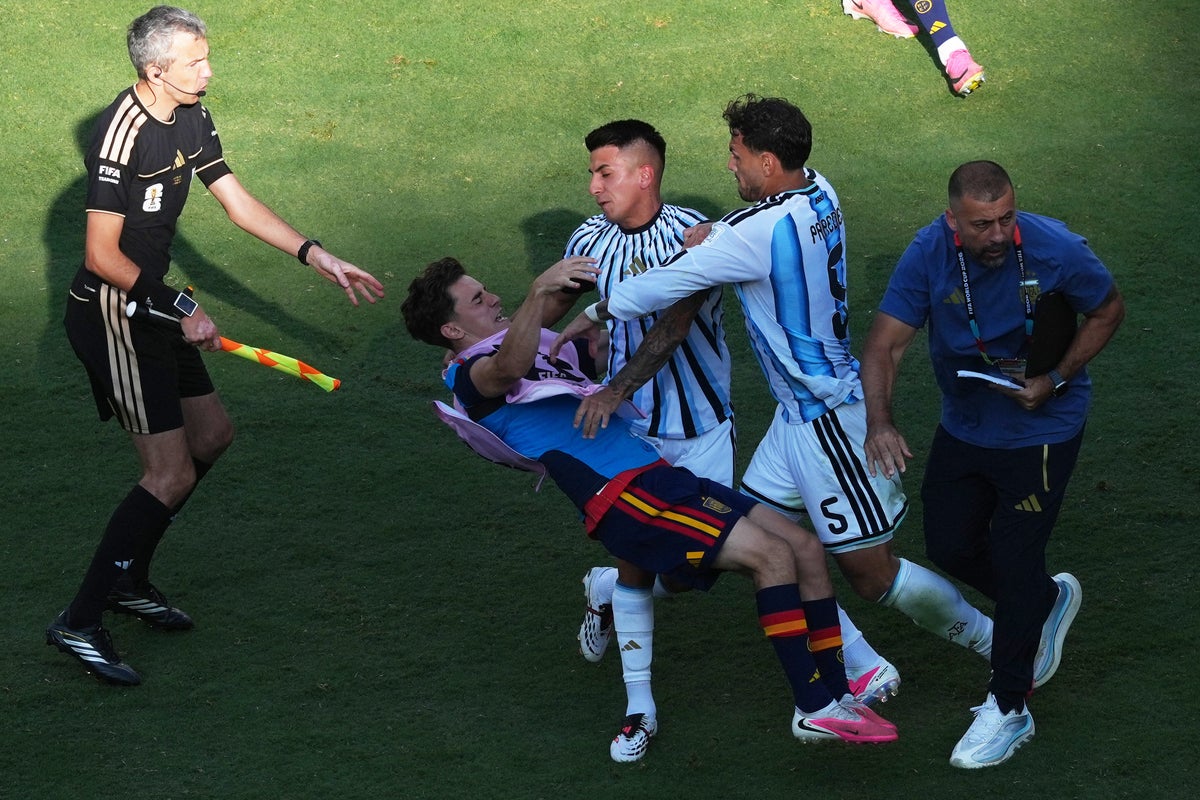
A prime example occurred during the recent 2026 World Cup tournament, where FIFA suspended a one-match ban handed to United States striker Folarin Balogun after direct political intervention from U.S. President Donald Trump. Belgium eventually eliminated the U.S. 4-1 in the Round of 16, burying what could have been a historic governance scandal.
Tebas called the handling of the ban an extremely serious matter, noting that FIFA got lucky the team was knocked out before the issue exposed deeper structural flaws.
The friction isn't isolated to La Liga either. The widening rift between UEFA and FIFA became blatantly obvious when UEFA president Aleksander Ceferin skipped the World Cup final altogether. Disagreements over match operations, refereeing logistics, and disciplinary procedures have left European football's major power brokers completely at odds with Infantino's administration.
The Financial Fallout for Football's Working Class
When fans think of football money, they picture multi-million-dollar player contracts and massive stadium naming rights. But Tebas emphasizes that the real football economy belongs to local communities and year-round employees.
Domestic leagues drive weekly economic activity for local business ecosystems:
- Matchday employment: Security personnel, ticketing staff, vendors, and local transit workers rely on 19 to 25 home matches a season.
- Broadcasting ecosystem: Regional networks build year-round programming around domestic match schedules, not quadrennial tournaments.
- Player health assets: Clubs pay the wages of players whose bodies are worn down by year-round international travel.
Protecting domestic football isn't about blocking global growth; it's about preserving the fundamental foundation that makes the sport viable in the first place.
If you want to support domestic football and keep up with these governance battles, pay attention to how your local league votes during upcoming FIFA congresses. Follow independent fan coalitions like Football Supporters Europe (FSE), who actively lobby against bloated match calendars and push for sustainable domestic schedules.