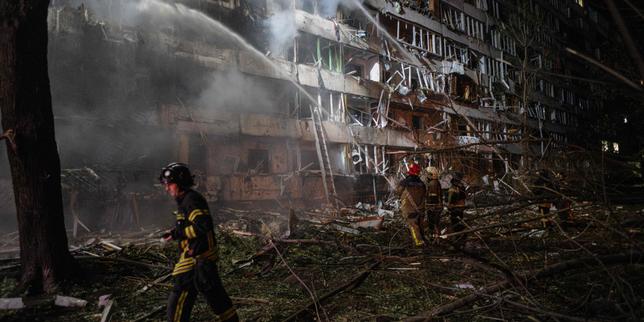
Lights go out in Kyiv by four in the afternoon, and suddenly the whole apartment building stops breathing. No heat hums through the radiators. Elevators sit dead between floors. Even the tap water quits on upper stories because electric pumps lose juice the second a substation takes a hit.
If you only read quick headlines about missile strikes and damaged power grids, you might think this is just another grim chapter in a war that's dragged on for years. Honestly, that misses what's actually happening on the ground right now. Russia hasn't just repeated old winter playbooks—it has scaled up the volume, mixed in hundreds of drones and ballistic missiles, and aimed straight at the bottlenecks that keep modern cities running. If you enjoyed this article, you should read: this related article.
Ukraine's Energy Ministry reported more than 1,000 airstrikes on energy infrastructure since September, hammering high-voltage substations and returning to sites just as repair crews get close to finishing. DTEK CEO Maksym Tymchenko recently said the scale and force of attacks on the energy sector have virtually doubled compared to what people expect, even when stacked against last winter's grind. Across regions from Kyiv and Dnipropetrovsk to Odesa, Rivne, and Kharkiv, families without generators are getting squeezed into tiny windows of electricity—sometimes as little as two hours a day under rolling blackouts.
How Russian Missile Strikes Target Ukraine Energy Infrastructure
People often picture grid warfare as blowing up a giant power plant and calling it a day. That's not how it works in practice. A single massive turbine is hard to replace quickly, sure, yet Ukraine's grid engineers have proven they can patch, reroute, and improvise around damaged generation sites. So Moscow has leaned heavily into high-voltage substations, transformers, and transit links—the traffic cops of the electrical network. For another angle on this development, refer to the recent coverage from Associated Press.
Take out a key substation and you don't just lose megawatts. You sever the pathways that move electricity from remaining generation over to where people actually live and work. Worse, striking Dnipro river crossings in Kyiv with ballistic missiles threatens to split the capital's left and right banks, making logistics, commuting, and utility repairs a logistical nightmare.
I've watched enough infrastructure crises up close to know a simple truth: a grid doesn't fail all at once; it fails through cascading dependencies. When power drops out in a cold November, water pressure falls in high-rises, district heating strains, cell towers lean on backup batteries, and small shops shut their doors early. You don't need total darkness everywhere to paralyze daily life. Just enough disruption at enough nodes wears people down week after week.
And let's be fair about the tactical picture. Analysts at the Institute for the Study of War note that Russian forces combine ballistic and cruise missiles with swarms of hundreds of drones—including jet-powered models—to saturate air defenses and hit both rear energy hubs and frontline-adjacent regions. Meanwhile, Ukraine has pushed its own deep counterforce strikes against Russian refineries, industrial sites, and launch infrastructure to erode Moscow's ability to keep firing. Both sides are trying to break the other's capacity to sustain the fight, while civilians in multi-story blocks bear the immediate brunt of every blown transformer.
Why Kyiv Power Outages Trigger Cascading Daily Crises
Ask anyone living on the twelfth floor of a Kyiv tower block what a blackout feels like, and they won't start with kilowatt-hours. They'll talk about water jugs in the hallway, cold rooms, and trying to get schoolwork or remote work done before the battery dies.
- Water and sanitation stall fast: Modern urban water systems rely on electric booster pumps to push water up tall buildings. When power cuts out, lower floors might trickle while upper floors go dry.
- Heating gets complicated: Even where central heating plants run, distribution pumps and residential controls depend on electricity, turning chilly apartments into iceboxes when outdoor temperatures dip.
- Repair crews face double jeopardy: Grid workers aren't just climbing poles in bad weather. Officials warn that Russian strikes have repeatedly hit sites where emergency crews were nearing the end of restoration work, forcing teams to start over under constant threat.
- Tensions boil over politically: Energy shortages don't stay neatly inside engineering reports. In Kyiv, frustrations over winter readiness, shelter access, and grid strain have spilled into street protests and sharp public clashes between city leadership and national officials.
There's a misconception outside Ukraine that because power came back after earlier winters, the grid is basically "fine." Not true. Energy crews restored power to nearly 10 million customers in October alone after attacks and military damage, which is an extraordinary feat of grit and engineering. Still, restoring a connection doesn't mean the equipment is brand new or spare parts are sitting on a shelf waiting around. Every repair cycle eats into reserves, stretches shift crews thin, and leaves the system fragile when another wave of missiles arrives.
Amnesty International has warned that escalating strikes on energy and heating networks create a deadly situation for civilians heading into cold weather. That isn't abstract legal phrasing. When temperatures drop and power stays rationed, health risks rise for older residents, infants, and anyone managing chronic illness without reliable heat or medical devices.
What Works Versus What Sounds Good in Theory
Whenever a power grid gets pounded like this, armchair strategists toss around big silver-bullet ideas. Some actually help. Others sound great on paper and fall flat in real life.
Putting a giant solar array on a single building sounds smart until you realize winter days are short, clouds sit heavy for weeks, and rooftop panels can't easily power heavy heating loads or whole apartment blocks. Big centralized power plants, on the other hand, make tempting large targets if they aren't heavily shielded and dispersed.
What does work better—slowly, messily, and without fanfare—is decentralization plus rapid replacement. Smaller, distributed generation units, mobile substations, shielded transformers, and stocked spare parts let engineers route around damage instead of losing an entire district at once. Add layered air defense and radar upgrades—like new air-defense support and radar deliveries backed by European partners—and you start raising the cost of every incoming drone and missile.
Even then, nobody honest will tell you there's a quick fix. Data on exact interception rates isn't always public, and war moves fast—what protects a substation in October might need tweaking by December as drone speeds, flight paths, or communications constraints shift. Acknowledging those limits matters. Pretending a single shipment or policy tweak solves a multi-layered grid problem just sets people up for disappointment.
Practical Ways to Track Reliable Updates and Support Relief
If you're following this crisis from abroad—or trying to help family, colleagues, or local communities—skip the rumor mills and noisy social threads. A few practical habits make a real difference right now:
- Check primary and independent trackers: Read updates directly from grid operators like Ukrenergo and DTEK alongside independent conflict analysis from the Institute for the Study of War and reporting from outlets like The Guardian or Al Jazeera so you separate confirmed outages from viral exaggerations.
- Focus aid on winter survival basics: If you donate, look for verified relief groups supplying portable power stations, heavy-duty generators, thermal blankets, water filters, and medical support for vulnerable households rather than generic goods that get stuck in transit.
- Keep comms simple with people on the ground: If you have friends or loved ones in Kyiv or other affected regions, agree on low-bandwidth check-ins—short text messages or scheduled check-ins when power windows open—instead of expecting constant video calls during evening blackouts.
- Watch the infrastructure chain, not just the headlines: Pay attention to water, heating, and bridge crossings alongside electricity. Those secondary bottlenecks often tell you much sooner how hard a week cities are really having.



