The Koh-i-Noor isn't a diamond. It’s a Rorschach test for post-colonial guilt.
Every time a royal coronation or a state visit rolls around, the same tired script gets recycled. Activists demand its return. Journalists weep over the "stolen" Mountain of Light. Nationalists in India, Pakistan, Afghanistan, and even Iran claim it as their singular birthright. They all treat it as a sacred relic of lost sovereignty.
They are all wrong.
The diamond isn't a symbol of a stolen past; it is the ultimate physical manifestation of the law of the jungle. To demand its "return" to a specific modern nation-state is to fundamentally misunderstand how history, power, and the diamond itself actually function.
The Curse of the "Last Owner" Fallacy
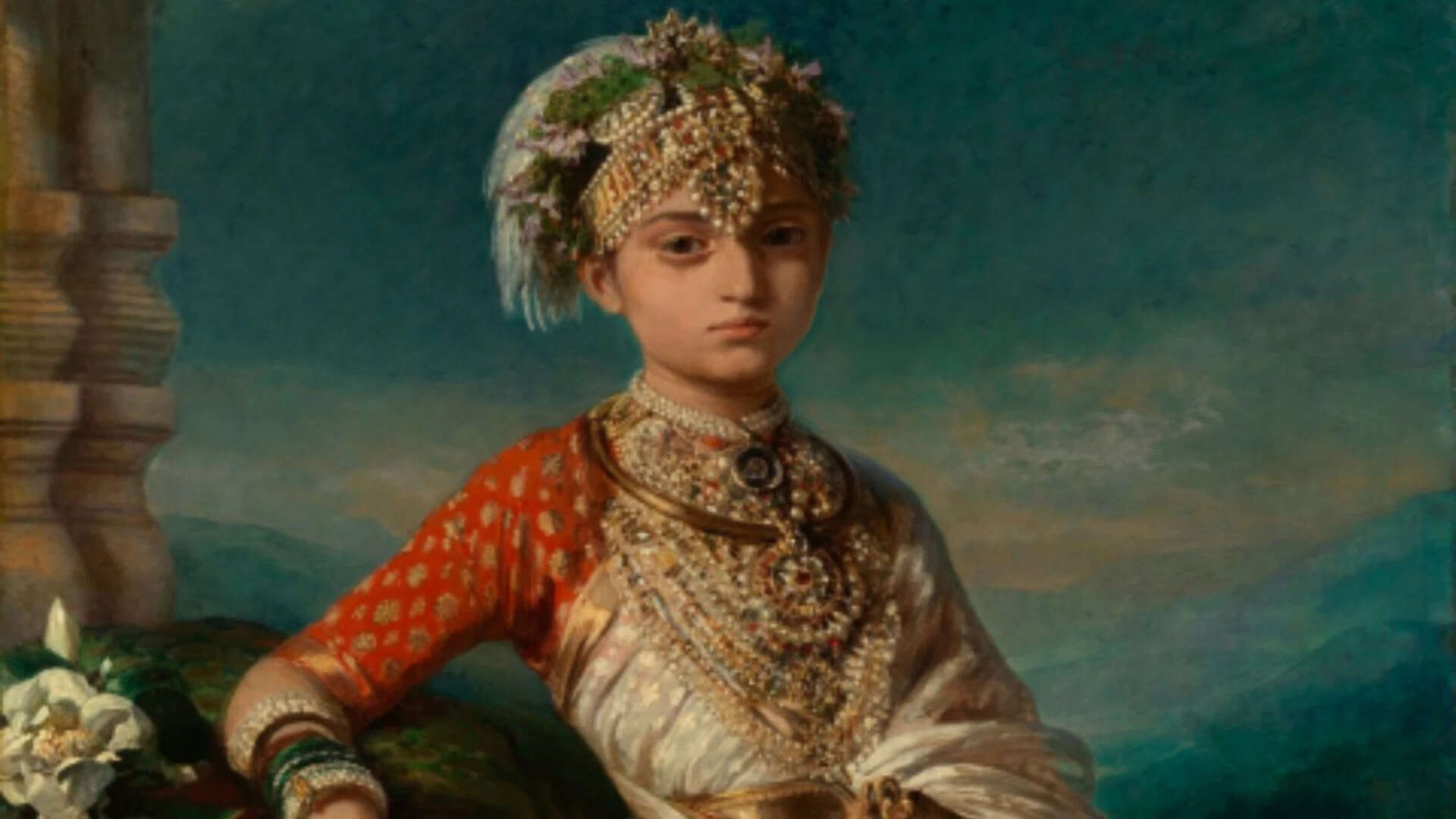
The loudest argument for repatriation hinges on a simplistic narrative: the British stole it from a child king, Duleep Singh, in 1849. Therefore, it belongs to the modern Republic of India.
This is historical myopia at its finest.
If we are playing the "rightful owner" game, why stop at 1849? Before the British East India Company "acquired" it via the Treaty of Lahore, the Sikhs took it from the Afghans. The Afghans took it from the Persians. The Persians—specifically Nader Shah—butchered their way through Delhi to snatch it from the Mughals. The Mughals likely squeezed it out of a South Indian dynasty.
History is a messy, blood-soaked chain of custody. There is no "original" owner in the way modern property law defines it. There is only the person who currently has the firepower to keep it. The Koh-i-Noor has never been bought, sold, or gifted in good faith. It has always been the ultimate trophy of conquest.
When you demand its return based on "justice," you aren't seeking a moral correction. You are asking the British to honor a specific 19th-century theft while ignoring the dozen thefts that preceded it. It’s a cherry-picked morality that collapses under the weight of its own internal logic.
The Geography of Ego
Where exactly should it go? This is where the repatriation argument turns into a farce.
- India claims it because the diamond was likely mined in the Kollur mines of Andhra Pradesh.
- Pakistan claims it because Lahore, where the British took it, is in modern-day Pakistan.
- Afghanistan claims it because the Durrani Empire held it for nearly a century.
- Iran has a claim because Nader Shah was the one who actually named the damn thing.
By demanding the diamond, these nations aren't seeking "repatriation." They are seeking a domestic PR win. To send the stone to New Delhi would be an insult to Kabul; to send it to Islamabad would be a provocation to Tehran.
The Koh-i-Noor is currently in the only place it can be without triggering a regional diplomatic meltdown: a neutral vault in London behind several inches of reinforced glass. The Tower of London isn't just a museum; it’s a geopolitical demilitarized zone.
The Aesthetic Betrayal: It’s Not Even That Great
Let’s talk about the diamond itself. If you saw the Koh-i-Noor in its original state, you’d probably think it was a mediocre paperweight.
When it arrived in England, the public was underwhelmed. It lacked the "fire" and brilliance expected of a legendary gem. It was a Mughal-cut stone—heavy on weight, light on sparkle. Prince Albert, in a fit of Victorian arrogance, had it recut.
He hacked away nearly 42% of its mass. It went from a historic 186-carat irregular slab to a 105.6-carat oval brilliant.
This is the nuance the "return it" crowd misses: The diamond that exists today is a British creation. The Mughal diamond is gone. The Sikh diamond is gone. What sits in the Crown Jewels is a Victorian reimagining of an Indian artifact. If you "return" it, you are returning a piece of British lapidary work.
The Moral Hazard of Repatriation
If we return the Koh-i-Noor, we open a door that no one is prepared to walk through.
Every major museum in the world—the Louvre, the Met, the British Museum—is a monument to conquest. That is their function. They are repositories of the human story, and that story is largely one of groups of people taking things from other groups of people.
If the standard for ownership is "who had it first," then we need to dismantle the world. We need to redraft every border on the planet. We need to return the land of Manhattan to the Lenape, the gold in the Federal Reserve to the various nations it was extracted from, and half of Europe to the ghosts of the Roman Empire.
The "Rightful Owner" is a legal fiction we invented to keep neighbors from stealing each other's lawnmowers. It does not apply to the movement of civilizations across centuries.
The Curse is Real (But Not How You Think)
Legend says the Koh-i-Noor brings misfortune to any man who wears it. Only God or a woman can wear it with impunity. This is why it has been passed down through the British Queens and Queen Consorts.
The real curse, however, is the obsession it generates. It acts as a massive distraction from actual, contemporary issues.
Politicians in the subcontinent love to bang the drum for the diamond’s return because it’s free. It costs nothing to demand a rock back from London. It’s a cheap way to signal "strength" and "anti-colonialism" without having to actually fix infrastructure, tackle corruption, or improve the lives of the people.
The diamond is a shiny object used to distract the masses from the fact that their own leaders are often more predatory than the colonizers of the past. It’s the ultimate populist "Look! A distraction!" tactic.
A Superior Perspective: Keep It Where It Is
We need to stop viewing the Koh-i-Noor as a piece of property. It is an artifact of the global human experience.
It is a stone that has witnessed the rise and fall of the Mughals, the Persians, the Afghans, the Sikhs, and the British Empire. Its current location in London is just the latest chapter in a long, violent book.
Moving it doesn't "right" a wrong. It just adds another chapter of tribalism to a story that should be about the shared, often brutal history of our species.
If you want to see the diamond, go to London. Pay the entry fee. Acknowledge that the world is a place where power shifts and treasures migrate.
Stop asking for the diamond back. Start asking why you’ve been conditioned to care more about a 105-carat piece of carbon than the actual mechanics of history.
The Koh-i-Noor belongs to the person who can hold it. Right now, that’s the British. If history teaches us anything, it’s that eventually, someone else will take it. That is the only law that has ever governed the Mountain of Light.
Accept the brutality of history or stop pretending you're interested in it.
Pick one.