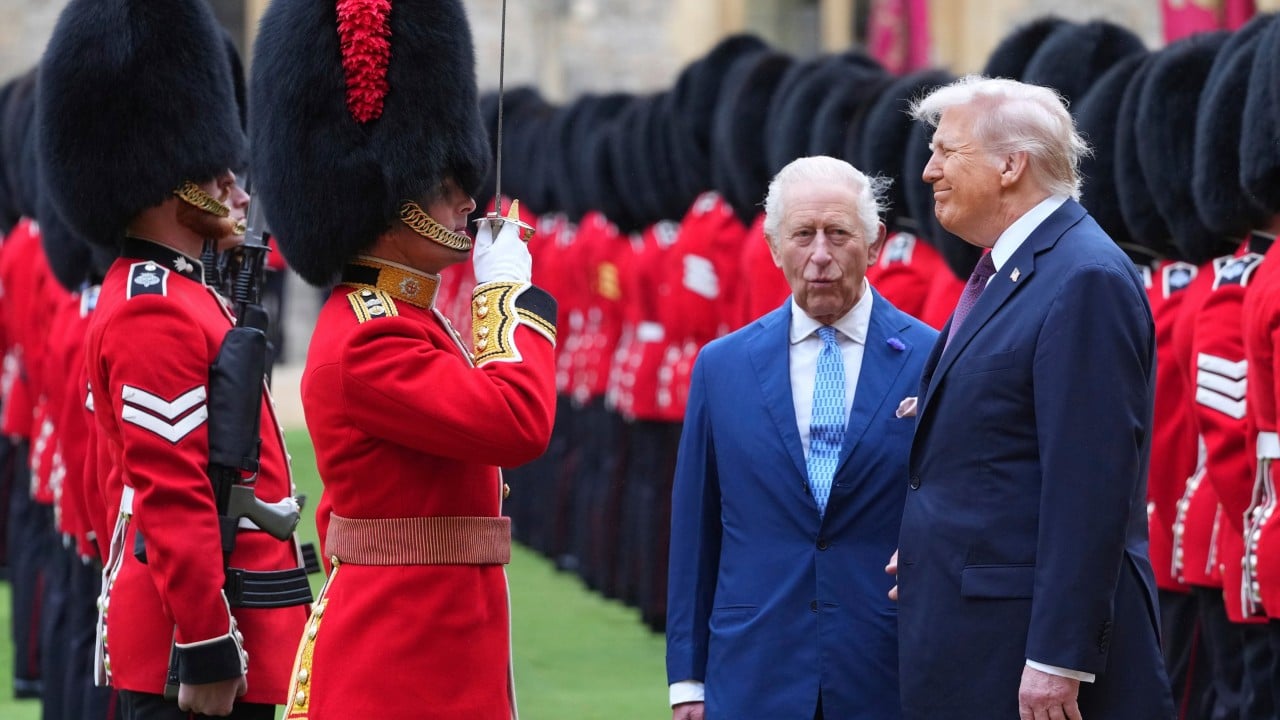
The scent of cordite has a way of clinging to the velvet curtains of history long after the smoke clears. In the early hours following the chaos at the Washington media gala, the air inside the British Embassy felt heavy, not with the humidity of a D.C. spring, but with the suffocating weight of a decision. A King does not simply pack a suitcase. He carries the symbolic gravity of a thousand years, and when that gravity meets the jagged reality of American political violence, something has to give.
The facts were cold and jagged. Gunfire had shattered the glass and the ego of a high-profile media event. The headlines screamed of security breaches and the fragile state of the capital. Logic suggested a retreat. Precedent offered an easy exit. Yet, as the sun began to crawl over the Potomac, the word came down from the Palace and the State Department alike. The visit would go ahead.
It was a choice made in the quiet, carpeted rooms where the "Special Relationship" is less of a political slogan and more of a gritty, lived endurance test.
The Weight of the Crown in a Divided City
Think of a state visit as a high-stakes theatrical production where the lead actor isn't allowed to see the script until he’s on stage. For King Charles III, this trip to the United States was never intended to be a mere photo opportunity. It was designed as a bridge—a way to link the environmental anxieties of the new era with the traditionalist stability of the old world. Then, a shooter outside a gala turned the bridge into a tightrope.
Security details are often seen as men in dark suits with earpieces, but in moments like these, they are architects of a hidden fortress. They don't just look for threats; they manage the psychology of a city. To cancel the visit would be to admit that the chaos had won. It would signal that the seat of American power was no longer a safe harbor for the world’s most visible diplomat.
The decision to stay was not about bravado. It was about the refusal to let a single violent act dictate the rhythm of international diplomacy. It was a calculated, quiet defiance.
Behind the Velvet Rope
Imagine a hypothetical staffer at the British Embassy—let’s call her Sarah. She has spent eighteen months coordinating the exact placement of dessert forks and the timing of motorcades. When the news of the shooting broke, her world didn't explode; it went silent. She sat at a mahogany desk, watching the rolling news, knowing that her months of labor could be erased by a single security memo.
The human element of these grand events is often lost in the broad strokes of news reporting. We talk about "The Crown" or "The Administration," but the reality is composed of people like Sarah, who stayed up until 4:00 AM re-verifying guest lists and checking in with Secret Service contacts. For these individuals, the King’s decision to proceed wasn't just a matter of statecraft. It was a validation of their work and a sign that the structure they represent—the belief in order over entropy—was still standing.
The King himself occupies a strange space in these moments. He is a man who has spent seventy years preparing for a role that is defined by being seen but rarely heard. His presence in Washington, so soon after a moment of national trauma, acts as a steadying hand on a feverish pulse. It is the British "stiff upper lip" exported to a country currently struggling to find its own voice.
The Invisible Stakes of a Handshake
There is a specific kind of silence that falls over a room when a monarch enters. It isn't just respect; it’s an acknowledgment of continuity. In a Washington currently defined by its fractures, that continuity is a rare commodity. The stakes of this visit were elevated the moment the first shot was fired at the gala.
Suddenly, a meeting about climate change or trade wasn't just about policy. It became a litmus test for the stability of the Western alliance.
If the King had turned back, the message to the world would have been clear: The United States is no longer a place where the business of the world can be conducted safely. By moving forward, Charles and the American leadership performed a delicate piece of geopolitical surgery. They cut out the fear and replaced it with the mundane, comforting routine of a state visit.
- The motorcade would still roll.
- The toasts would still be made.
- The cameras would focus on the smiles, not the crime scene tape ten blocks away.
This is how power maintains its grip on reality. It ignores the outliers until they become the story, and then it simply steps over them.
The Geography of Risk
Washington is a city of circles and squares, designed to be both open and defensible. But the modern threat doesn't care about L'Enfant’s city plan. A shooting at a media gala—a place where the Fourth Estate meets the political elite—is a strike at the very nervous system of the capital. It creates a lingering sense of "what if" that permeates every subsequent event.
Navigating this requires more than just armored Suburbans. It requires a narrative shift. The King's itinerary remained largely unchanged, a move that was as much about optics as it was about logistics. When he walks through a garden or meets with scholars, he is performing an act of normalization. He is telling the public that the world is still turning, even when it feels like it’s spinning off its axis.
Consider the contrast: the frantic, shaky cell phone footage of the shooting versus the high-definition, steady-cam shots of a Royal arrival. One is the sound of a society fraying; the other is the image of a system that refuses to bend.
The Ghost at the Banquet
Despite the polished surfaces, the shooting will remain the ghost at every banquet during this trip. It sits in the corner of the room, uninvited but impossible to ignore. Every mention of "shared values" or "common goals" now carries the subtext of shared vulnerability.
The King knows this better than most. His own family history is peppered with the scars of political violence and the persistent threat of the radicalized individual. For him, the decision to proceed was likely not a difficult one. It was the only one. To do otherwise would be to betray the very essence of the institution he spent a lifetime waiting to lead.
The "Special Relationship" is often described in terms of intelligence sharing and economic ties. But in the wake of the Washington shooting, it looked more like two old friends standing together in a storm. One friend had been shaken; the other arrived to remind him of his own strength.
A Legacy Written in Footsteps
We often look for the meaning of a state visit in the joint statements and the policy breakthroughs. Usually, those are forgettable. The real impact is found in the physical act of being there.
As the King moves through the scheduled events, his presence acts as a suture. He is stitching a sense of normalcy back into the fabric of a city that was briefly, violently torn. The shooting was an attempt to disrupt; the visit is an insistence on continuity.
The motorcade winds its way past the monuments, the sirens muted, the flags fluttering. There is no grand speech that can erase the violence of the night before, but there is the slow, deliberate pace of a man who knows that his primary job is simply to exist, to show up, and to keep walking.
The shadows of the Washington gala will eventually fade into the archives, filed away as another grim data point in a turbulent century. But the image of the King standing on American soil, hours after the chaos, offers a different kind of data. It suggests that while violence is loud and sudden, the structures we build to contain it are quiet, resilient, and surprisingly stubborn.
He didn't come to Washington to change the world. He came to prove that the world he represents hadn't ended yet.
The gala is over. The smoke is gone. The King is here.