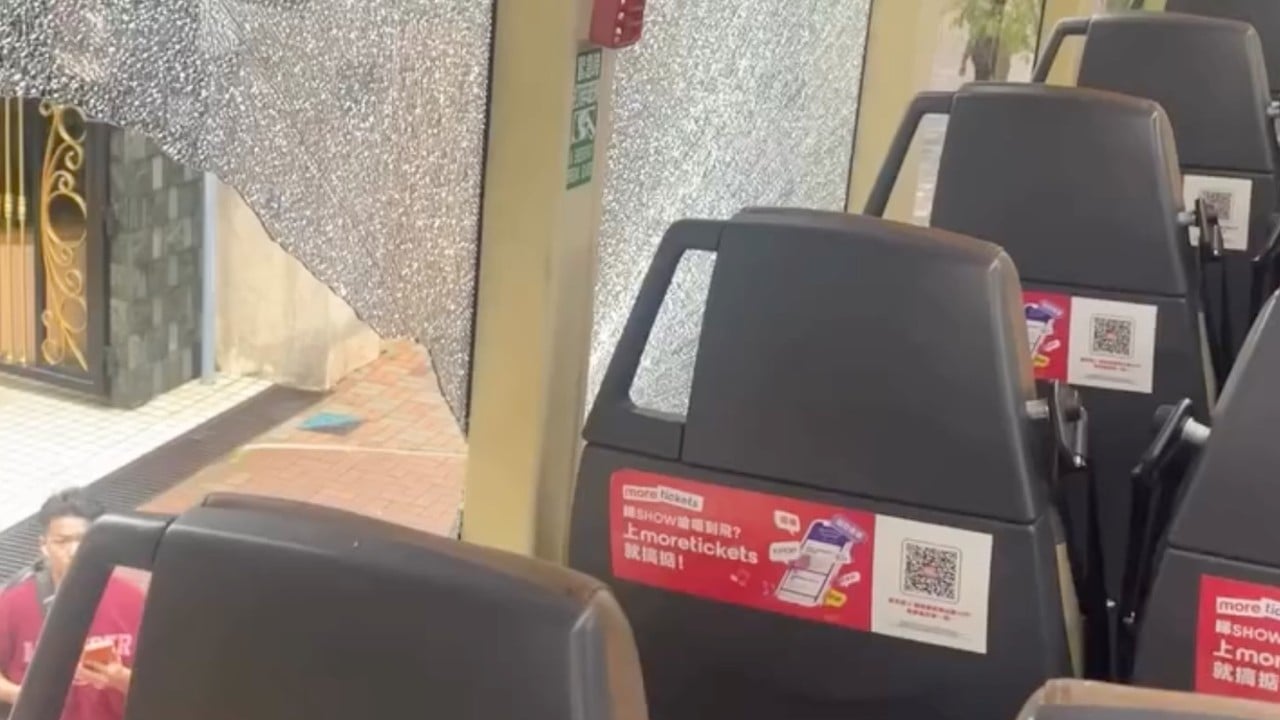
Urban mass transit systems operating double-decker bus fleets face a distinct geometric and structural hazard: the intersection of high-profile vehicle paths with dynamic roadside tree canopies. When a Kowloon Motor Bus (KMB) vehicle traveling Route 277E struck an angled tree branch on Ching Hiu Road in Sheung Shui, the structural failure of the upper-deck glazing highlighted a recurring failure mode in urban transit asset management. Analyzing this event requires evaluating the mechanical forces at play, the material limitations of transit glazing, and the systemic bottlenecks in arboricultural monitoring.
The Geometric Hazard Profile of High-Capacity Transit
The double-decker bus introduces a specific operational risk profile due to its heightened vertical envelope. Standard single-decker transit vehicles operate comfortably below the lower threshold of urban tree crowns. A double-decker vehicle, standing approximately 4.4 meters tall, occupies a spatial zone where roadside vegetation frequently encroaches due to phototropism, wind loading, or structural sagging under heavy rainfall.
The mechanical interaction on Ching Hiu Road can be broken down into a three-part causal chain:
- Spatial Encroachment: A roadside tree developed a growth vector angled directly into the path of the oncoming vehicle's upper-deck envelope.
- Kinetic Energy Transfer: The bus, moving at operational transit speeds, introduced a fixed mass against a stationary, rigid biological obstruction. The kinetic energy ($E_k = \frac{1}{2}mv^2$) concentrated at the point of impact on the upper-left window pane.
- Glazing Failure: The localized stress exceeded the ultimate tensile strength of the tempered glass, causing an immediate catastrophic failure of the pane and showering the interior cabin with micro-fragments.
While the primary injury recorded was a minor abrasion, the physics of these encounters can yield far more severe outcomes. In high-velocity impacts, a rigid branch can penetrate the cabin entirely, compromising the structural pillars of the upper deck and bypassing the passive safety systems designed for vehicular collisions.
Material Dynamics: Tempered vs. Laminated Glass in Transit Assets
The choice of glazing material on the upper deck determines the failure mechanism during an external impact. Public transit buses predominantly utilize tempered glass for side windows due to weight considerations, cost efficiency, and passenger egress requirements during emergencies.
Tempered glass is manufactured through rapid thermal cooling, which creates high compressive stress on the exterior surfaces balanced by tensile stress in the interior core. This internal energy profile ensures that when the surface tension is breached, the entire pane fractures simultaneously into small, blunt granules rather than sharp shards.
This material behavior introduces a distinct operational paradox:
- Egress Benefit: In a rollover or submersion event, passengers can easily shatter a tempered window with an emergency hammer to create an escape route.
- Impact Vulnerability: The same internal stress profile means that a localized impact from an external object, such as a sharp or rigid tree branch, causes the entire window to instantly disintegrate. This maximizes the volume of glass fragments entering the passenger cabin during motion.
Laminated glass, which bonds two layers of glass with a polyvinyl butyral (PVB) interlayer, prevents this fragmentation by holding the broken pieces in place. However, deploying laminated glass across an entire upper deck increases the vehicle's center of gravity and complicates emergency evacuation protocols, demonstrating that passive safety design involves balancing competing risk vectors.
Infrastructure Bottlenecks in Vegetation Management
Incidents of this nature expose systemic limitations in the maintenance loop between municipal arboriculture and transit route operations. In high-density urban environments like Hong Kong, roadside trees are subject to aggressive environmental stressors, including micro-climates created by high-rise buildings, soil compaction, and typhoons. These factors alter the structural stability and growth rates of branches faster than standard seasonal inspection intervals can detect.
The primary operational bottleneck is the reliance on periodic human visual inspections to identify encroaching limbs. A branch that presents a nominal hazard during a dry, windless period can sag significantly when saturated with water or shifted by wind shear, dropping directly into the 4.4-meter vehicle clearance zone.
Furthermore, the fragmentation of administrative responsibility creates latency in risk mitigation. When a transit operator identifies an encroaching branch, the remediation process requires coordination with municipal departments responsible for public greenery. The time elapsed between identification, risk assessment, and physical pruning creates a window of vulnerability where a recurring route asset is exposed to a known physical hazard.
Predictive Mitigations for Fleet Operations
Mitigating the risk of roadside canopy impacts requires shifting from reactive maintenance to data-driven, predictive asset protection. Relying on drivers to manually report low-hanging limbs while navigating complex urban traffic introduces human error and variable reporting quality.
Transit networks can implement a closed-loop mitigation strategy built on three distinct layers:
LiDAR-Based Clearance Mapping
Fleet operators can equip a subset of scheduled service buses with roof-mounted Light Detection and Ranging (LiDAR) sensors. As these vehicles navigate regular routes, the sensors generate high-resolution 3D point clouds of the surrounding infrastructure and vegetation. Automated spatial analysis algorithms can compare the recorded canopy data against the vehicle profile envelope, flag encroachments down to the centimeter, and automatically generate work orders for municipal pruning teams before physical contact occurs.
Advanced Sensor Integration
Modern advanced driver-assistance systems (ADAS) can be calibrated to detect low-hanging anomalies above the standard windshield line. By utilizing specialized camera arrays oriented toward the upper-deck path, the vehicle's onboard processing unit can alert the operator to decelerate or alter lateral lane positioning when an encroaching branch is detected in the immediate trajectory.
Optimizing the Kinetic Equation
The severity of an impact is directly proportional to the velocity of the vehicle at the point of contact. Integrating geo-fencing protocols into targeted route segments known for dense, mature vegetation can automatically enforce lower speed thresholds during weather events that cause branches to sag. Reducing the velocity minimizes the kinetic energy transfer during an unforeseen impact, preserving the integrity of the tempered glazing and protecting the interior occupants.