When armed men intercepted a vehicle in the upscale Bourdon neighborhood of Port-au-Prince on Thursday, they didn't just grab another high-value hostage. They snatched James Boyard. He's the cabinet director of the Defense Ministry, the inspector general of Haiti's police, and a highly respected political scientist. Honestly, if a man with his massive security detail, deep institutional knowledge, and state backing can be taken in broad daylight, no one in the country is safe.
This isn't your typical random gang abduction. It feels like a calculated, surgical strike against the state itself.
For years, the narrative out of Haiti focused on gangs targeting vulnerable citizens, international aid workers, or local merchants. But snatching the guy tasked with rebuilding the nation's armed forces and reforming the National Police? That takes a terrifying level of audacity. It shows the gang networks aren't just holding territory anymore. They're actively aiming for the throat of governmental authority.
The Illusion of Safe Zones in Port-au-Prince
Bourdon always felt different. It's a relatively affluent pocket of the capital, a place where diplomats, business leaders, and top officials lived and worked under the assumption that some invisible barrier protected them from the chaos consuming the rest of the city. That barrier is officially gone.
Gangs now control roughly 70% of the capital, unified under a brutal, powerful coalition known as Viv Ansanm. The U.S. designated this group as a foreign terrorist organization last year, but that label hasn't slowed them down. Instead, their tactics evolved. They aren't just lurking in the slums of Cité Soleil or Martissant anymore.
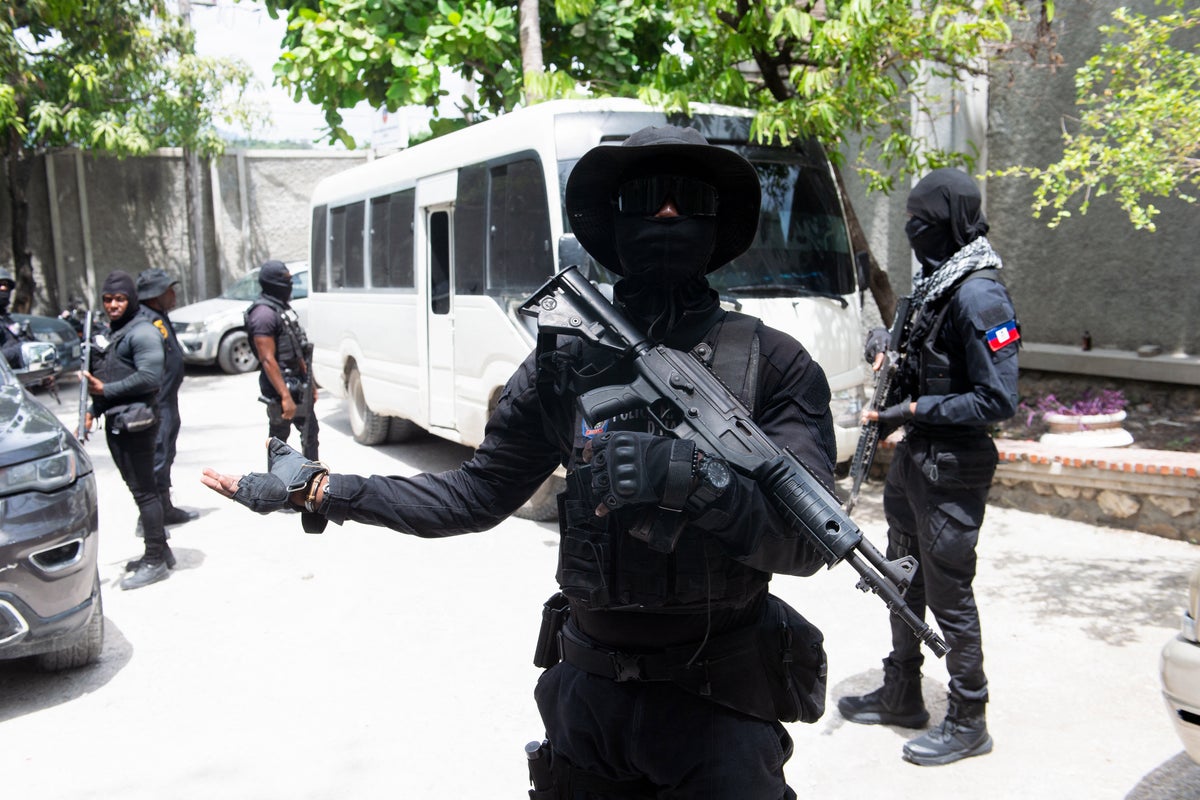
Security analysts, including Diego Da Rin from the International Crisis Group, point out a chilling trend. Gang members frequently don official police uniforms, set up fake checkpoints, and pull over drivers in areas previously deemed safe. It's a psychological game as much as a tactical one. When the people look at a police uniform and feel terror instead of relief, the state has lost its most basic leverage.
An Inside Job or Total State Failure
You don't just ambush the inspector general of the police without some serious homework. A man of Boyard's stature travels with heavily armed bodyguards and armored assets. To pull this off without a massive, prolonged shootout in the middle of Bourdon suggests deep planning.
There's a very real, very ugly possibility that someone close to Boyard's security detail leaked his route, timing, and vulnerabilities. This speaks to the systemic rot inside Haiti's public institutions. Corruption and desperation make it incredibly easy for criminal networks to buy information from underpaid state employees.
Haiti Kidnapping Statistics Breakdown
2024 Total Reported: 2,058 cases
2025 Total Reported: 1,268 cases (a 40% drop from previous year)
Dec 2025 - Feb 2026: 267 cases documented by the U.N.
While 2025 showed a statistical decline in overall abductions compared to the bloody peaks of 2024, the strategy shifted. Gangs aren't just grabbing random citizens for quick payouts anymore. They're targeting individuals with dual nationalities and high-profile public officials.
The Village de Dieu Connection
While no group officially claimed responsibility yet, look at where the tactical lines are drawn. The Haitian National Police recently launched aggressive operations against Village de Dieu, a notorious seaside slum. That area is the fortress of the 5 Segond gang, led by Johnson Andre, better known by his alias "Izo."
Izo is arguably the most powerful and ruthless gang leader in the country. His network regularly uses Village de Dieu as a holding ground for high-profile hostages. By kidnapping a top defense official like Boyard, the criminal coalition secures an incredible bargaining chip. They use these high-value human shields to force the government into stopping its police offensives. It's basic leverage. If the police push too hard into Izo's territory, the life of the country's top security expert hangs in the balance.
The Strategy Behind the Chaos
This high-profile snatching impacts more than just immediate security operations. It's a direct threat to the upcoming 2026 democratic elections. The country is struggling to stabilize its fragile institutions, and a structural security crisis makes holding a legitimate vote nearly impossible. Over 1.4 million people have been displaced from their homes across Haiti because of this ongoing violence.
When a state can't protect its own cabinet director, it sends a clear message to voters, political candidates, and international observers. The message is simple: the gangs hold the real veto power.
We need to look at what this means for the immediate future. If you are an international organization, a remaining state official, or a business owner operating in Haiti, relying on traditional security protocols is a mistake.
First, completely overhaul route planning and operational security. If fake police checkpoints are the new norm, transit security needs verification protocols that go beyond looking at a uniform or a badge.
Second, internal vetting must happen immediately. The likelihood of insider collusion in Boyard's case means security teams need strict compartmentalization of information. No single guard should know the full schedule or route details until the moment the wheels turn.
The state is running out of time to prove it can actually govern. Saving James Boyard isn't just about recovering a hostage. It's about preserving whatever shred of credibility the Haitian state has left.