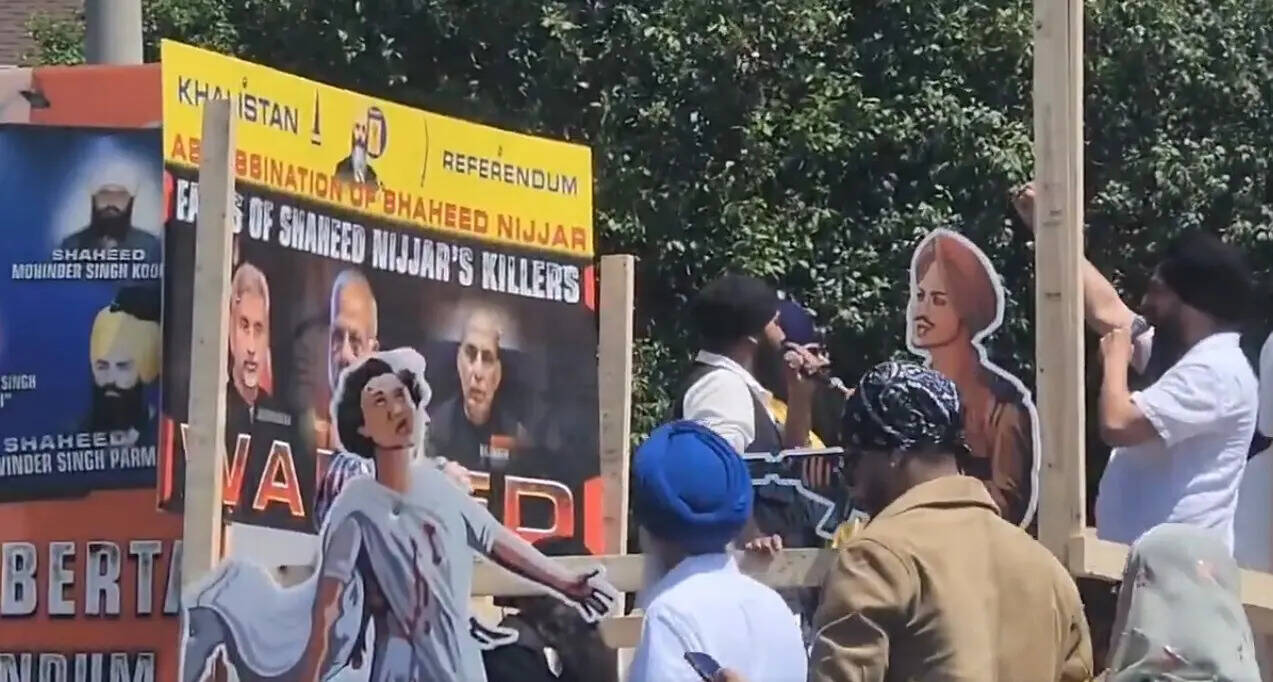
You can't talk about modern diplomatic relations between India and Canada without addressing the elephant in the room. Or rather, the float in the parade. Once again, a public celebration in Brampton, Ontario, featured a controversial tableau depicting the 1984 assassination of former Indian Prime Minister Indira Gandhi. Alongside the float, yellow Khalistan flags waved freely through the suburban Canadian streets.
This isn't a one-off incident. It is a recurring flashpoint that completely derails any attempt at normal relations between Ottawa and New Delhi. While many Canadian officials point to free speech laws, the Indian government views it as a blatant glorification of terrorism.
So, what is actually going on here, and why does this keep happening on Canadian soil? Let's break down the real dynamics behind these parades and what they mean for international politics.
The Anatomy of the Brampton Nagar Kirtan Incident
The latest display occurred during a Nagar Kirtan, a traditional Sikh religious procession. Brampton has a massive Sikh community, making up roughly 25% of the city's population. While these events are overwhelmingly peaceful, cultural, and spiritual, specific factions use the massive crowds to broadcast highly charged political messages.
The controversial tableau featured a life-sized figure of Indira Gandhi drenched in fake blood, with turbaned statues pointing firearms at her. Behind the scene, banners bore messages emphasizing revenge for the military action at the Golden Temple.
For the local organizers, the display represents a historical narrative of resistance. For New Delhi, it's a direct threat. Indian External Affairs Minister S Jaishankar didn't hold back, stating that giving space to extremists and people who advocate violence hurts the relationship and ultimately hurts Canada itself.
Why Canada and India Read the Same Image Differently
To understand why this issue won't go away, you have to look at the fundamental disagreement on where free speech ends and hate speech begins.
The Canadian View on Public Demonstrations
In Canada, political expression is heavily protected under the Charter of Rights and Freedoms. Unless a group directly incites imminent legal violence or violates specific hate speech statutes, the police cannot simply shut down a parade float. Local authorities in Ontario often claim their hands are tied. They can condemn the imagery morally, but they can't arrest people for holding a sign or displaying a historical recreation, no matter how offensive it might be to a foreign nation.
The Indian View on National Security
India looks at the exact same scene and sees a massive double standard. To New Delhi, Indira Gandhi was a sitting prime minister murdered by extremists. Glorifying her assassination isn't "free speech"—it is the endorsement of political murder. Indian officials argue that if a parade in India celebrated an attack on a Canadian leader, Ottawa would demand immediate action. They view Canada's hands-off approach as a sign of weakness, or worse, complicity.
The Historical Weight of 1984
You can't comprehend the anger on both sides without knowing the history. The events depicted on these floats trace back to Operation Blue Star in June 1984.
Indira Gandhi ordered the Indian Army to enter the Golden Temple complex in Amritsar, the holiest shrine in Sikhism. The goal was to flush out Jarnail Singh Bhindranwale and armed pro-Khalistan militants who had fortified the temple. The military operation resulted in significant casualties, heavy damage to the sacred complex, and deep trauma for the global Sikh diaspora.
A few months later, on October 31, 1984, Indira Gandhi was shot and killed by two of her Sikh bodyguards in an act of retaliation. The assassination triggered horrific anti-Sikh riots across India, leading to the deaths of thousands of innocent people.
When groups in Canada display these floats, they are tapping directly into this generational trauma. Some view Bhindranwale as a martyr; the Indian government views him as a terrorist responsible for a violent separatist movement.
The Role of Local Vote Bank Politics
Why is the Canadian government so quiet when these incidents happen? Indian politicians frequently point to domestic Canadian politics.
The Sikh diaspora is a highly organized, politically active voting bloc in Canada, especially in crucial electoral districts like Brampton, Surrey, and parts of Vancouver. No major political party—whether the Liberals, Conservatives, or the New Democratic Party—wants to alienate an entire community by cracking down on diaspora politics.
Because of this, federal leaders often offer mild condemnations while avoiding any real policy changes. This dynamic infuriates New Delhi, which openly accuses Ottawa of sacrificing its international ties for the sake of local vote-buying politics.
Where Do We Go From Here?
The cycle seems endless. A float appears, videos go viral, India lodges a formal diplomatic protest, Canada issues a statement defending free speech while condemning violence, and ties freeze a little more.
If you want to see how this actually gets resolved, watch these specific areas moving forward:
- Local By-law Enforcement: Keep an eye on municipal permit rules. While federal laws protect free speech, cities like Brampton can tighten rules around parade permits, blocking specific political displays from religious events.
- Consular Security: Watch how India protects its diplomats. Following these parades, India routinely raises concerns about the safety of its consulates in Vancouver and Toronto.
- Trade Consequences: Expect economic fallout. Diplomatic freezes usually mean stalled trade talks. If you are doing business between these two countries, prepare for bureaucratic delays.
The tension isn't going away anytime soon. Until Canada finds a way to balance domestic political expressions with international diplomatic respect, these annual parades will continue to be a major roadblock for global diplomacy.