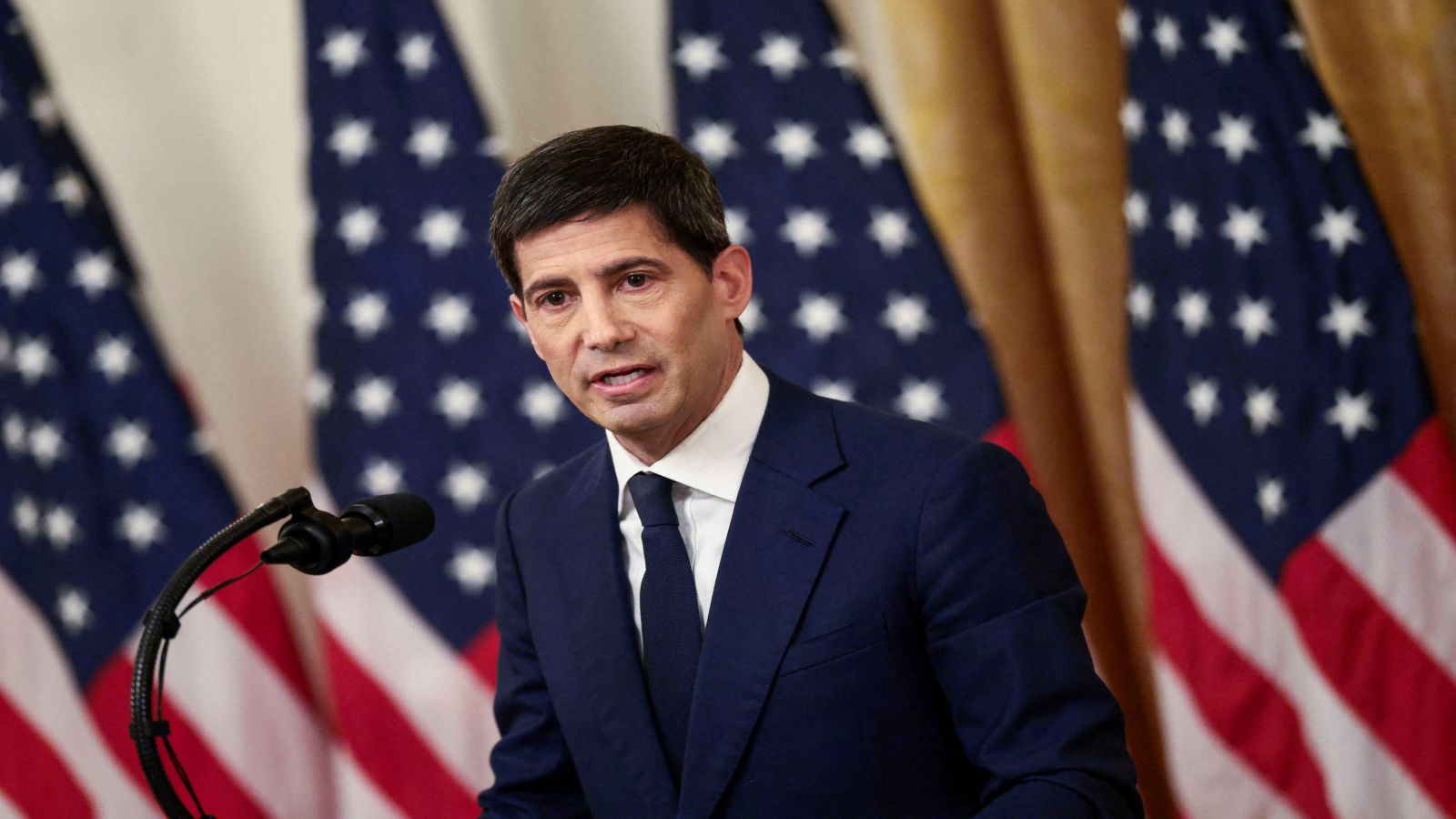
The Federal Reserve has a data problem, and its new chair isn't hiding his frustration.
Speaking at the European Central Bank Forum in Sintra, Portugal, Fed Chair Kevin Warsh made it clear that the current system of tracking the American economy is broken. Central bankers are making trillion-dollar decisions based on backward-looking government surveys that are frequently revised weeks or months after the fact.
Warsh wants to change that. Within the next nine to twelve months, he plans to transition the central bank toward tracking economic conditions using real-time data and new technologies. It's an aggressive timeline that could fundamentally alter how interest rates are set.
The Problem With Government Statistics
For decades, the Fed has relied on agencies like the Bureau of Labor Statistics and the Bureau of Economic Analysis. These institutions gather data through traditional surveys to calculate inflation, employment, and gross domestic product.
Warsh argued that these metrics suffer from severe mismeasurement problems. The response rates for corporate and household surveys have plummeted for years, making the data less reliable. By the time a government agency compiles, adjusts, and publishes a monthly report, the economic reality on the ground has already shifted.
We saw this play out vividly during the inflation surge of the early 2020s, where delayed data caused the central bank to keep interest rates near zero for far too long. Warsh wants to ensure that mistake isn't repeated. His focus is on capturing contemporaneous, active information that reflects what businesses and consumers are doing right now, not what they did a month ago.
Replacing lagging indicators with live tracking
To pull this off, Warsh is leaning heavily on a specialized data task force he established shortly after taking office. This group is tasked with identifying private-sector data streams, digital transaction records, and alternative metrics that can give the Fed a live view of the economy.
What does that look like in practice? Instead of waiting for a monthly retail sales report, the Fed could analyze aggregated, anonymized credit card transaction data provided by payment processors in real time. Instead of relying on delayed housing surveys, they can track live real estate listings, rental pricing platforms, and digital mortgage applications.
Artificial intelligence will play a major role in sorting through these massive, unstructured data sets. Warsh has repeatedly stated that AI should expand the economy's productivity over the long haul, and he expects his team to use those exact tools to clean up the Fed's internal forecasting models.
Dropping forward guidance to keep markets guessing
This pivot toward real-time data explains why Warsh has essentially eliminated forward guidance. Under previous leadership, the Fed spent years signaling its upcoming rate moves months in advance to avoid startling Wall Street. Warsh chopped the June policy statement down to just 132 words, removing the predictable clues investors rely on.
If you're making policy decisions based on live data, you can't promise what you'll do in two months. The data might change next week.
During his panel discussion alongside ECB President Christine Lagarde and Bank of England Governor Andrew Bailey, Warsh flatly refused to tip his hand on whether the Fed will raise rates at the upcoming July meeting. With inflation sitting around 4.2% following geopolitical energy shocks, and the target fed funds rate at 3.5% to 3.75%, the markets want certainty. Warsh isn't giving it to them. He expects investors to analyze the market signals themselves rather than expecting the central bank to hold their hands.
Striking a defiant line on political independence
This shift to a data-heavy, unpredictable stance also serves a political purpose. President Donald Trump, who nominated Warsh to the post earlier this year, has repeatedly demanded lower interest rates.
By tying the Fed's future decisions strictly to live, verifiable economic data, Warsh creates a protective shield against White House pressure. He noted that if households or politicians think the Fed will tolerate inflation above its 2% target just to keep the peace, they're going to be disappointed.
Relying on objective, real-time technology allows the Fed to argue that its decisions are purely mathematical, keeping political bias at bay.
How to prepare for a reactive Federal Reserve
Corporate leaders, investors, and treasury managers need to adjust to a central bank that moves faster and communicates less. You can adapt your strategy by focusing on the following areas:
- Ignore the narrative, watch the private data: Stop obsessing over what Fed governors might say in speeches. Start tracking high-frequency private indicators like corporate credit card spending velocity, real-time supply chain freight indexes, and private payroll processing data.
- Prepare for sudden policy shifts: Because the Fed will no longer drop hints weeks before a meeting, interest rate decisions could catch the market off guard. Ensure your corporate debt structures and investment portfolios can handle abrupt macro swings without forward warning.
- Build flexible pricing models: If the central bank is reacting to live inflation pressures rather than smoothed-out quarterly averages, borrowing costs will remain volatile. Keep cash reserves liquid enough to navigate sudden shifts in credit availability.