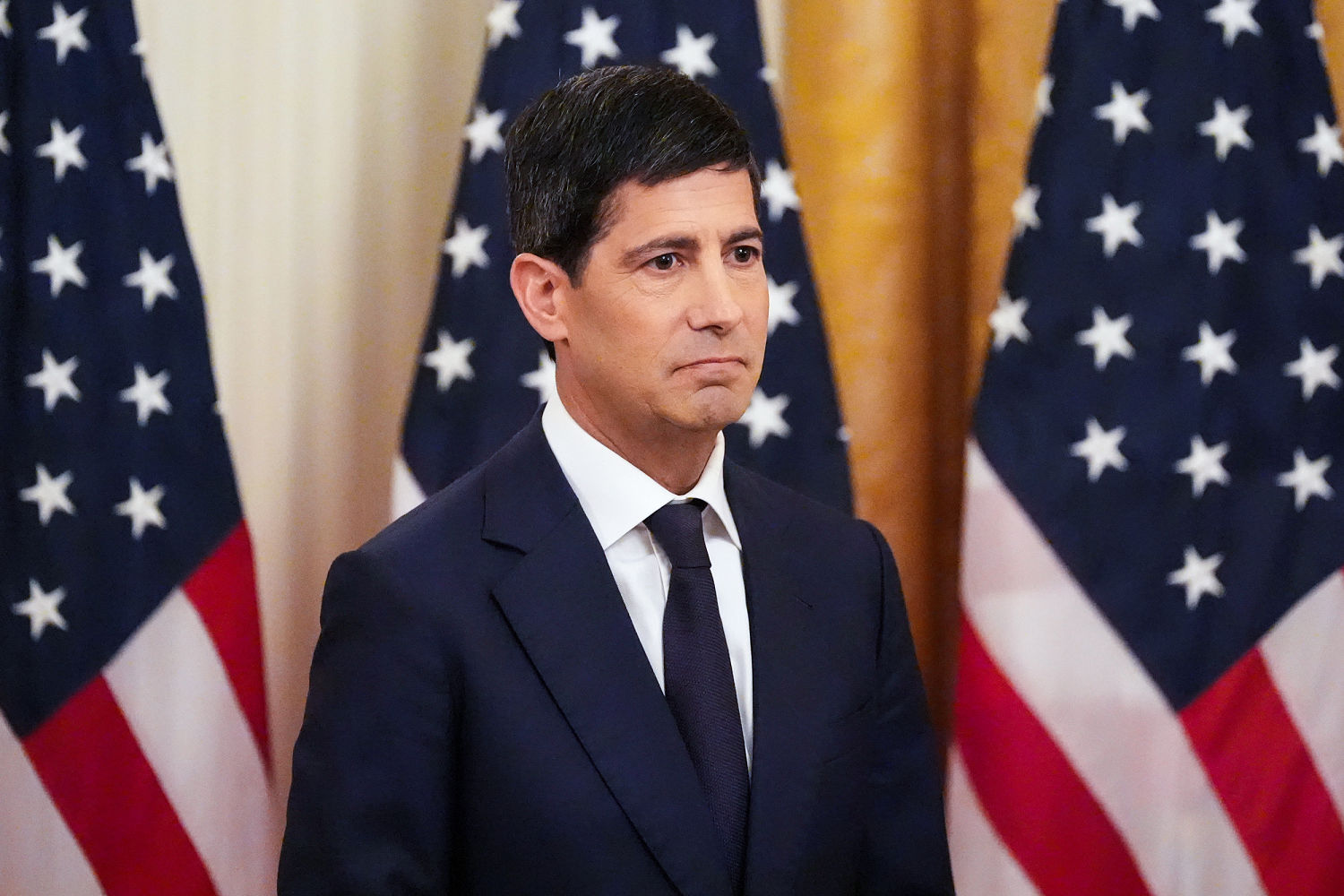
Financial commentators are currently transfixed by a beautifully choreographed piece of theater. The narrative dominating the headlines is simple, compelling, and entirely wrong. They will tell you that the Federal Reserve’s upcoming interest rate meeting hangs on a knife-edge, balanced between stubborn inflationary metrics and the looming shadow of Kevin Warsh’s hawkish monetary philosophy.
This framing treats macroeconomics like a reality television show where a single personality can bend the global financial system to their will. It is a comforting fiction. It implies someone is actually in control.
The harsh reality is that the obsession with individual central bank actors and marginal inflation ticks is a massive distraction from structural economic realities. The financial press is asking whether the Fed will cut by 25 basis points or hold steady, debating it with the intensity of theologians arguing over the head of a pin. They miss the bigger picture. The interest rate trajectory is already locked in by forces far larger than any single central banker, including Kevin Warsh.
The Myth of the Hawkish Savior
Kevin Warsh has long been the darling of the sound-money crowd. His track record as a Federal Reserve Governor during the 2008 financial crisis—and his subsequent critiques of quantitative easing—earned him a reputation as a principled hawk. When his name circulates in connection with leadership roles or policy shifts, markets react as if a disciplinarian is about to walk into a chaotic classroom.
This view fundamentally misunderstands how the Federal Reserve operates as an institution. I have watched institutional investors burn through millions of dollars in capital trying to front-run policy shifts based purely on who is sitting at the FOMC table. It is a fool's errand.
The Fed is not a dictatorship; it is a sprawling, bureaucratic consensus machine. It is insulated by layers of staff economists, proprietary data models, and a deeply ingrained institutional inertia. To believe that one individual, regardless of their intellectual pedigree, can suddenly steer the committee toward an aggressive, independent path of monetary tightening ignores the gravity of the institution itself.
Furthermore, the "hawk" label is frequently misunderstood. True monetary hawkishness requires a willingness to tolerate severe market drawdowns and rising unemployment to maintain currency stability. In a modern political economy burdened by massive sovereign debt, absolute hawkishness is a luxury no central banker can actually afford. If Warsh or anyone else were to enforce the strict monetary discipline his supporters crave, the immediate result would not be a clean economic reset—it would be a structural fracture in the Treasury market.
The Inflation Data Trap
Meanwhile, the media tracks every consumer price index release as if it provides an absolute truth. The "lazy consensus" dictates that if core inflation prints 0.1% above consensus, the Fed must instantly pivot to a restrictive stance. If it prints lower, the green light is on for a monetary easing cycle.
This reactive approach is flawed for two distinct reasons:
- Lagging Indicators: The metrics the Fed watches closest are historical artifacts. By the time shelter costs or service-sector data manifest in official indexes, the underlying economic decisions were made six to nine months prior. Trading on yesterday's news while pretending it predicts tomorrow's growth is a recipe for portfolio destruction.
- Structural Fiscal Dominance: Inflation is no longer driven purely by the supply of credit or short-term interest rate adjustments. We have entered an era of fiscal dominance. When a government runs multi-trillion-dollar deficits during a period of nominal economic expansion, central bank policy loses its bite.
Monetary Policy (Rates) <---> Fiscal Policy (Deficits)
       |                                |
Tries to cool economy            Injects massive liquidity
The Fed can raise the federal funds rate to 5% or 6%, but if the fiscal authority keeps injecting liquidity directly into the economy via structural deficits, the monetary brakes will simply slip. The market fixates on the Fed's interest rate dial while ignoring the massive fiscal firehose pouring money into the system.
The Flawed Premise of "Neutral" Rates
Step back and look at the questions market participants frequently ask:
- "What is the true neutral interest rate?"
- "How can the Fed balance price stability with full employment?"
The premise of these questions is fundamentally broken. They assume a static, discoverable "neutral" rate ($R^*$) exists in nature, waiting for clever economists to calculate it. It does not. The neutral rate is an invisible variable shifted by global demographics, capital flows, and government debt issuance.
By pretending the Fed can perfectly balance the scales, the financial media obscures the real structural problem: the distortion of risk capital.
When interest rates are manipulated to achieve short-term political or economic harmony, it destroys the price discovery mechanism. It rewards zombie corporations that survive only on cheap debt and punishes savers. If you want unconventional advice that actually works, stop trying to predict the exact path of the federal funds rate. Instead, look at the health of the corporate credit markets. Watch the spread between high-yield debt and Treasuries. That is where the real stress manifests, far earlier than any official Fed press release.
The Cost of the Current Narrative
The risk in accepting the consensus narrative—that the Fed is carefully calibrating policy around inflation data and personality dynamics—is that it breeds a false sense of security. It convinces investors that the economic cycle has been tamed, managed by technocrats who can tweak a dial to ensure a smooth economic trajectory.
The downside of acknowledging my contrarian perspective is uncomfortable: it means admitting that the system is highly unpredictable and exposed to structural forces outside any central bank's control. It means realizing that a higher-for-longer interest rate regime isn't a policy choice; it is an economic necessity driven by an avalanche of sovereign debt that must be financed.
The financial media will continue to analyze Kevin Warsh’s public statements and obsess over every decimal point of the next economic report. They will declare winners and losers at the conclusion of the next Fed meeting. Let them play that game. The real structural shift has already happened. The era of cheap money is dead, killed not by a specific central banker, but by decades of fiscal excess. No policy tweak or change in leadership can reverse that reality.