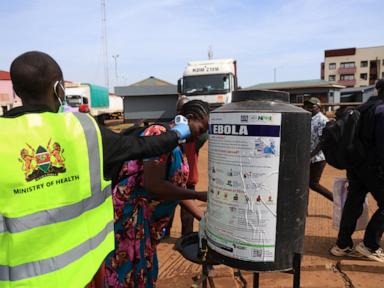
Headline counts of confirmed Ebola cases tell the wrong story during an imported outbreak. When Kenya's confirmed Bundibugyo virus disease cases reached eight in mid-October 2026 following a single imported case, standard wire reporting treated the absence of community transmission as a reassurance that containment was holding. Operational epidemiology treats that exact milestone as a stress test of two distinct firewalls: pre-symptomatic quarantine capture and hospital infection prevention.
Standard reporting of this event flattens complex causal dynamics into a single tally. The underlying reporting logic typically follows a straightforward sequence: an imported case enters from the Democratic Republic of the Congo via Uganda, contacts are quarantined, secondary cases appear inside quarantine, and officials assert there is no community spread. That sequence obscures the mechanics that actually govern whether an imported filovirus case dies out or ignites an epidemic. Understanding the outbreak requires separating epidemiological reality from headline numbers, mapping the transmission chain across three distinct operational stages, and evaluating where containment friction remains.
Epidemiological Reality Versus Headline Metrics
A raw case count conflates epidemiological containment with risk elimination. In outbreak control, containment means every new infection is traced to a known chain of transmission and isolated before onward spread occurs, whereas risk elimination means zero susceptible exposures remain. Reporting that Kenya has no community transmission is accurate on the population level, yet it leaves out the critical distinction between spread inside known contact networks and undetected spread outside them.
During the October 2026 event, the index patient arrived in Kenya on October 3, 2026, after traveling from the Democratic Republic of the Congo through Uganda, was admitted for care, and died on October 5, roughly 58 hours after landing. Subsequent secondary cases—comprising close relatives and healthcare workers—emerged among contacts already under quarantine and monitoring. From an operational standpoint, detecting secondary cases inside quarantine is evidence that contact tracing identified exposed individuals before their infectiousness expanded widely, even though infections still occurred among those contacts.
The broader regional context further complicates raw case tallies. The Democratic Republic of the Congo has been experiencing an extensive Bundibugyo virus outbreak across multiple provinces and health zones with thousands of confirmed cases and a high crude case-fatality rate, while cross-border travel and occasional international importations—such as a confirmed case in Nigeria linked to travel from Uganda—demonstrate how porous mobility corridors operate. When a single imported case generates secondary infections within days, the operational question is not simply "how many cases exist today," but "what is the lag between symptom onset, isolation, and laboratory confirmation across each link in the chain?"
The Three Pillars of Imported Outbreak Control
Containing an imported Ebola case depends on three interdependent operational pillars: early detection and triage, contact capture and quarantine enforcement, and nosocomial infection prevention. Weakness in any one pillar shifts burden onto the others.
Early Detection and Triage
Early detection fails when initial symptoms mimic routine illnesses or when travel histories are incomplete. In the index trajectory, the patient experienced nonspecific malaise in mid-September in Bas-Uélé before traveling to Kenya via Uganda and presenting acutely in early October with fever, chills, muscle pain, sore throat, and bleeding at injection sites. Standard clinical triage only transitions from routine care to high-consequence isolation when clinical presentation, epidemiological history, and diagnostic testing converge.
The operational mechanism here is diagnostic lead time. Every hour between symptom onset and isolation increases the probability of exposure for household members, transport companions, and clinical staff. Because there is no licensed vaccine or specific treatment established for Bundibugyo virus disease—though supportive care improves survival and clinical trial evaluation such as the ring-vaccination TUMAINI framework in the DRC has been advancing—rapid recognition and supportive clinical management carry disproportionate weight.
Contact Capture and Quarantine Enforcement
Quarantine only interrupts transmission if contact identification is comprehensive, timely, and sustained through the full 21-day incubation window. Following the first case in Kenya, health authorities mapped over a hundred contacts across categories including airport staff, healthcare workers, airline passengers, relatives, and flight crew, while notifying foreign authorities for passengers who traveled onward.
The operational bottleneck in contact tracing is coverage versus compliance. Listing contacts on paper is distinct from maintaining daily symptom checks, isolating symptomatic contacts immediately, and keeping every eligible individual in quarantine for the full observation period. Even a single unmonitored or non-quarantined contact represents an unsealed breach in the perimeter. Conversely, as contacts complete 21 symptom-free days and undergo final assessment, safe release reduces operational strain without reintroducing transmission risk.
Nosocomial Infection Prevention
Healthcare settings act as high-amplification nodes if standard and transmission-based precautions falter. The appearance of secondary cases among healthcare workers alongside family members underscores that hospital exposure remains one of the sharpest vulnerabilities in early imported clusters.
Nosocomial transmission is driven by procedural friction under pressure: rushing to stabilize a deteriorating patient, incomplete travel disclosure at intake, or shortages in personal protective equipment, trained personnel, and laboratory supplies. World Health Organization assessments of the response have noted workforce constraints across surveillance, case management, and infection prevention and control alongside supply shortfalls in protective gear and diagnostic materials. Those resource constraints explain why healthcare workers face elevated risk even when national emergency operations centers and task forces are activated quickly.
Cause-and-Effect Chains Standard Coverage Misses
Competitor reporting typically treats outbreak milestones as isolated facts rather than linked causal mechanisms. Four structural cause-and-effect relationships govern how an eight-case cluster behaves:
- Cross-border mobility links regional incidence to urban import risk. High transmission intensity in neighboring health zones and regional transit hubs raises the probability that an infected traveler enters an urban transport hub like Nairobi, turning regional disease burden into a metropolitan triage event.
- Delayed or non-specific early presentation compresses the containment window. When early symptoms are mild or misattributed, family care and initial clinical encounters occur before isolation protocols engage, expanding the primary contact roster.
- Quarantine surveillance converts latent exposure into visible cluster growth. As traced contacts develop symptoms during their 21-day monitoring period and test positive, confirmed case counts rise even while transmission is being intercepted inside controlled settings.
- Input bottlenecks in protective gear and staffing magnify hospital vulnerability. When infection prevention supplies or specialized personnel are tight, routine clinical procedures on unconfirmed or rapidly declining patients carry higher secondary transmission risk for staff.
Educated Hypotheses Versus Verified Facts
Rigorous analysis requires separating confirmed public health observations from educated hypotheses that cannot yet be proven from headline figures alone.
Known facts from official public health reporting include:
- Kenya recorded its first confirmed imported Bundibugyo virus case in early October 2026 following travel from the DRC via Uganda, with death occurring shortly after admission.
- Secondary cases—among relatives and healthcare workers linked to the index patient—were detected among traced contacts, with cases concentrated in Nairobi and no evidence of broader community transmission.
- Authorities established a contact list of roughly 135 individuals across multiple exposure groups, placed the vast majority of in-country contacts in quarantine, notified international counterparts for departing passengers, and conducted 21-day monitoring and phased releases for asymptomatic contacts who completed observation.
Educated hypotheses that remain analytical interpretations rather than established facts include:
- That the higher-than-headline secondary count among relatives and healthcare workers reflects cumulative exposure intensity during the initial acute care window prior to full isolation.
- That sustained containment in urban Kenya depends less on border temperature checks alone—which have well-known limitations for asymptomatic or incubating travelers—and more on rapid fever-plus-travel triage inside emergency and inpatient wards.
Operational Limitations and Blind Spots
Even disciplined containment programs face structural constraints that no single protocol eliminates:
- Incubation lag: A 21-day monitoring window means epidemiological closure lags behind the last known exposure by three full weeks, creating a prolonged period of operational uncertainty.
- Asymptomatic travelers: Entry screening at airports or land borders cannot reliably intercept incubating carriers who have not yet developed fever or visible symptoms.
- Resource competition: Maintaining intensive contact tracing, quarantine support, laboratory testing, and strict infection control simultaneously stretches local public health and hospital staffing over time.
- Stigma and non-disclosure: Fear of isolation or social stigma can discourage symptom reporting or complete contact disclosure, weakening early detection.
Tactical Playbook for Outbreak Containment
For health system operators and emergency planners managing an imported filovirus cluster, containment execution follows a strict sequence:
- Enforce mandatory travel-and-symptom gating at triage. Require structured travel history and fever screening at every outpatient, emergency, and inpatient entry point, routing high-risk presentations directly to dedicated isolation rooms without waiting-room mixing.
- Stratify contacts by exposure intensity and trace backward and forward. Rank traced contacts by direct bodily fluid or close caregiving contact versus casual proximity, pairing daily symptom check-ins with rapid transport to treatment centers at the first sign of illness.
- Audit personal protective equipment burn rates and donning/doffing compliance. Track protective gear inventory against active isolation beds daily and station trained observers during high-risk clinical procedures to prevent healthcare worker breaches.
- Coordinate cross-border data exchange in real time. Share verified contact identifiers and flight/transit manifests with neighboring health authorities and destination countries immediately so mobile contacts do not slip across jurisdictions.
- Manage 21-day quarantine exits systematically. Conduct structured clinical exit assessments and post-quarantine guidance before releasing asymptomatic contacts so public confidence and community reintegration stay intact.
Strategic Recommendation
Treat an eight-case secondary cluster with zero community spread not as proof of mission accomplishment, but as a live calibration audit of hospital triage and contact quarantine discipline. Direct immediate operational resources toward frontline healthcare worker protection, rapid diagnostic turnaround, and uninterrupted 21-day contact monitoring—and keep those exact controls active for a full incubation cycle after the last confirmed case is isolated and the final contact clears observation.