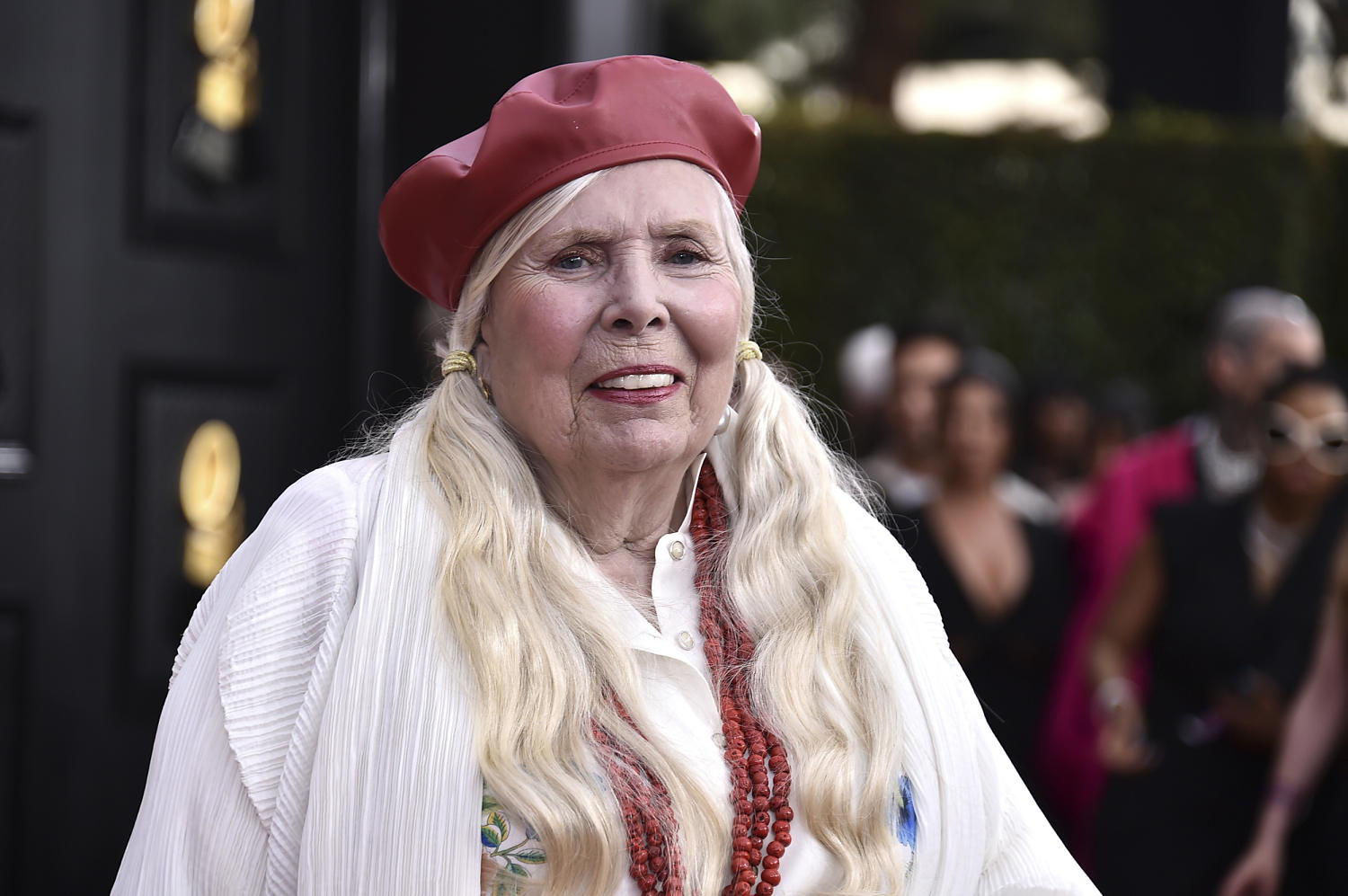
Joni Mitchell has officially become an American citizen after more than sixty years of living, working, and reshaping popular music in the United States. Born Roberta Joan Anderson in Fort Macleod, Alberta, Canada, she spent six decades as a Canadian citizen and a permanent resident in America while building a catalog that defined California folk, jazz fusion, and confessional songwriting.
Headline writers treat the milestone like a sentimental afterthought or a sudden change of heart. It is neither. Behind a single naturalization oath sits a long, unglamorous collision of immigration law, cross-border tax mechanics, industry economics, and a fiercely guarded artistic independence that refused to bend to polite public relations.
After forty years covering the music business and the legal machinery that quietly governs artists behind the curtain, I have learned that paperwork rarely moves by accident. When an artist of Mitchell's stature waits more than six decades to take an oath of citizenship, every decade of delay carries real structural weight.
The Myth of the Effortless California Immigrant
Popular memory likes to draw a straight line from a snowy Canadian prairie to a sun-drenched Laurel Canyon porch. That line is a marketing fiction.
Mitchell arrived in the United States in the mid-1960s as a young songwriter chasing venues, publishers, and survival. Like thousands of working musicians crossing the border before strict modern border digitization, she built her career first and sorted out long-term legal status over time rather than on a neat corporate schedule.
Permanent residency—the familiar green card—gives a foreign national the right to live and work permanently in the United States without surrendering their home citizenship. For decades, that arrangement worked well enough for a touring and recording artist whose creative headquarters sat in Los Angeles while her family roots and emotional memory remained tied to Canada.
Citizenship asks for something different. Naturalization requires filing formal applications, submitting extensive biographical and travel records, passing civics and English requirements where applicable, and swearing an oath of allegiance to the United States. For someone who spent her entire adult life scrutinizing authority, institutions, and national borders, signing that paper was never a casual box to check.
Consider a hypothetical example of how an independent musician navigates status across borders over forty years. Suppose a songwriter enters the country in their twenties, obtains permanent residency in their thirties, buys property in California, tours internationally, and holds royalties in multiple currencies. Without an urgent legal trigger—such as a change in estate planning, healthcare logistics, or cross-border governance—staying a permanent resident can feel like a practical truce rather than an unfinished chore.
Why Citizenship Matters Now Behind the Scenes
Sentimentality makes a nice lead paragraph. Practical reality drives major legal decisions late in life.
Mitchell's path over the last decade has been shaped by serious health recovery following a brain aneurysm in 2015, a gradual return to public performance, and heightened attention to how her life's work and personal affairs are managed. When an artist's estate, medical directives, and asset structures are organized, legal clarity stops being theoretical.
Citizenship alters several concrete mechanics that rarely show up in entertainment press releases:
- Estate and tax alignment: Cross-border estates involving U.S. real estate, American royalties, and dual-country rules can create thorny tax and probate friction for non-citizens compared to U.S. citizens.
- Long-term residency security: While long-term green card holders have strong protections, extended absences or administrative shifts can still create headaches that citizens do not face.
- Civic and legal finality: Voting in federal elections and holding a U.S. passport alongside or in place of prior arrangements closes a sixty-year chapter of living in America without full political standing.
None of this means Mitchell suddenly abandoned her Canadian identity. Dual citizenship exists precisely because legal nationality and personal history do not have to erase one another, though each country's laws set its own rules on how ties are recognized.
The Music Industry Illusion of Borders
Rock history loves to file Joni Mitchell under "California singer-songwriter," right next to Laurel Canyon mythology and late-sixties studio lore. That label is convenient for record executives and lazy for historians.
Mitchell brought a distinctly Canadian sensibility—shaped by small-town prairie winters, folk clubs, and an outsider's eye—into an American music industry that was busy turning counterculture into a billion-dollar corporate engine. She wrote about Los Angeles with the sharp distance of someone who had not grown up inside its illusions.
That outsider posture helped make albums like Blue, Court and Spark, and Hejira endure. She did not chase radio formulas or behave like a compliant brand ambassador. Even when major labels wanted tidy commercial hooks, she pushed toward complex alternate guitar tunings, jazz rhythm sections, and unvarnished emotional honesty.
| Status Factor | Permanent Resident (Green Card) | Naturalized U.S. Citizen |
|---|---|---|
| Right to live and work in U.S. | Yes, subject to residency rules | Yes, unconditional |
| Federal voting rights | No | Yes |
| U.S. passport eligibility | No | Yes |
| Long-term administrative exposure | Higher scrutiny over time | Removed |
For sixty years, her legal status mirrored her artistic stance. She lived inside the American cultural machine, profited from its reach, and remained legally apart from full membership until she chose otherwise.
What Critics and Fans Get Wrong About Late Milestones
Whenever a veteran icon makes a major personal or legal move late in life, two predictable reactions surface. One camp treats it as proof that the artist's earlier identity was somehow incomplete. The other camp complains that nothing has changed because the songs were already written.
Both reactions miss the point. A life lived across six decades is not a static statue; it is an ongoing negotiation with time, body, law, and memory.
Choosing American citizenship after more than sixty years does not rewrite Both Sides Now or erase Saskatchewan or Winnipeg from Mitchell's story. It simply marks the moment she decided to lock in her legal footing in the country where she spent her adult life building one of the most influential bodies of work in modern music.
In an era when public figures treat every private step like a content rollout, Mitchell's timing has its own quiet authority. She did it on her own clock, long after the hype of her youth had passed, leaving the paperwork to catch up with the reality of where she actually lived.