Concrete does not care about dynasties. Pour enough asphalt, drive enough heavy machinery into the loess soil of Shaanxi, and eventually you will hit the ghosts of the Warring States.
Modern travelers land at Xi'an Xianyang International Airport, adjusting their luggage straps and checking their phones, entirely unaware that just meters beneath the roaring southern flight path lies a silence older than the imperial crown of China. It is a quiet shaped like a square double-ring, measuring roughly six hundred by five hundred and eighty meters. A flat-topped earthen mound rises ten meters into the dusty air, marked quietly on modern maps as Gongling.
For years, this ancient sepulcher sat in the path of progress, a protected anomaly brushed by the dust of landing jets. Then came the archaeologists.
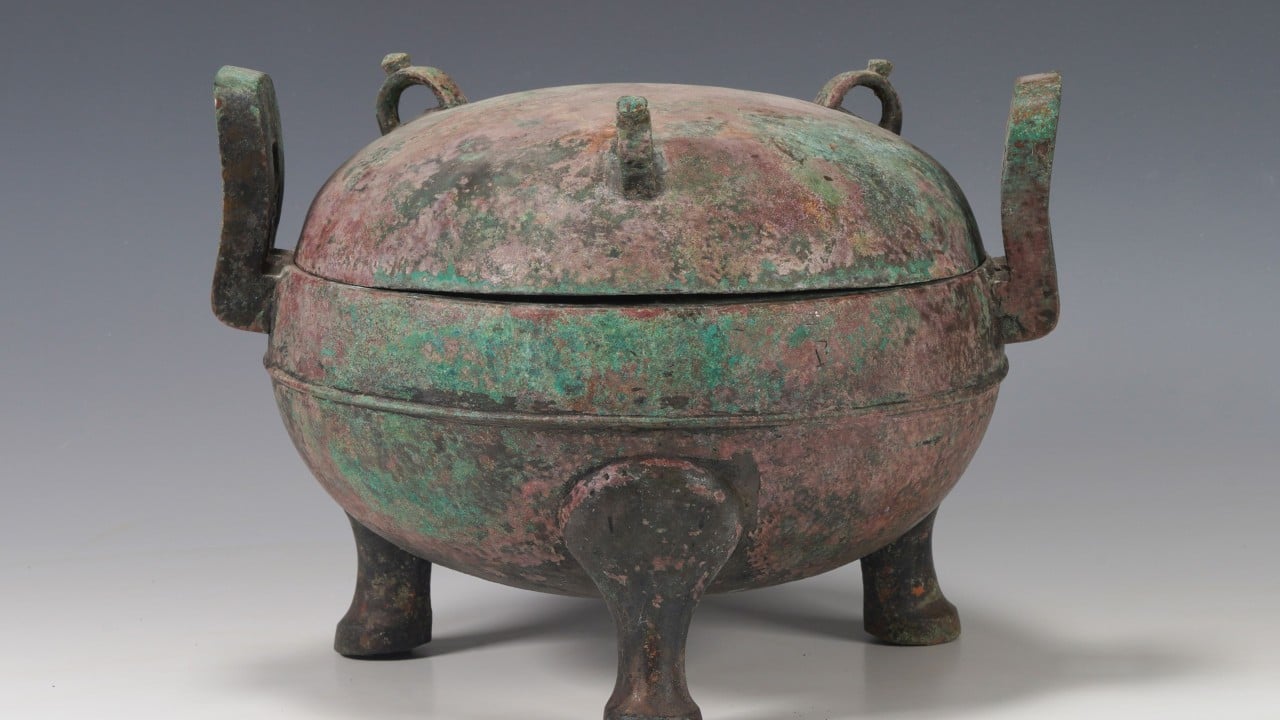
When researchers systematically cracked open the perimeter of the Shangzhaoyao Qin mausoleum site, they did not just find cold stone. They found the discarded debris of a royal household: two hundred and fifty-eight groups of artifacts, from shattered pottery and heavy bronze vessels to delicate jade ornaments, chunks of ancient glass, and glowing agate. They found satellite graves containing human bones radiocarbon-dated between 389 and 208 BC.
And recently, a compelling new study led by researchers like scholar Zhao Hua has proposed something astonishing. This sprawling, tarmac-adjacent complex may be the long-lost resting place of Empress Dowager Huayang.
To understand why this matters, you have to look past the dirt and the jet fuel into the violent, brilliant machinery of the late Qin state. Huayang was not born to the ruthless mountain kingdom of Qin. She was a noble daughter of the rival Chu state, sent into the heart of a foreign court as a consort to Prince Anguo. She had a severe problem that haunted every woman in the inner palace: she was childless.
Enter a clever, desperate hostage prince named Zichu, trapped far from home and facing a bleak future. Through a combination of political maneuvering and sheer survival instinct, Huayang adopted him. She styled him as her own, reshaping the royal line of succession with the stroke of a court decree. When that adopted son's son finally seized the fractured states of the continent and became Qin Shi Huang—China’s first emperor—the architectural blueprint of East Asian civilization was forever altered.
Huayang made the emperor possible. Without her strategic adoption, the dynasty that unified a continent might never have held the throne.
Yet history is notoriously careless with its architects. Sima Qian, the grand historian, recorded that Huayang died around 230 BC and was supposed to be buried alongside King Xiaowen at Shouling. But historical texts are notoriously slippery, written by victors who often blurred geographic markers to confuse grave robbers or satisfy political narratives. The main tomb near the airport has never been fully excavated; it sits untouched beneath its protective earth, refusing to give up its final secrets. The researchers' proposal relies on meticulous process of elimination—matching the layout, the elite rank of the monarch-level cemetery, the chronological markers, and the unique dual-burial proximity theories.
It is a persuasive argument built on fragments. But the human core of the site lives in the spaces between the grand politics.
Look at the satellite burials surrounding the massive central mound. Bioarchaeological analysis of the human remains in those smaller graves reveals the grim texture of palace life two millennia ago. Skeletal markers point to women who performed heavy, repetitive physical labor—textile production, sweeping, kneeling for endless hours in cold chambers, carrying the weight of a royal household on warped spines. While Huayang sat draped in silk and jade, these women lived and died in her shadow, bound to her in death just as they were in life.
Consider what happens next: a commercial flight touches down on the asphalt runway, shaking the ancient loess. The passengers disembark, pulling their wheeled suitcases across the earth, chasing business meetings and modern lives. Just yards away, the dust settles over a flat-topped mound where an empress from a vanished world sleeps beside the women who served her.
We build our modern miracles directly on top of our ancient ghosts. The jet engines scream, but the earth remembers who built the road.