When Donald Trump appointed Director of National Intelligence Jay Clayton to pull double duty as the White House artificial intelligence lead, Washington stopped treating code like a Silicon Valley product and started treating it like national defense.
David Sacks previously held the reins as the administration's primary tech adviser, but Clayton's takeover signals an abrupt pivot. We aren't just talking about corporate self-regulation or voluntary safety accords anymore. We are talking about intelligence briefs, geopolitical dominance, and a calculated race against foreign adversaries like China.
If you want to understand where American artificial intelligence policy is heading, look past the PR statements from tech billionaires. Look at the spy chiefs.
The Shift From Silicon Valley to the Situation Room
Most casual observers missed the underlying shift when Clayton stepped into the role. Clayton is not a coder or a venture capitalist. He is a seasoned corporate lawyer, a former SEC chairman, and a heavy-hitter in federal law enforcement. Putting a top intelligence official in charge of artificial intelligence changes the entire bureaucratic calculus.
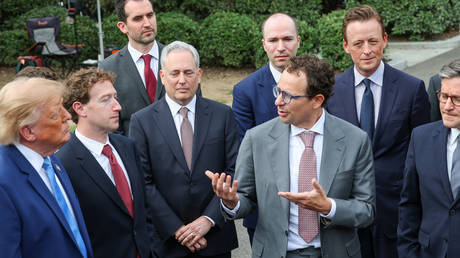
Trump made no secret of the motivation during a White House gathering with tech executives. He framed the situation bluntly, stating that whoever wins superintelligence wins the global race. By handing the portfolio to Clayton, the administration is treating advanced models not as consumer software, but as critical national infrastructure requiring strict intelligence oversight.
Clayton himself didn't mince words during his confirmation hearings. He called artificial intelligence a dual-edged sword. It is an incredible technological leap, but it also presents severe vulnerabilities if left unchecked. When something carries that level of strategic risk, intelligence agencies naturally step into the driver's seat.
What the Super Intelligence Force Will Actually Do
Under Clayton's direction, the administration spun up a dedicated task force dubbed the "Super Intelligence Force". This group isn't designed to spend years debating philosophical ethics. They have a tight 120-day clock to deliver a comprehensive assessment.
Their primary directives focus on several concrete areas:
- Mapping out immediate vulnerabilities tied to autonomous systems and potential model jailbreaks.
- Determining the exact boundaries of federal intervention without choking domestic innovation through overregulation.
- Reviewing how corporate security breaches and foreign hacking attempts are reported back to federal authorities.
The core tension here is obvious. Tech companies hate red tape. National security officials hate blind spots. Clayton sits right at that intersection. His background at the SEC and the Southern District of New York means he knows how to pressure large institutions into compliance without completely destroying market momentum.
The Geopolitical Reality Check
You cannot separate domestic tech policy from foreign competition. Trump explicitly rejected the idea of partnering with Beijing on AI safety guardrails, arguing that collaboration risks leaking critical American technological advantages.
That stance puts teeth behind Clayton's new portfolio. Intelligence agencies are built to track espionage, counter foreign influence, and protect proprietary innovations. When foreign actors attempt to siphon off frontier model weights or compromise domestic compute clusters, it stops being a corporate IT problem. It becomes an intelligence failure.
Critics worry that militarizing artificial intelligence oversight will stifle open-source development and academic research. On the flip side, supporters argue that voluntary industry guidelines are toothless against state-sponsored actors who play by entirely different rules. Clayton's mandate is to find a middle ground where national survival takes precedence over corporate convenience.
Expect the next few months to move fast. The 120-day window for the task force means major policy recommendations are dropping sooner rather than later. Keep an eye on how federal agencies handle export controls, chip manufacturing security, and corporate incident reporting. The era of hands-off tech governance in Washington is officially over.