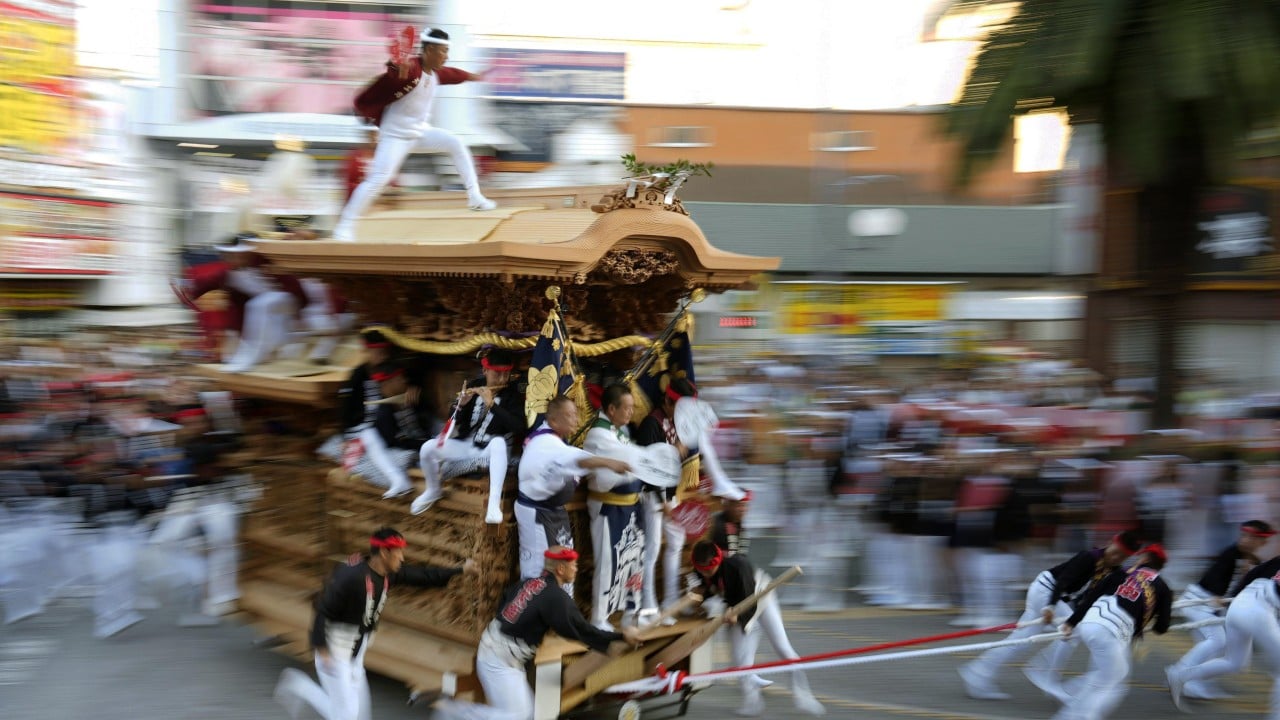
Standing beside a four-ton wooden float barreling down a narrow, wet cobblestone street in rural Japan changes how you view cultural tourism. The air smells like sweat, cedar, and cheap sake. Men in loincloths scream cadence calls at the top of their lungs, veins bulging in their necks as they haul thick hemp ropes with zero mechanical brakes. One slip on a slick stone, and four tons of timber doesn't stop. It crushes whatever sits in its path.
For centuries, that raw physical danger wasn't a bug in Japan's matsuri (traditional festivals). It was the whole point. Surviving the chaos proved devotion to local Shinto deities and bonded tight-knit communities together through shared risk.
Now, that ancient formula is breaking down. A string of fatal accidents, aging rural populations, and modern liability laws have pushed some of Japan's most famous festivals to the brink of cancellation. Organizers aren't just fighting bad weather anymore. They're fighting insurance companies, grieving families, and a demographic cliff that's draining the muscle needed to run these events safely.
The Reality Behind Japan's Most Dangerous Festivals
Most tourists show up to a Japanese festival expecting lantern-lit street food stalls, polite drumming, and neat lines of dancers. Those events exist, sure.
Then there are the kenka matsuri (fighting festivals) and heavy-float rituals. These aren't theatrical reenactments put on for cameras. They're high-stakes endurance tests where participants regularly leave in ambulances.
Take the Onbashira Festival in Nagano Prefecture, held every six years near Lake Suwa. Men ride massive, freshly felled fir logs—some weighing over ten tons—down steep, rocky mountain slopes with no ropes or harnesses to slow them down. Every cycle brings broken bones. Fatalities aren't rare anomalies; they're grimly expected parts of the festival's history. During the 2022 festival, scaled back because of the pandemic, safety protocols tightened significantly, yet injuries still piled up.
Look at the Danjiri Matsuri in Kishiwada, Osaka. Teams sprint through tight urban intersections pulling massive carved wooden floats at full speed, executing sharp ninety-degree turns called yarimawashi. If the crew misses the timing by half a second, the float tips over or slams straight into concrete storefronts. Participants have died crushed under the wheels or pinned against walls.
In Ehime Prefecture, the Niihama Taiko Festival features giant, ornate drum floats weighing around three tons, carried entirely on the shoulders of over a hundred men. Sometimes rival neighborhoods intentionally slam their floats into one another in violent clashes known as hachiawase. Police routinely deploy riot squads just to keep the collisions from turning into lethal brawls.
Why do communities keep doing this? Because in towns that have lost factories, schools, and young families to Tokyo, the annual festival is often the only thing keeping the town's identity alive. Young men who moved to the city for office jobs take vacation days to come home, drink with childhood friends, and put their bodies on the line for their neighborhood's pride.
What Changed After Recent Fatal Accidents
Risk used to stay inside the village. If someone got hurt or killed in 1955, the community mourned, raised money for the family, and quietly prepared for next year. Nobody sued the shrine committee.
That silent social contract has evaporated.
Over the past decade, a series of high-profile deaths and severe injuries forced local governments and police departments to step in. When a float crushes a spectator—or when a volunteer falls from a thirty-foot wooden pillar in front of smartphone cameras—the fallout hits national news within minutes.
In 2023 and 2024, multiple regional festivals across Japan suspended events, banned alcohol during float pulls, or replaced traditional human-powered maneuvers with slow, heavily policed processions. In several cases, local police refused to issue road-use permits unless organizers agreed to install steel barriers, ban spectators from tight corners, and mandate helmets or safety harnesses.
To outsiders, putting a helmet on someone riding a ten-ton log sounds like obvious common sense. To traditionalists, it strips the ritual of its spiritual meaning.
Here's the friction nobody likes admitting out loud: safety rules and religious devotion don't mix easily. In Shinto tradition, participating in a dangerous matsuri is an act of purification and offering to the kami (spirits). When municipal bureaucrats rewrite rules to eliminate risk, elders feel the festival turns into an empty theme park parade. When organizers resist those rules, insurance underwriters walk away, leaving neighborhood associations personally liable for millions of yen in wrongful death lawsuits.
The Demographic Time Bomb Nobody Can Fix
Even if every festival organizer agreed to strict modern safety standards tomorrow, they'd still face a math problem they can't solve.
Japan is aging faster than any major economy on earth. Rural towns—the exact places that host the most physically demanding festivals—are hollowing out.
Pulling a four-ton wooden float requires dozens of strong, sober, coordinated adults in their twenties and thirties. Twenty years ago, a small fishing town or mountain village had plenty of young carpenters, farmers, and factory workers who knew how to handle heavy timber and read the crowd's momentum.
Today, that same town might have mostly retirees in their seventies and eighties.
Let's look at what happens on the ground when manpower drops:
- Inexperienced crews take over critical roles. People who live in cities all year show up the morning of the festival without practicing braking techniques or cornering signals.
- Exhaustion sets in faster. Without enough fresh rotations to swap out tired pullers, teams lose control of heavy floats late in the afternoon when fatigue peaks.
- Alcohol fills the confidence gap. Drinking sake before and during a festival is deeply ingrained in the culture, lowering inhibitions right when sharp reflexes matter most.
When you combine an understaffed crew, a heavy wooden structure without brakes, and heavy drinking, disaster isn't just possible. It's predictable.
Some towns have tried importing "volunteer pullers" from nearby cities or allowing tourists to join the ropes. While it solves the headcount problem on paper, it introduces a massive safety liability. A tourist who doesn't understand local dialect commands won't know when to drop the rope or brace for a sudden stop.
How Communities Are Fighting to Keep Traditions Alive
Faced with extinction, festival committees across Japan are making painful compromises. Nobody wants to be the generation that let a 400-year-old tradition die on their watch, so communities are testing new ways to survive without losing their soul.
Some shrines have quietly altered the physical mechanics of their floats. Hidden hydraulic disc brakes, steel reinforcements, and rubber wheel treads are showing up underneath centuries-old woodwork. From ten feet away, the float looks identical to how it looked in the Edo period. Underneath, engineers have added basic stopping power so a runaway cart doesn't plow into a crowd.
Other festivals are changing their schedules and rules around participation:
- Strict breathalyzer checks before anyone touches a rope or climbs a float, breaking centuries of heavy-drinking tradition.
- Mandatory safety drills weeks in advance, barring out-of-town relatives from critical steering positions if they miss practice.
- Shortened routes that avoid steep hills and blind intersections where most fatal accidents historically occurred.
- Women stepping into historically male-only roles to make up for the severe shortage of young men in rural districts.
That last shift has sparked intense debate across Japan. Historically, many Shinto festivals barred women from touching floats or entering sacred zones due to outdated taboos around ritual impurity. Now, pragmatism is beating dogma. When a village only has fifteen young men left, turning away twenty willing women means the float stays locked in the shed. Several historic festivals have quietly opened participation to women over the last few years simply to keep the tradition moving forward.
What You Should Know If You Plan to Attend
If you're traveling to Japan to experience an authentic local festival, leave the passive sightseeing mindset at your hotel. Popular events like Kyoto's Gion Matsuri have massive crowd control, steel barricades, and thousands of security guards. Smaller regional matsuri operate on completely different rules.
You're stepping into an active, unpredictable environment where locals are focused on the ritual, not on keeping tourists out of harm's way.
If you want to watch safely without getting in the way—or ending up in an emergency room—follow a few non-negotiable habits:
- Never stand on the outside of a sharp turn. If a heavy float loses traction or misses a corner, centrifugal force sends it straight toward the outer curb. Always stand well back or inside protected alcoves.
- Watch the local handlers, not your phone screen. Every festival has spotters wearing distinct armbands or blowing whistles to clear the path. When they yell and wave people back, move immediately—don't try to grab one last photo.
- Skip front-row spots near narrow intersections. Bottlenecks are where crowd crushes and runaway floats collide. Elevated spots or wide straightaways give you better views and actual escape routes.
- Respect physical boundaries even without ropes. In rural towns, organizers assume spectators have the common sense to stay clear of moving timber. If there isn't a metal fence, draw your own line ten feet further back than you think you need.
Japan's festivals aren't museum pieces behind velvet ropes. They're living, breathing, sometimes brutal expressions of local identity trying to survive in a country that's growing older and more risk-averse every year. Support them by showing up respectfully, spending money at local stalls, and giving the people hauling four tons of history plenty of room to work.