Japan is rewriting its dictionary to survive a climate that no longer resembles the one its infrastructure was built to withstand. The Japan Weather Association recently introduced the term kokusho—translated as "cruelly hot"—to describe days where temperatures exceed 40 degrees Celsius (104 degrees Fahrenheit). This is not a mere linguistic quirk or a marketing gimmick for weather apps. It is a desperate attempt by meteorologists to reset the public’s risk threshold in a country where heatstroke deaths have become a predictable annual mass-casualty event.
For decades, the Japanese public viewed summer as a season of endurance, or gaman. You toughed it out. You used a folding fan. You drank barley tea. But the old ways are killing people. By formalizing a category beyond the traditional "extremely hot day" (moshobi, 35°C), authorities are signaling that the environment has shifted from uncomfortable to lethal.
The Language of Biological Threat
The introduction of kokusho serves a specific psychological function. Humans are remarkably bad at assessing incremental shifts in danger. When every day in August hits 35°C, the warning loses its teeth. People stop staying indoors; they continue to tend their gardens or walk to the train station, assuming their bodies can handle "just another hot day."
Meteorologists realized the existing scale was broken. If the highest tier of warning is triggered forty days in a row, it becomes background noise. By carving out a new tier for the 40°C threshold, the weather association is trying to trigger a "fight or flight" response. This is about biological limits. At 40°C, the human body’s ability to shed heat through sweat begins to fail, especially in Japan’s high-humidity urban corridors where the "wet-bulb" temperature makes evaporation nearly impossible.
Beyond the Thermometer
The heat in Tokyo or Osaka is not the same as the heat in the Arizona desert. Japan's urban design creates a compounding effect known as the urban heat island. Concrete and asphalt soak up radiation all day and bleed it back into the streets all night. This means there is no "cool-off" period.
- Thermal Inertia: Modern skyscrapers block wind corridors from the ocean.
- Waste Heat: Millions of air conditioning units cooling the indoors are simultaneously pumping blistering exhaust into the narrow streets.
- Humidity Saturation: The surrounding Pacific waters ensure the air stays heavy, preventing the skin from cooling itself.
When the mercury hits the kokusho level, these factors converge into a physical weight. It isn't just "hot." It is a suffocating envelope that taxes the cardiovascular system of every person caught outside.
The Gaman Trap and the Elderly Crisis
The biggest obstacle to Japan's heat safety isn't a lack of air conditioning; it is a cultural refusal to use it. There is a deep-seated generational belief that relying on "artificial" cooling is a sign of weakness or an unnecessary luxury. This mindset is literally fatal.
Statistics from the Fire and Disaster Management Agency consistently show that the vast majority of heat-related deaths occur indoors, and the victims are overwhelmingly over the age of 65. Many are found in homes equipped with air conditioning units that were switched off. Some are trying to save money on electricity—which has skyrocketed in price—while others simply do not perceive the heat until their core temperature has reached a point of no return.
The term kokusho is an aggressive nudge directed at these populations. It is meant to sound alarming. It is meant to override the cultural instinct to endure.
Why Infrastructure is Failing the Climate
Japan’s legendary rail system and power grid were designed for a different century. While the Shinkansen can withstand earthquakes, the nation's broader infrastructure is sagging under the thermal load.
When temperatures stay in the kokusho range, track buckling becomes a genuine risk. Overhead power lines sag. Transformers, pushed to their limits by the surge in cooling demand, face a higher rate of failure. We are seeing a slow-motion collision between 20th-century engineering and 21st-century reality.
The government has begun designating "cooling shelters"—libraries, malls, and community centers—as mandatory refuges. This mirrors the country’s earthquake evacuation protocols. It is an admission that the private home, once a sanctuary, is becoming a death trap for those without the means to pay for 24/7 climate control.
The Economic Drain of Extreme Heat
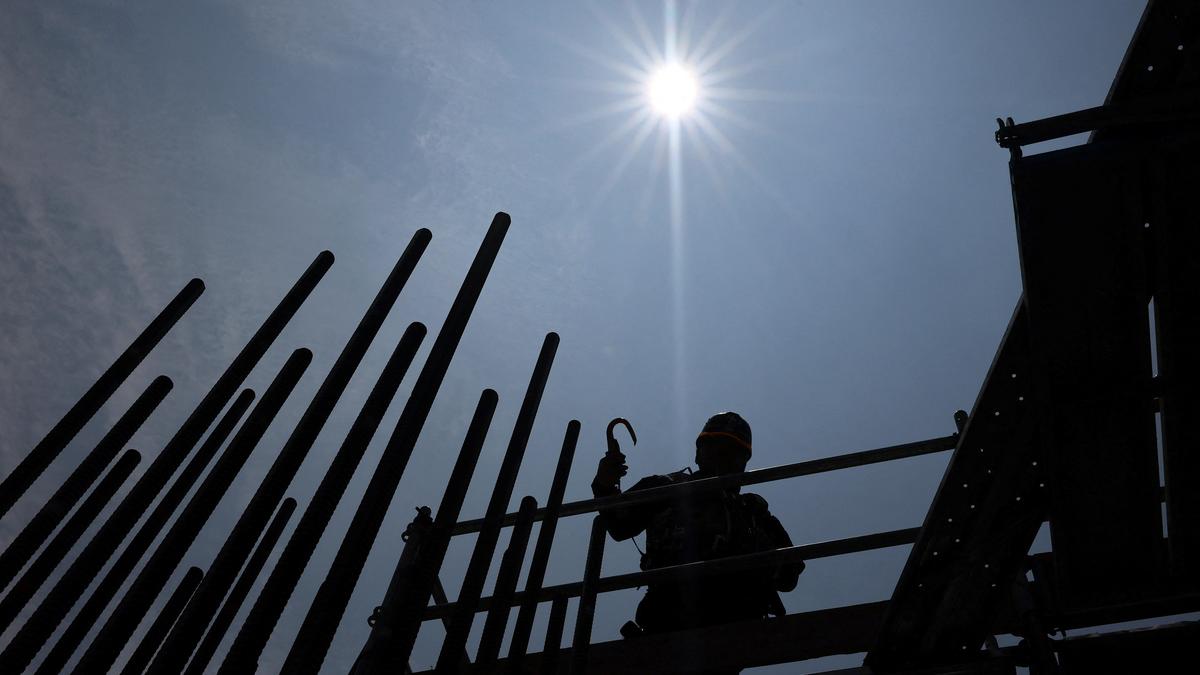
The cost of these "cruelly hot" days is not just measured in hospital visits. Productivity in outdoor industries—construction, agriculture, and delivery services—has hit a wall.
Companies are now experimenting with fan-equipped jackets, which have become a common sight on Tokyo construction sites. These garments use two small fans at the small of the back to circulate air across the skin. While effective, they are a temporary patch on a systemic problem. You cannot run a modern economy if it is physically impossible for a human to stand in the sun for more than twenty minutes.
The Global Warning
What is happening in Japan is a preview, not an isolated incident. The country is essentially a laboratory for how an aging, highly organized society attempts to bureaucratize its way out of a climate catastrophe.
The shift from moshobi to kokusho represents the death of "normal." We are moving into an era where weather is no longer a conversation starter but a threat assessment. If the terminology doesn't change, the behavior won't change. And if the behavior doesn't change, the body count will continue to rise regardless of how many fans are sold.
The term kokusho isn't about the weather. It is about the limits of human adaptation. It is a linguistic white flag, an admission that we have pushed the environment into a state where "extreme" is the new baseline, and "cruel" is the only word left to describe the reality of stepping out your front door.
Stop checking the forecast for a return to the old summers. They are gone. When the sirens go off for a kokusho day, the only rational response is to hide.