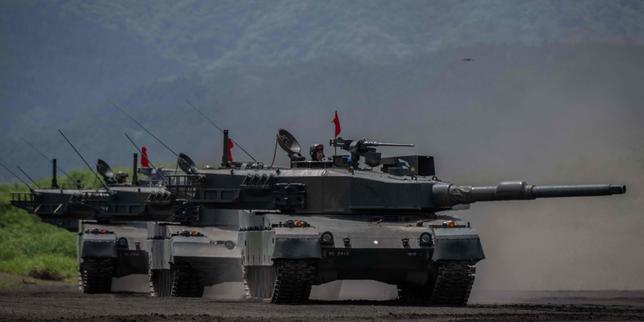
Japan just flipped the script on decades of pacifist tradition. It's a massive shift that most people didn't see coming so quickly. For the first time since the end of World War II, Tokyo is opening the door to exporting finished lethal weapons. This isn't just a minor policy tweak. It's a fundamental rewrite of how Japan views its role in global security and its own industrial survival.
The move centers on the Three Principles on Transfer of Defense Equipment and Technology. These rules used to be a straightjacket. Now, they're more like a roadmap. Japan's cabinet decided to allow the export of defense equipment—including lethal ones—to countries that hold the patents for that tech. This specifically clears the way for Japan to send Patriot missiles back to the United States.
Why the old rules had to go
You've got to understand the context here. For years, Japan operated under a self-imposed ban on weapon exports. It was born out of a desire to avoid fueling international conflicts. But the world changed. China's military buildup and North Korea's missile tests made the "passive observer" role feel dangerous. Tokyo realized it couldn't just rely on others for protection without contributing to the hardware side of the alliance.
Japan's defense industry was dying a slow death. When you only sell to one customer—the Japan Self-Defense Forces—your costs are sky-high. You don't get the benefits of mass production. Companies like Mitsubishi Heavy Industries and Kawasaki Heavy Industries were struggling to keep their defense divisions profitable. Without exports, the "Made in Japan" defense brand was destined for the scrap heap.
The immediate catalyst was a request from Washington. The U.S. is running low on Patriot interceptors because it's shipping so many to Ukraine. Japan produces these under license from Raytheon and Lockheed Martin. By sending Japanese-made PAC-3 missiles to the U.S., Tokyo helps replenish American stockpiles. It's a clever workaround. Japan isn't sending weapons directly to a war zone—which is still technically a no-go—but it's supporting the guy who is.
The Patriot missile deal is just the start
This isn't just about one type of missile. The policy change also opens the door for Japan to export components and equipment to any of the 15 countries it has security agreements with. We're talking about nations like Australia, the UK, and India.
Think about the Global Combat Air Program (GCAP). Japan is co-developing a sixth-generation fighter jet with the UK and Italy. Under the old rules, Japan might have been blocked from exporting that jet to third-party countries. That would have made the whole project a financial nightmare for the partners. Now, the path is cleared. Japan wants to be a tier-one player in the global arms market. It's moving from "security consumer" to "security provider."
The change allows for five specific categories of equipment exports:
- Rescue
- Transport
- Warning
- Surveillance
- Minesweeping
But the "lethal" part is the kicker. If a piece of equipment is designed for one of those five missions but happens to be armed, it can now be exported. That's a huge loophole. It means armed transport helicopters or surveillance drones with strike capabilities are suddenly on the table.
Domestic pushback and the pacifist identity
Don't think this went over smoothly at home. The Komeito party, the junior coalition partner to the ruling LDP, fought this for months. They're traditionally pacifist. They worry this leads Japan down a slippery slope toward becoming a "merchant of death." Honestly, they have a point about the lack of public debate. This change happened via cabinet decision, not a full vote in the Diet.
Public opinion in Japan is split. Younger generations tend to be more pragmatic about defense. They see the regional threats as real and immediate. Older Japanese citizens, who remember the legacy of the 20th century, are much more skeptical. They fear that exporting weapons makes Japan a target and erodes the nation's "peace constitution" identity.
But the government's stance is clear. Peace requires power. Prime Minister Kishida basically argued that if Japan wants to maintain a rules-based international order, it has to help defend it. You can't just talk about peace; you have to build the tools that enforce it.
What this means for the global arms market
Japan entering the export market changes the math for everyone. Japanese tech is world-class. Their sensors, materials science, and electronics are often superior to what's currently on the battlefield. If Japan starts integrating its commercial tech into export-grade weapons, they could quickly take market share from traditional exporters like France or Germany.
We should expect a "Japan-first" approach to these deals. They aren't going to sell to just anyone. The criteria remain strict. They won't sell to countries currently at war. But they will use weapons exports as a diplomatic tool. Want to counter Chinese influence in Southeast Asia? Sell radar systems to the Philippines or patrol boats to Vietnam. It's classic statecraft, just with more firepower.
There's also the "interoperability" factor. By selling the same gear as the U.S. and its allies, Japan ensures that in a crisis, everyone's systems talk to each other. This is about building a seamless defensive web across the Indo-Pacific.
Practical steps for tracking this shift
If you're following the defense industry or geopolitical shifts, keep your eyes on the specific contracts signed over the next twelve months. The rhetoric is done; now the paperwork begins.
- Watch the GCAP fighter jet development. Any news about export versions of this jet will tell you how far Japan is willing to go.
- Monitor the shipment of Patriot missiles to the U.S. This is the first "test case" and will set the precedent for how these transfers are handled.
- Look for new defense cooperation agreements between Japan and Southeast Asian nations. These are the likely customers for Japan's "non-lethal but essential" tech.
Japan's defense industry is coming out of the shadows. It's a move that strengthens the U.S.-Japan alliance but also makes Tokyo a more independent actor on the world stage. The "Pacifist Japan" we knew for 70 years is evolving into something much more muscular. It's a messy, controversial, and necessary transition in a world that's getting a lot more dangerous. Get used to seeing Japanese hardware in more than just consumer electronics stores.