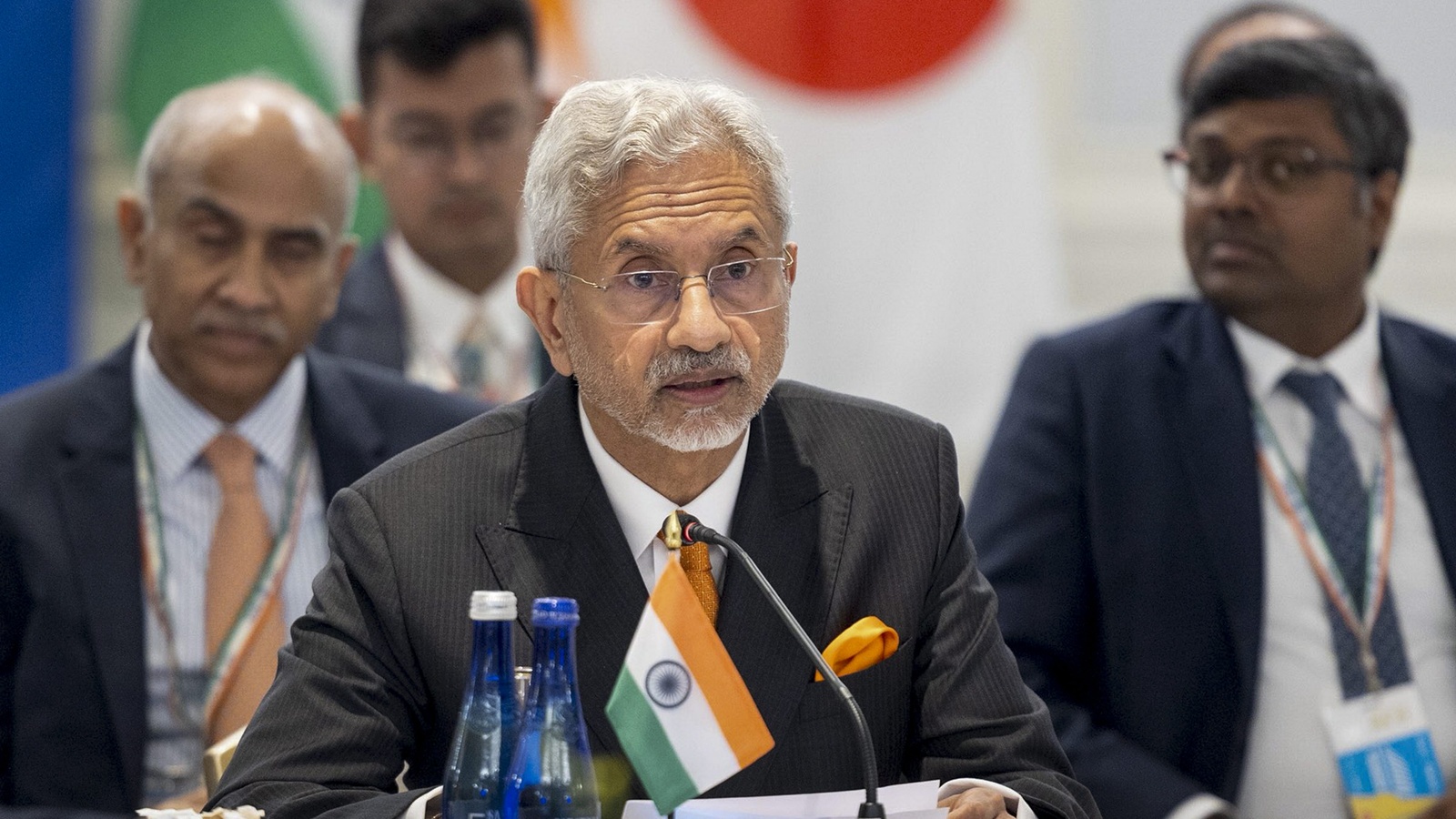
Every time S Jaishankar delivers a sharp retort to a Pakistani journalist on the international stage, New Delhi erupts in applause. The internet turns his soundbites into viral reels. Commentators praise his diplomatic swagger. He is hailed as the statesman who finally puts cross-border provocations in their place with ice-cold poise.
It makes for magnificent television. It plays exceptionally well on domestic news channels. It feeds the appetite of an electorate that hungers for muscular foreign policy.
It is also an absolute strategic dead end.
The lazy consensus among foreign policy analysts is that these fiery exchanges represent strength, resolve, and a masterclass in modern diplomacy. That is a comforting illusion. When a foreign minister of a rising global power spends valuable podium time at the United Nations playing verbal ping-pong with reporters from a failing state, he is not projecting power. He is punching down. And worse, he is falling directly into a trap that Islamabad has laid for decades.
Let us dismantle the core premise of India’s current diplomatic posture on Pakistan.
The prevailing assumption is that total diplomatic isolation and perpetual rhetorical demolition will eventually force Pakistan to abandon state-sponsored militancy. Decades of data prove the exact opposite. Pakistan’s military establishment thrives on the binary of perpetual grievance with India. When New Delhi refuses bilateral engagement and treats Islamabad as a pariah state unworthy of conversation, it validates the very narrative the Pakistani military uses to justify its disproportionate domestic power and budget.
By treating Pakistan as an existential obsession rather than a localized nuisance, Indian diplomacy suffers from an acute lack of scale. India has a three point five trillion dollar economy, aspirations for a permanent seat on the United Nations Security Council, and a complex geopolitical balancing act involving the United States, Russia, and the Global South. Yet, whenever a microphone is placed in front of Jaishankar, the gravitational pull of Islamabad drags Indian foreign policy right back to square one.
True statecraft does not react to provocation; it dictates the terms of engagement. When Chancellor Otto von Bismarck or Zhou Enlai dealt with troublesome, declining neighbors, they did not engage in public shouting matches. They rendered them strategically irrelevant.
India’s real strategic challenge is not managing Pakistan's desperate rhetoric. It is managing the rise of China, securing critical supply chains, and establishing undisputed technological and economic leadership across Asia. Every minute spent dissecting a journalist's question about terrorism at the UN is a minute stolen from the grand strategy required to meet these actual objectives.
Let us look at the economics of this dynamic. Pakistan’s economy is a permanent ICU case, perpetually reliant on International Monetary Fund bailouts. Its geopolitical leverage is near zero outside of its utility as a nuclear-armed buffer state. By continuing to treat Pakistan as a formidable diplomatic adversary worthy of high-level rhetorical combat, India inadvertently inflates its strategic weight on the global stage.
Think about how corporations handle failing competitors. Apple does not waste board meetings or keynote addresses responding to budget smartphone manufacturers who copy its designs. It simply builds superior products and moves the market forward. When you engage with a declining actor on their terms, you validate their relevance.
The counter-argument from the South Block traditionalists is that ignoring cross-border terrorism is impossible, and silence equals weakness. That is a false dichotomy. There is a vast ocean between military restraint combined with quiet intelligence operations and theatrical verbal sparring at global forums. Real deterrence is quiet, lethal, and systematic. It happens in boardrooms, through financial intelligence task forces, and via strategic border dominance—not through witty one-liners delivered to the press corps.
Admitting the downside of this aggressive rhetoric is essential for any serious strategist. The populist benefit is undeniable. Domestic political dividends are immediate. But foreign policy cannot be run like an election campaign rally. When the primary metric of diplomatic success becomes how many views a clip gets on social media, the long-term national interest is quietly sacrificed for short-term dopamine hits.
Stop treating diplomacy as a reality television show. Stop letting a failing neighbor dictate the emotional tenor of a nation poised to shape the twenty-first century. Real power does not need to snap back at every microphone thrust in its face. It simply walks past the noise and builds the future.