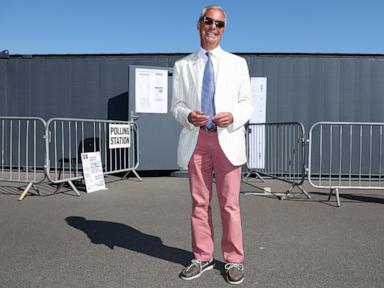
The rain in Clacton had that particular British persistence—not quite a storm, but a heavy, grey mist that soaked through wool coats and settled deep into the bones. Standing outside a community centre, shivering slightly, a local voter watches the steady stream of raincoats and umbrellas funneling through the double doors. Inside, beneath the harsh fluorescent humming of municipal lighting, democracy is playing out its familiar, tired drama.
Ballot papers are crisp. Pencils are chained to wooden booths. And somewhere out there, the machinery of public choice is grinding forward.
We talk about elections as if they are grand architectural feats, monuments built by sober-minded citizens laying bricks of policy and reason. But anyone who has stood in a school gymnasium waiting to cast a vote knows the truth. It is messy. It is theatrical. Sometimes, it feels less like a choice between competing visions of society and more like an episode of a satirical television show written by someone who has entirely lost faith in narrative structure.
Consider the recent spectacle that gripped the headlines: the contest between Nigel Farage and Count Binface.
On paper, or at least on the glowing screens of smartphones scrolling through late-night feeds, the matchup sounds like the fever dream of a comedy writer. In one corner stands a figure who has loomed over the political topography of the nation for decades, a permanent fixture of populist grievance and media oxygen. In the other stands a person wearing a metal wastepaper basket on their head, promising the nationalisation of Adele and the introduction of a strict rule about motorway lane discipline.
The internet reacted with predictable, exhausted mirth. Memes multiplied. Puns were deployed with varying degrees of success. Social media feeds filled with side-by-side comparisons of seasoned political operators and a satirical entity whose campaign manifesto includes making it illegal to park an e-scooter inside a volcano.
Yet, when the shouting stopped and the damp cardboard boxes were emptied onto long tables under the watchful eyes of weary officials, the reality was stark. The votes were tallied. The results were announced.
To understand why this moment captured the public imagination—and why it simultaneously induced a profound sense of exhaustion—requires looking past the comedy and examining the mechanics of contemporary attention.
Elections have become attention economies. When politics is stripped of its tedious administrative details—the committee meetings about sewage management, the zoning laws, the budgetary amendments for local libraries—what remains is pure performance. In a crowded room of competing voices, how do you cut through the noise?
Sometimes you do it by tapping into deep-seated cultural anxieties, building a brand around opposition, and styling yourself as the perennial outsider even after years in the corridors of influence. And sometimes you do it by putting a literal bucket on your head, leaning entirely into the absurdity of the system to mock the very seriousness with which politicians take themselves.
Both strategies share a common ancestor: the realization that the modern electorate is desperately seeking a hook.
Think about the hypothetical voter, Sarah. Sarah works forty hours a week at a regional distribution center. By the time she gets home, her feet ache, the tea kettle is taking too long to boil, and the evening news is flashing images of politicians shouting past one another in parliamentary chambers that feel as distant as the moon. Sarah does not have time to read eighty-page white papers on fiscal devolution. She encounters politics in fragments—a heated clip on TikTok, a sharp headline on her phone during her lunch break, a satirical sketch mocking a national figure.
When politics reduces itself to a spectacle, the lines between genuine governance and performance art blur entirely.
This is where the story takes a sharper turn. Because while the internet laughed at the juxtaposition of high-stakes political ambition and satirical absurdity, the underlying mechanism revealed something unsettling about our current moment. We have built a system where the outlandish is rewarded because the mundane cannot compete for our fractured focus.
The Count Binfaces of the electoral map serve a vital, if cynical, function. They hold up a mirror to a political culture that often feels like a parody of itself. If a candidate can promise free jetpacks or demand that Piers Morgan be exiled to a remote island, and still command thousands of votes, it forces a difficult question: What does it say about the mainstream when the satire makes just as much sense—and provides significantly more entertainment—than the official manifestos?
Conversely, the enduring appeal of figures like Farage points to a different psychological hunger. It speaks to the desire for a simple narrative in a bewilderingly complex world. Human beings crave villains and heroes, clear boundaries and decisive enemies. When global supply chains fracture, local industries shift, and communities feel left behind by economic forces they cannot see or touch, a charismatic voice offering a straightforward enemy is intoxicating.
It does not matter that the solutions offered are often illusory. The feeling of being heard, of having someone articulate your frustration with theatrical flair, is a powerful narcotic.
We find ourselves caught between these two poles: the cynical performance of the satirist reminding us of the system's inherent ridiculousness, and the fervent performance of the populist channeling public resentment into electoral momentum.
Neither builds a bridge. Neither repairs a pothole. Neither trains a nurse or lowers the cost of groceries.
Instead, they turn the democratic process into a spectator sport. We sit in the stands, clutching our warm cups of tea, watching the match unfold in the rain. We cheer for our side, groan at the opposition, and chuckle at the bizarre characters who wander onto the pitch wearing household items on their heads.
To explore official information regarding election outcomes, voter turnout, and the certified results of this or any other contest, the public is encouraged to consult authoritative resources such as the Electoral Commission or local municipal reporting portals. These platforms provide the unvarnished data—the cold, hard numbers stripped of commentary, spin, and satire.
Yet numbers alone rarely capture the texture of why people vote the way they do. Statistics cannot fully measure the weight of a quiet Tuesday afternoon in a town that has watched its primary employer close down, leaving behind empty brick buildings and a lingering sense of abandonment. They cannot quantify the mixture of defiance, fatigue, and hope that drives someone to mark an X on a piece of paper.
As the ballots are boxed away and the television studios pack up their cables, the rain in Clacton finally eases. The streets grow quiet. The posters taped to lampposts begin to flap loose in the evening breeze, soon to be washed away by the next storm or torn down by municipal workers.
The spectacle concludes. The theatre darkens.
And tomorrow, Sarah wakes up, puts on her coat, and walks back to the distribution center, leaving the banners, the buckets, and the grand promises behind in the grey mist.