The Iranian Rial didn't just lose value over the last year; it vanished. When you're looking at an exchange rate that crossed the 1,000,000 rial to $1 mark in March 2025 and kept sliding toward 1.7 million by December, you aren't looking at a "struggling" economy. You're looking at a corpse.
Donald Trump bet his entire Middle East legacy on the idea that if you squeezed Tehran hard enough, they’d either fold at the negotiating table or watch their own people tear the house down. Now, as we sit in April 2026, the squeeze is absolute. The "Maximum Pressure" campaign is back with a vengeance, oil exports are choked, and the Twelve-Day War earlier this year turned Iranian infrastructure into a graveyard of concrete and twisted metal.
But here’s the problem that the hawks in Washington don't want to admit. The collapse is here, and it's still not enough. The regime is broke, the people are starving, yet the "Great Deal" feels further away than ever.
The Math of a Broken Country
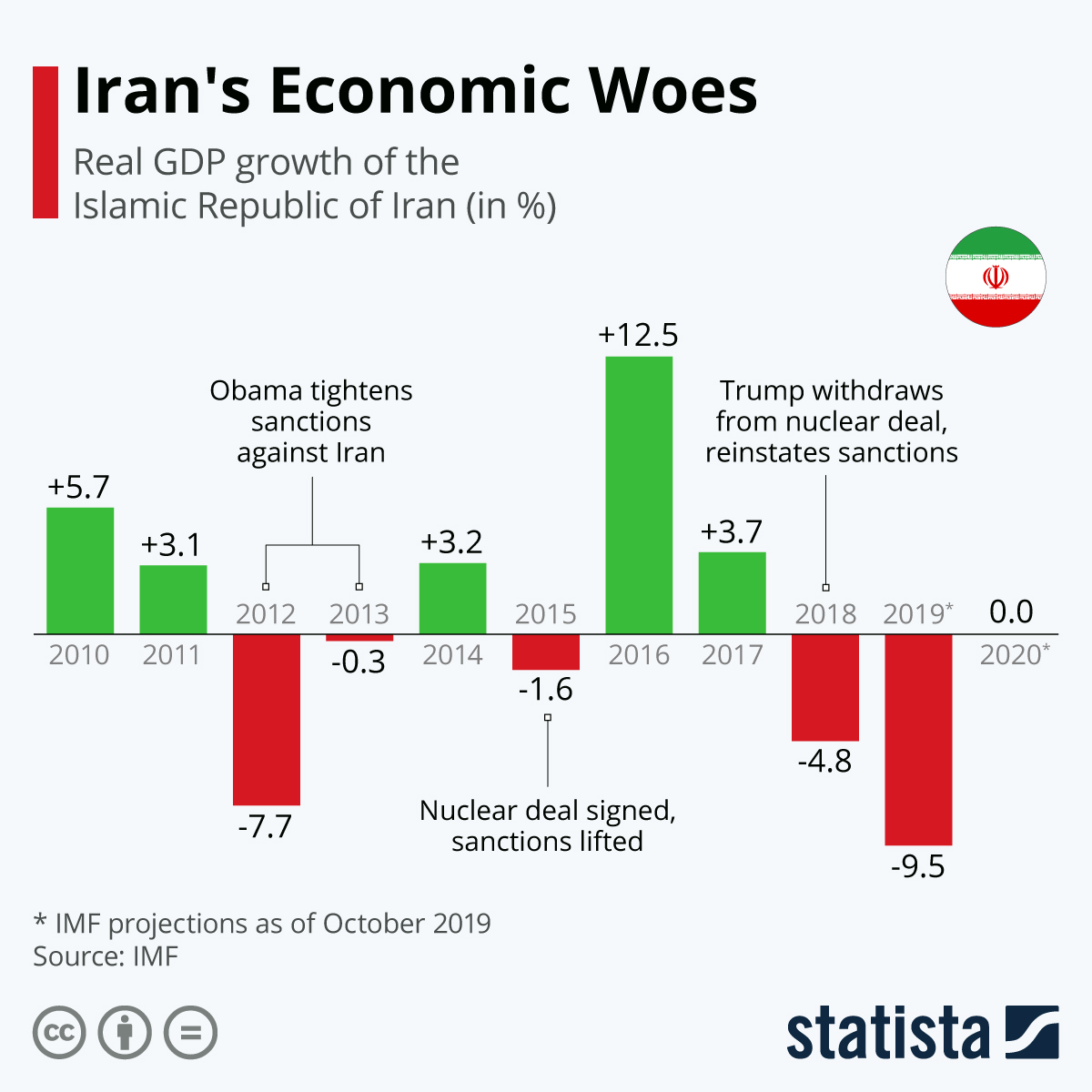
The numbers coming out of Tehran right now are grim. We’re talking about inflation hitting 48.6% in late 2025. When the price of meat and cooking oil becomes a luxury for the middle class, the social contract isn't just frayed—it’s gone.
By early 2026, the Iranian economy was expected to shrink by another 10% purely due to the recent military strikes. You can’t run a country when your steel mills in Isfahan are smoldering and your largest naval vessels are at the bottom of the Persian Gulf.
- Currency Crisis: The Rial has lost nearly 96% of its value compared to a few years ago.
- Infrastructure Failure: Since February 2025, nationwide blackouts have lasted 3 to 4 hours daily.
- Brain Drain: Over 50,000 students and thousands of nurses are fleeing the country every year.
Trump’s team thinks this is the home stretch. They see the bread lines and the protests in 31 provinces and assume the finish line is in sight. They’re wrong. They’re mistaking a country’s death rattle for a white flag.
Why the Pressure Is Backfiring
History shows us that desperate regimes don't become more reasonable; they become more dangerous. We saw this in February 2026 when negotiations in Muscat and Rome fell apart. Iran didn't come to the table to surrender. They came to stall, and when that didn't work, they lashed out.
The closing of the Strait of Hormuz was the nuclear option of economics. By choking off a major trade route, Iran proved that even as it bleeds out, it can still take a chunk of the global economy with it. Gas prices in the US didn't hit $4 a gallon because Iran is winning; they hit $4 because a cornered animal bites the hardest.
Trump wants a "new nuclear deal" and a total withdrawal of Iranian proxies from Lebanon, Yemen, and Iraq. It's a massive ask. To the clerical elite, giving in to those demands isn't a diplomatic pivot—it's a suicide note. They’d rather rule over a starving, dark, and isolated nation than sign away the only leverage they have left.
The Misconception of Regime Change from Outside
There's a persistent myth in DC that if the economy gets bad enough, the "Bazaaris"—the merchants who historically funded revolutions—will flip the script. While it’s true that thousands of merchants joined the strikes in late 2025, the IRGC (Islamic Revolutionary Guard Corps) has spent decades preparing for this exact scenario.
They own the black markets. They control the remaining supply lines. As the private sector dies, the Guard’s grip on what’s left of the economy actually tightens. When people are worried about where their next meal comes from, they're often too exhausted to sustain a revolution against a paramilitary force that has no qualms about using live ammunition.
The Timing Problem
Trump needs a win, and he needs it to look like a triumph of "The Art of the Deal." But the timeline of economic collapse doesn't match the timeline of political change.
Sanctions are a slow-motion weapon. Regime collapse is a chaotic, unpredictable event. You can't schedule a revolution for a Tuesday afternoon to boost a news cycle. Even with the 2026 internet blackout and the surge in domestic unrest, the clerical structure remains entrenched.
Intelligence reports have been blunt: infrastructure damage won't topple the military in the short term. The fragmented opposition doesn't have the muscle to seize power, even if the streets are on fire. Trump is pushing for a climax that the Iranian reality isn't ready to deliver.
Moving Forward
If you're watching this play out, don't wait for a sudden "Mission Accomplished" moment. The Iranian economy is in a tailspin that will take a generation to pull out of, regardless of who's in the White House.
- Watch the Oil Prices: The Strait of Hormuz remains the ultimate "fever check" for this conflict. If it stays blocked, the global economic pain will eventually outweigh the political gains of the pressure campaign.
- Monitor the Proxy Activity: If Hezbollah and the Houthis actually start to de-escalate—as suggested in the Muscat talks—that’s a sign the money has truly run out. Until then, it’s all talk.
- Check the Rial: Until the currency stabilizes, there is no "normal" in Iran. Watch the informal "street" rates, not the official government numbers.
The collapse is happening, but don't expect it to gift Trump the clean victory he’s looking for. Diplomacy with a country that has nothing left to lose is the hardest kind of deal to make.