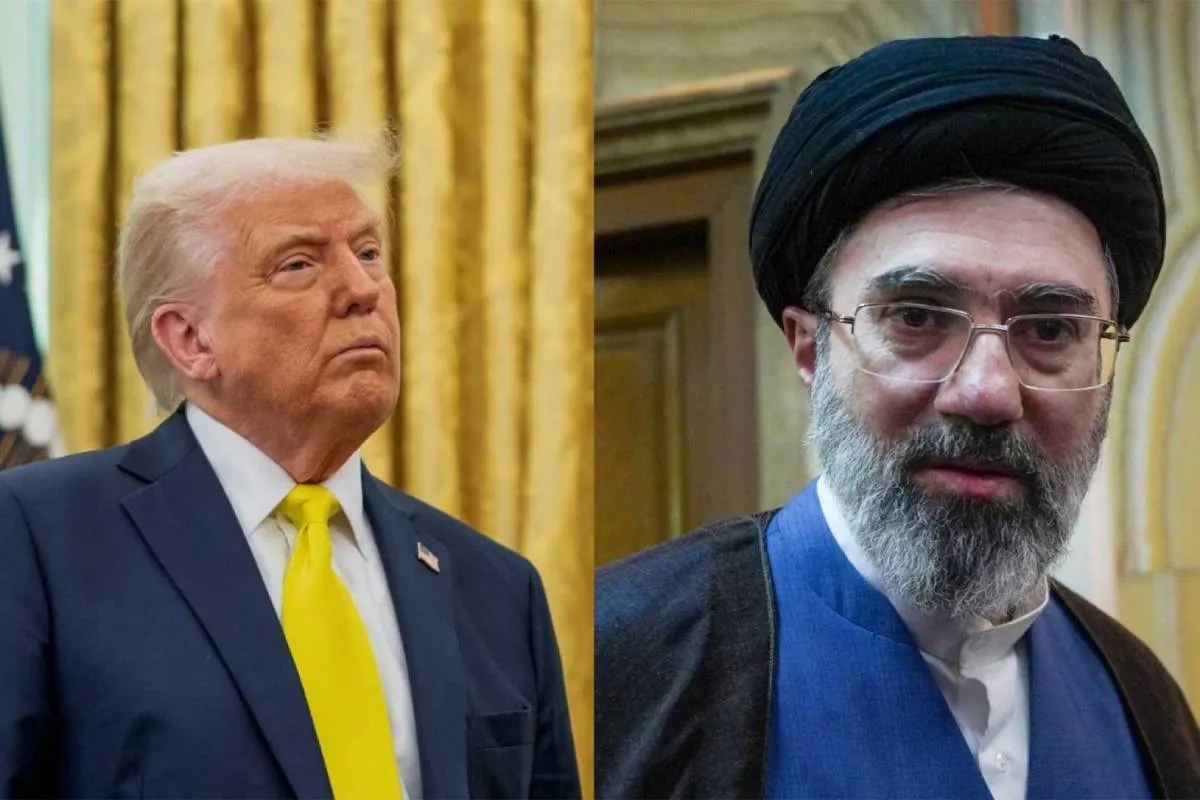
The escalating rhetoric between Tehran and Washington has reached a critical flashpoint, driven by explicit threats from Donald Trump and an aggressive, retaliatory vow from Mojtaba Khamenei. Following Trump’s severe warnings aimed at curbing Iran's regional influence and nuclear ambitions, Mojtaba Khamenei—the highly influential son of Supreme Leader Ali Khamenei—publicly swore vengeance for "Martyr Khamenei" and all fallen soldiers from recent conflicts. This fierce declaration goes beyond mere wartime propaganda. It represents a calculated geopolitical maneuver designed to consolidate domestic power, signal unyielding defiance to the West, and solidify Mojtaba's positioning as the frontrunner to succeed his father in Iran's highest office.
Beneath the surface of this fiery exchange lies a complex web of internal Iranian politics, economic desperation, and a high-stakes transition of power that the West frequently misreads.
The Succession Gamble Behind the Rhetoric
To understand why Mojtaba Khamenei is suddenly adopting the mantle of chief defender of the Islamic Revolution, one must look at the empty chairs in Tehran's corridors of power. For years, Mojtaba operated in the shadows. He managed his father’s office, maintained deep ties with the Islamic Revolutionary Guard Corps (IRGC), and pulled the strings of the internal security apparatus without commanding the public spotlight.
That anonymity ended out of sheer necessity. The sudden death of President Ebrahim Raisi in a helicopter crash disrupted the carefully laid plans for the Supreme Leader’s succession. Raisi was widely viewed as either the primary candidate to succeed Ali Khamenei or the perfect, compliant shield for Mojtaba’s eventual ascension. With Raisi gone, Mojtaba has been forced into the open.
By framing himself as the man who will avenge the losses of the state and stand up to Washington, Mojtaba is directly appealing to the hardline elements of the IRGC. He needs their guns and their financial empires to secure the supreme leadership. The IRGC, in turn, needs a leader who will guarantee their continued dominance over the Iranian economy and foreign policy. This is a mutual survival pact masquerading as religious and nationalist fervor.
Trump Warnings and the Failure of Maximum Pressure
The catalyst for Mojtaba's sudden public vow was a series of fresh, uncompromising warnings from Donald Trump. The American stance remains clear: absolute economic isolation, crippling sanctions targeting oil exports, and the implicit threat of military action if Iran crosses the nuclear threshold or continues to fund its regional proxies.
However, Washington's strategy suffers from a fundamental misunderstanding of Iranian regime survival mechanics. Decades of pressure have taught the ruling elite in Tehran how to weaponize isolation.
- The Shadow Economy: Iran has perfected a sprawling, illicit network of oil smuggling, front companies, and maritime deception that keeps the regime afloat despite Western sanctions.
- Domestic Scapegoating: Every economic failure, from hyperinflation to crumbling infrastructure, is blamed entirely on American aggression, deflecting public anger away from state corruption.
- The Siege Mentalty: External threats allow the clerical establishment to treat domestic dissent as treason, justifying brutal crackdowns on civil society.
When Trump issues a threat, it does not force the regime to back down. Instead, it provides the exact political ammunition hardliners need to silence pragmatic politicians who advocate for diplomacy. Mojtaba’s aggressive response is proof of this dynamic. He uses the American threat to demonstrate his strength, arguing that negotiation is a form of cowardice.
The Fragmented Proxy Network and Loss of Strategic Depth
The mention of "both wars" and the accumulated casualties points to a deeper, more painful reality for Tehran. Iran’s ring of fire—the network of proxy militias including Hezbollah in Lebanon, the Houthis in Yemen, and various factions in Iraq and Syria—has taken unprecedented damage.
For decades, Iran’s defense strategy relied on fighting its battles away from its own borders. By using Arab proxies to pressure Israel and the United States, Tehran maintained a layer of deniability and strategic depth. That depth has eroded significantly. Targeted campaigns have decimated top-tier commanders, disrupted supply chains, and exposed severe intelligence gaps within the Iranian apparatus.
+-------------------------------------------------------------------+
|               IRAN'S ERODING STRATEGIC ASSETS                     |
+--------------------------+----------------------------------------+
| Asset Class              | Current Vulnerability                  |
+--------------------------+----------------------------------------+
| Regional Proxies         | Severed command structures, heavy      |
|                          | leadership losses in Levant.           |
+--------------------------+----------------------------------------+
| Domestic Stability       | Severe inflation, widespread public    |
|                          | resentment, systemic corruption.       |
+--------------------------+----------------------------------------+
| Nuclear Leverage         | Advanced enrichment serves as a target |
|                          | rather than a permanent shield.        |
+--------------------------+----------------------------------------+
Mojtaba’s rhetoric is an attempt to paper over these structural vulnerabilities. When the proxy network weakens, the rhetoric must grow louder to project an illusion of control. The regime cannot afford to look weak to its remaining regional allies, who are increasingly questioning Tehran's willingness or ability to protect them when the stakes are highest.
The Illusion of a Unified Iranian Front
Western analysts frequently make the mistake of treating the Iranian regime as a monolith. It is not. A fierce, quiet civil war is being fought within the halls of parliament, the seminaries of Qom, and the boardrooms of IRGC-controlled conglomerates.
On one side stand the pragmatists and reformists, who understand that without sanctions relief, the country faces systemic economic collapse. They know that a population struggling to buy basic food items cannot be sustained indefinitely by ideological slogans. On the other side are the hardliners, led by Mojtaba Khamenei and the upper echelons of the security forces, who believe that any concession to the West is fatal. They point to the collapse of previous nuclear agreements as evidence that Washington cannot be trusted.
Mojtaba’s vow of vengeance is a direct strike against internal moderates. By elevating the conflict to a matter of blood existentialism and religious duty, he effectively criminalizes any attempt at future diplomatic compromise. He is setting a trap for anyone within Iran who might suggest a deal with Trump, ensuring that the only acceptable path forward is one of maximum resistance.
The High Cost of the Vengeance Doctrine
The immediate consequence of this rhetorical escalation is the total elimination of diplomatic off-ramps. Iran is trapped in a loop of its own making. To maintain internal legitimacy among its core zealots, the leadership must constantly promise retaliation and victory. Yet, fulfilling those promises risks a direct, conventional war with a superior military superpower—a war the regime knows it cannot win and might not survive.
This leaves Tehran with a dangerous, limited toolkit. We are likely to see an increase in asymmetrical tactics: cyber warfare targeting Western infrastructure, sabotage of commercial shipping in the Strait of Hormuz, and localized terrorist operations. These actions allow Mojtaba to claim he is fulfilling his vow of vengeance without triggering the catastrophic conventional response that a full-scale military conflict would bring.
The strategy is highly volatile. In a region primed for conflict, miscalculations happen easily. A single drone strike or a misdirected missile could trigger the very war that both sides claim they want to avoid, turning Mojtaba’s internal political posturing into a regional reality.
The Looming Nuclear Decision
The ultimate expression of Mojtaba’s hardline doctrine may manifest in Iran’s nuclear program. As conventional deterrence via proxies weakens, the temptation within Tehran to cross the final threshold and construct a nuclear weapon grows exponentially. Hardliners argue that only a nuclear deterrent can truly guarantee security against an unpredictable Washington.
Mojtaba Khamenei is tying his personal political destiny to this policy of defiance. By stepping out from the shadows to answer Trump's warnings, he has made it clear that a future Iran under his influence will not seek integration into the global order. It will seek to challenge it. The vow of blood revenge is not just a tribute to the past. It is a terrifying blueprint for Iran's future.